How to Style Silver Dressing Table Accessories in a Modern Bedroom
Silver works particularly well when it is allowed to sit alongside the things we already use. There is no need to recreate an Edwardian bedroom or assemble a complete matching set.
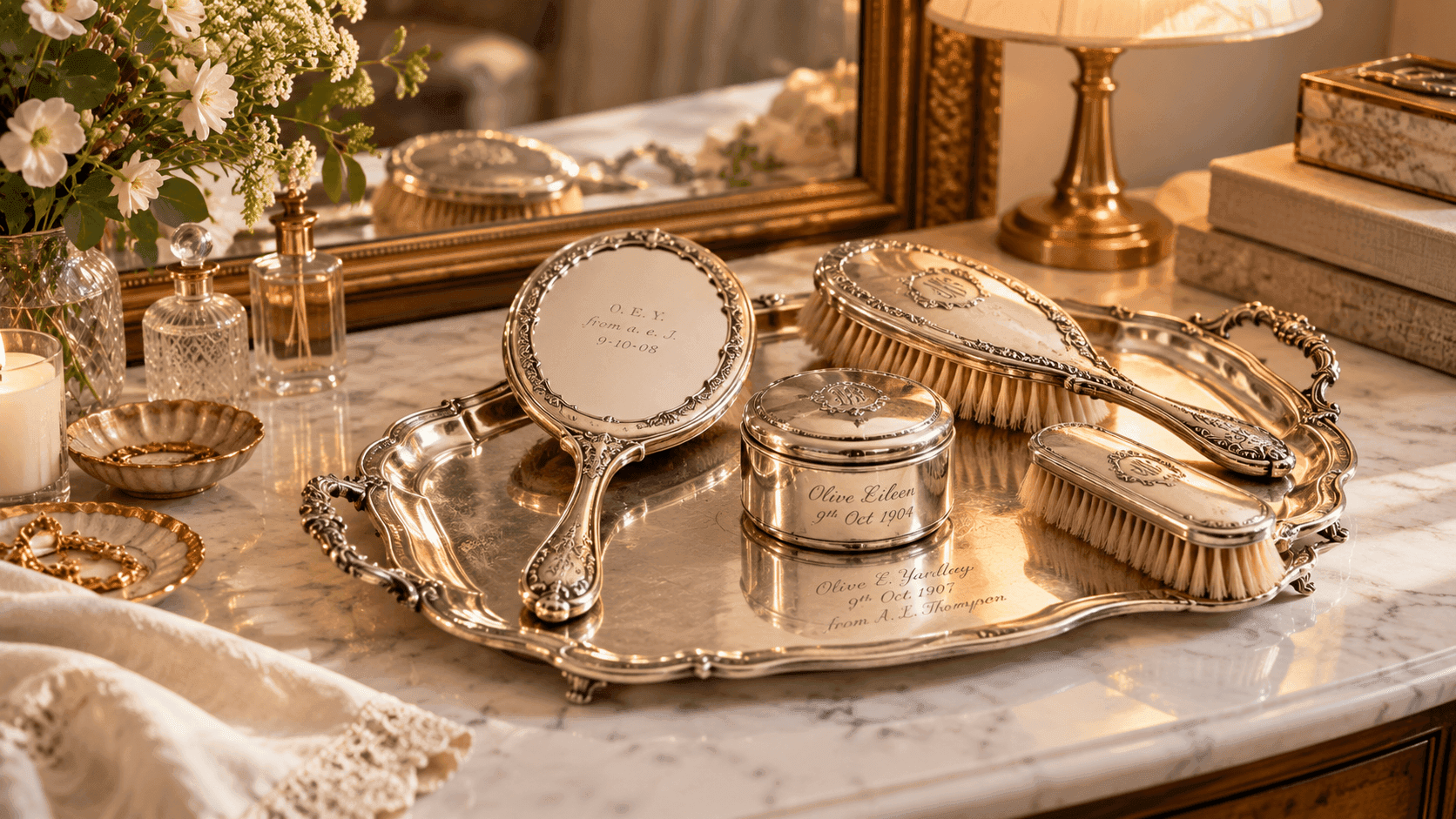
A silver-backed mirror can rest beside a contemporary perfume bottle. A small silver box might hold earrings on a wooden chest of drawers. A silver tray can bring together a hand cream, a favourite scent and a few personal possessions.
The contrast between materials is often what makes the arrangement interesting. Silver sits comfortably alongside natural wood, marble, ceramics, glass and linen. It can introduce light and texture without requiring an elaborate setting.
Five Simple Ways to Use Silver on a Dressing Table
- Start with a small tray. Bring together perfume, jewellery and everyday essentials without creating clutter.
- Choose one useful object. A silver hand mirror or hairbrush can make an ordinary routine feel more considered.
- Mix different periods. An Edwardian powder box can sit happily beside a contemporary jewellery dish.
- Make it personal. Include a photograph, a treasured piece of jewellery or an object with a family connection.
- Leave room to use it. A dressing table should remain practical. A few well-chosen pieces are often more appealing than an elaborate arrangement.
Are Silver Dressing Table Sets Collectable?
Silver dressing table sets appeal to collectors for several reasons, including their craftsmanship, decorative variety, maker's marks and personal histories. Complete sets can be particularly attractive, especially where the pieces share a maker, date, design or original fitted case.
However, individual pieces also have collecting appeal. A hand mirror with an unusual design, a powder box by a recognised maker or a particularly fine silver-mounted scent bottle may be of interest in its own right.
Condition and originality are important. Matching sets should be examined carefully to establish whether the components were originally made together or assembled at a later date. Engraved initials and inscriptions can also contribute to an object's history, although their effect on value depends on the piece and the interests of individual collectors.
A Specialist's Eye: What to Look for When Buying Dressing Table Silver
When buying silver dressing table accessories at auction, it is worth considering more than the decoration alone.
Hallmarks and maker's marks: British silver hallmarks can help establish the standard of silver, assay office, date and maker. Some accessories contain silver mounts rather than being made entirely from silver.
Condition: Look for dents, splits, repairs and excessive polishing, particularly around decorative borders and handles.
Original fittings: Mirrors, brushes, powder boxes and scent bottles often incorporate materials other than silver. Their condition and originality can be important.
Matching sets: Check whether pieces share the same design, maker and date. A collection assembled over time may be attractive, but should not automatically be described as an original matching set.
Inscriptions: Names, initials and dates can provide valuable clues to an object's history. They should be considered before any decision to alter or remove them.
How to Clean and Care for Silver Dressing Table Accessories
Silver dressing table accessories often require more careful cleaning than ordinary silver tableware because they incorporate mirrors, bristles, glass, fabric and other materials. Dust regularly with a soft, dry cloth, and avoid abrasive cleaning products.
Where polishing is appropriate, use a suitable silver-cleaning product sparingly, taking care to keep it away from mirror backing, brush heads and delicate fittings. Do not immerse silver-backed brushes or hand mirrors in water. Moisture can become trapped beneath the silver or damage the materials used in their construction.
Scent bottles and powder boxes should also be examined carefully before cleaning, particularly if they retain original liners, stoppers or fittings. For valuable or delicate pieces, specialist conservation advice is preferable to aggressive cleaning.
A little tarnish is not necessarily a problem. Over-polishing can gradually remove fine surface detail, and an older piece does not need to look newly made to be beautiful.