A Brief History of the Silver Tea Service
Tea arrived in Britain during the seventeenth century and gradually became an important part of domestic and social life. Initially expensive and enjoyed by a relatively small section of society, tea became increasingly accessible during the eighteenth and nineteenth centuries. As tea drinking developed into an established custom, so too did the objects used to prepare and serve it.
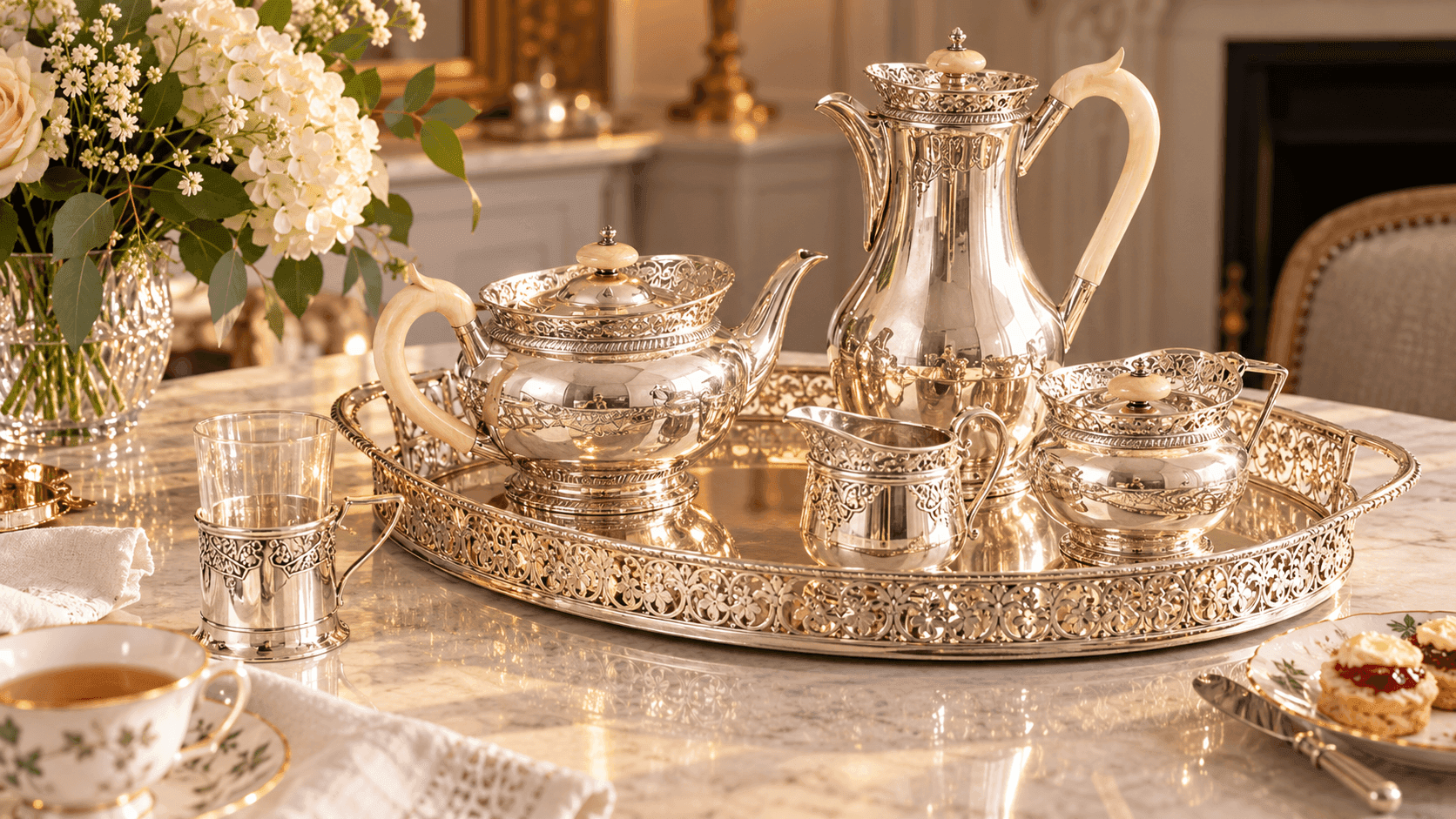
Silversmiths responded with teapots, tea caddies, sugar bowls, cream jugs and increasingly elaborate services. Early Georgian silver teapots often had rounded bodies and restrained decoration. Later eighteenth-century designs introduced neoclassical forms, while nineteenth-century examples reflected changing fashions, from richly ornamented Victorian pieces to the more individual approaches of the Arts & Crafts movement.
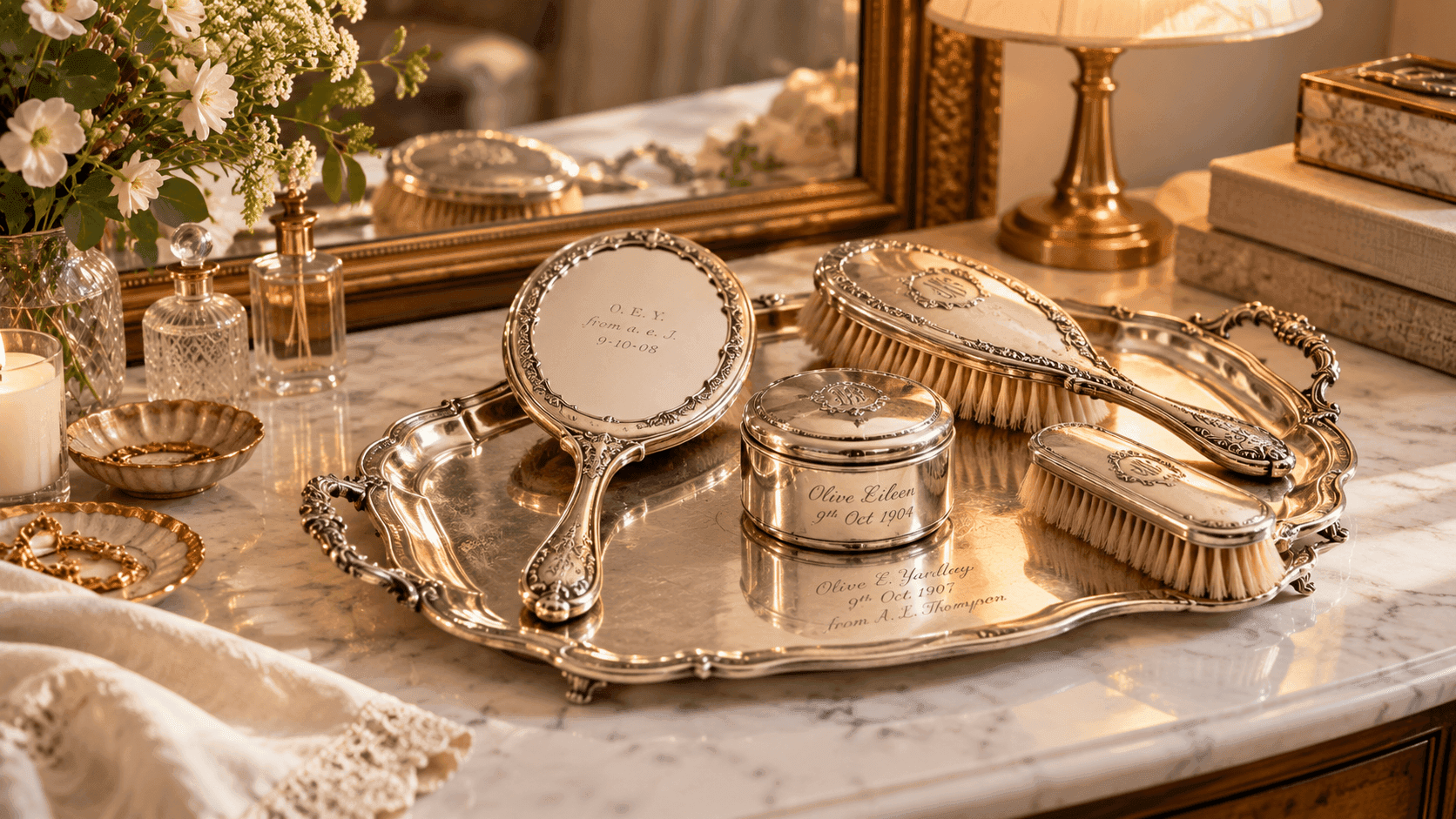
By the early twentieth century, silver tea services were available in a remarkable variety of styles. They were also closely associated with gifting. Silver teapots and services were presented to mark weddings, retirements, anniversaries and other important occasions, often carrying engraved inscriptions recording the people and events behind them.
The Silver Teapot: A Beautifully Practical Object
A good teapot is a small piece of engineering. It needs to pour cleanly, balance comfortably in the hand and retain heat without making the handle difficult to hold. Its spout, lid, handle and body must work together.
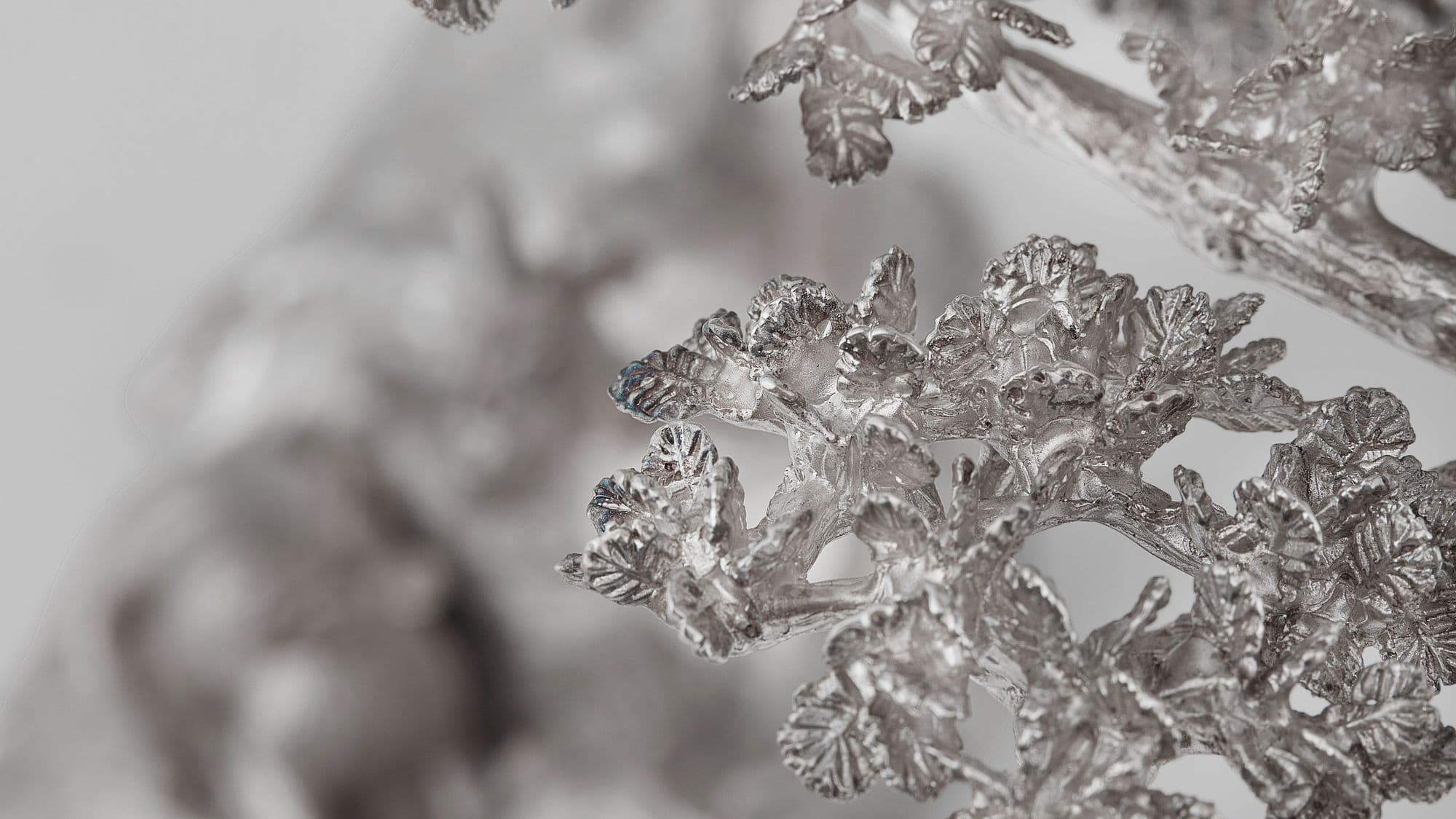
Silver teapots demonstrate how silversmiths have approached these practical requirements while responding to changing tastes in design. Some have rounded, generously proportioned bodies. Others are tall and angular, with carefully controlled lines. Handles may be made from wood or another insulating material, while decorative details range from simple engraved borders to elaborate chasing and repoussé work. The best examples combine visual appeal with an understanding of how the object will be used.
Can You Actually Make Tea in a Silver Teapot?
Yes. Many silver teapots were made for precisely this purpose and can still be used today, provided they are in sound condition. Before using an older teapot, check that the interior is clean, the handle and lid are secure, and there are no leaks or damaged repairs.
Silver conducts heat efficiently, so the body of a teapot can become hot when filled with boiling water. Handles, lids and other fittings should be treated with care. A historic teapot should not be placed directly on a hob or other heat source unless it was specifically designed for that purpose. For valuable or delicate pieces, it is sensible to seek specialist advice before returning them to regular use.
More Than a Teapot: The Pieces That Make a Silver Tea Service
One of the pleasures of collecting silver for the home is that a tea service does not need to be acquired all at once. A single teapot can be the beginning. A cream jug or sugar bowl might follow, perhaps from a different period or maker.
Although complete matching services have their own appeal, there is no requirement for everything on the table to match.
Silver Cream Jugs and Milk Jugs
Silver cream jugs are among the most versatile pieces of domestic silver. Available in a wide variety of sizes and styles, they can be used for milk or cream at the table, provided they are suitable for food use and in good condition.
Their smaller scale also makes them appealing to collectors who are beginning to explore silver.
Silver Sugar Bowls
A silver sugar bowl can bring a little character to the tea table, whether it is an elaborate Victorian example or a simple twentieth-century design. Some are fitted with lids, while others are open bowls intended for use with sugar tongs.
Small silver bowls can also have other practical uses around the home, although food use should always depend on the object's condition and construction.
Silver Tea Trays
A silver tray brings a collection of objects together. It might hold a teapot, cups and milk jug, or simply provide a place for a smaller arrangement on a sideboard or table. Trays vary enormously in size and design, from modest pieces intended for serving a few cups to large presentation trays with elaborate borders and handles.
For a modern home, proportion matters. A small tray may be more practical than a substantial service tray, particularly where storage is limited.
Silver Hot Water Pots and Spirit Kettles
Hot water pots were designed to provide additional hot water at the table, while spirit kettles incorporated a stand and burner intended to keep water hot. These can be among the most impressive pieces in a silver tea service, particularly where the silversmith has paid close attention to the relationship between vessel, handle and stand.
Historic spirit kettles should be approached with particular care. Old burners, fittings and fuel systems may no longer be safe to operate, and specialist assessment is advisable before any attempt to use them. They can nevertheless be appreciated as striking examples of domestic silver design.
The Pleasure of an Individual Silver Tea Service
Not every silver tea service needs to be an important example of a design movement. There is equal pleasure in the familiar forms of Georgian, Victorian and Edwardian silver.
A rounded silver teapot with a wooden handle, a simple cream jug or a generously proportioned sugar bowl can sit comfortably in a contemporary home. More elaborate services, with engraved decoration, shaped spouts and decorative feet, may suit those who enjoy the visual richness of nineteenth-century craftsmanship.
For collectors, the variety is part of the attraction. A tea service might be chosen for its maker, period, unusual design or personal history. Others are bought simply because they are beautiful objects that someone would like to use. Both approaches have their place.