The Desk as a Personal Space
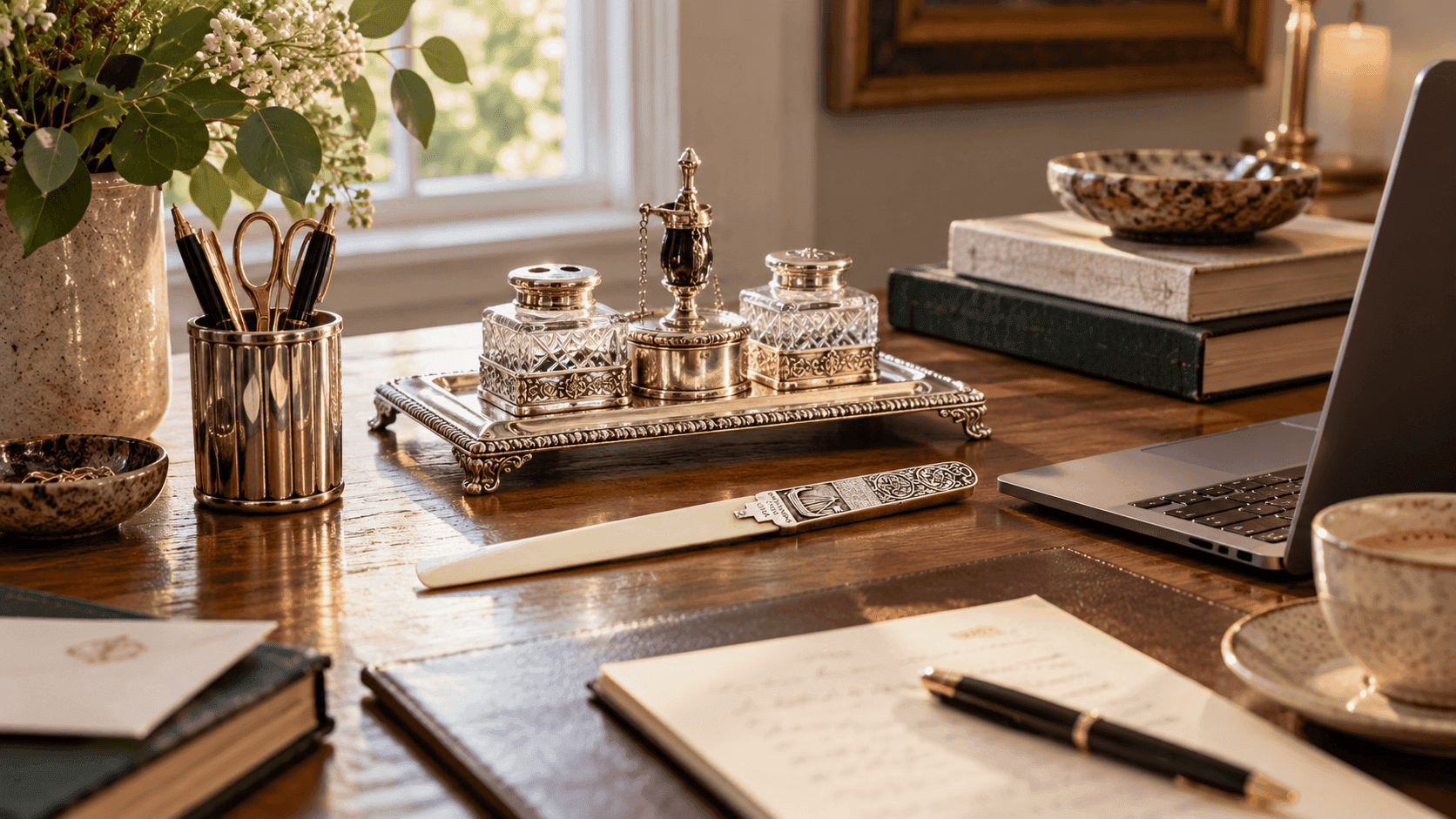
A desk is rarely just somewhere to work. It may be where letters are written, bills are paid, books are read or ideas first find their way onto paper. Before the arrival of computers, desks were furnished with objects designed around the physical business of writing. Inkstands held ink bottles and pens; blotters absorbed excess ink; letter openers dealt with correspondence; and trays kept papers, calling cards and small possessions in order.
These objects were made in silver, silver plate and combinations of materials including wood, glass, leather and stone. Their designs reflected the tastes of their period, from restrained Georgian forms to the naturalistic ornament of the Victorian era and the cleaner lines of twentieth-century design. The tools of work have changed, but the pleasure of a well-made object has not.
Silver Letter Openers: The Pleasure of Opening a Letter
There is something satisfying about opening a letter with a properly made letter opener rather than tearing into an envelope. Silver letter openers range from relatively simple examples to elaborate designs incorporating engraved handles, decorative motifs and unusual materials. Some were made as individual accessories, while others formed part of larger desk sets.
They also make particularly appealing gifts for readers, writers and anyone who still enjoys handwritten correspondence. A letter opener is one of the easiest ways to introduce silver to a desk. It takes up little space, can be used regularly and offers considerable variety in design.
What to look for: Examine the condition of the blade and handle, particularly where different materials meet. Check for bends, repairs or loose fittings, and establish whether the piece is solid silver, silver-mounted or silver-plated.
Silver Inkstands: A New Place for an Old Favourite
The inkstand was once an essential feature of the writing desk. By the eighteenth and nineteenth centuries, inkstands had developed into objects of considerable variety, ranging from practical silver-mounted stands to elaborate presentation pieces. Many incorporated glass ink bottles, pen rests, compartments and decorative details.
Today, an inkstand can still be used by someone who writes with a dip pen. Alternatively, depending on its design and condition, it might hold pens or serve as a decorative centrepiece on a desk or bookshelf. There is no need to disguise its original purpose. Part of the appeal is recognising that an object once central to everyday work can remain relevant in a different age.
What to look for: Original glass liners and bottles are worth checking, as are the hinges, lids and any removable fittings. Ink corrosion, old repairs and missing components can affect condition and value.
Silver Pen Trays and Card Trays: A Place for Everything
Not every desk accessory needs to have a complicated purpose. A small silver tray can hold a pen, a watch, paperclips or the other things that accumulate during a working day. A card tray, originally intended for visiting cards, might provide a place for correspondence or a few frequently used objects. Larger salvers can also be effective on a desk, particularly where there is space for a collection of smaller accessories.
This is where historic silver can be especially versatile. A piece made for the dining room or drawing room may be perfectly suited to a modern workspace, without requiring any permanent alteration.
What to look for: Consider the tray's dimensions and whether it sits evenly. Examine the surface for wear, repairs and engraving, and protect polished furniture from any rough or uneven feet.
Silver Boxes: Keeping the Small Things Close
Every desk has its collection of small necessities: spare keys, stamps, paperclips, memory sticks and the occasional item that seems too important to throw away. A silver box provides somewhere to keep them.
Silver boxes were produced for a wide variety of purposes, including tobacco, snuff, jewellery, cards and personal possessions. Many smaller examples can be used for modern storage, provided their construction and condition make this appropriate. A beautifully engraved box might sit beside a laptop, while a restrained twentieth-century example could work particularly well in a contemporary office. There is also pleasure in choosing an object with an interesting maker, inscription or history.
What to look for: Check that the lid closes correctly and that hinges, catches and interior linings are sound. Avoid storing objects that could scratch or damage delicate surfaces.
Silver Photograph Frames: Something Beyond the Screen
For all the photographs stored on our phones, there is still something special about having a favourite picture on the desk. A silver photograph frame can bring a personal note to a workspace, whether it holds a family portrait, a holiday photograph or a memory of someone important.
Frames vary considerably in style, from simple polished borders to examples with elaborate chased or embossed decoration. The most successful choice is often the one that suits both the photograph and the space around it.
What to look for: Check the frame's backing, support, glazing and fittings. These components are often more vulnerable to damage than the silver itself.
Mixing Silver with a Contemporary Workspace
One of the pleasures of silver is how easily it can be combined with other materials. A small silver tray can sit beside a ceramic coffee cup. An engraved letter opener may look particularly good against a plain wooden desk. A silver photograph frame can introduce a different texture among books, notebooks and computer equipment.
There is no requirement for matching pieces or a particular period of furniture. Indeed, a desk furnished entirely with historic accessories can sometimes feel more like a museum display than a place where someone actually works.
A few carefully chosen objects are often more effective.
Five Ways to Introduce Silver to Your Desk
- Start with a tray. Use a small silver tray or salver to keep pens, keys and everyday essentials together.
- Keep a letter opener within reach. Choose one that is comfortable to handle and suits your desk.
- Give a historic object a practical role. An inkstand or card tray may offer useful storage, depending on its design.
- Add something personal. A silver photograph frame or small keepsake box makes the space feel individual.
- Mix periods and materials. Silver works with contemporary ceramics, natural wood, glass and modern office equipment.