How to Identify Antique Scent Bottles
While materials and decoration provide important clues, identifying an antique scent bottle requires looking at the object as a whole. Specialists consider craftsmanship, construction and condition alongside maker's marks or hallmarks.
Materials
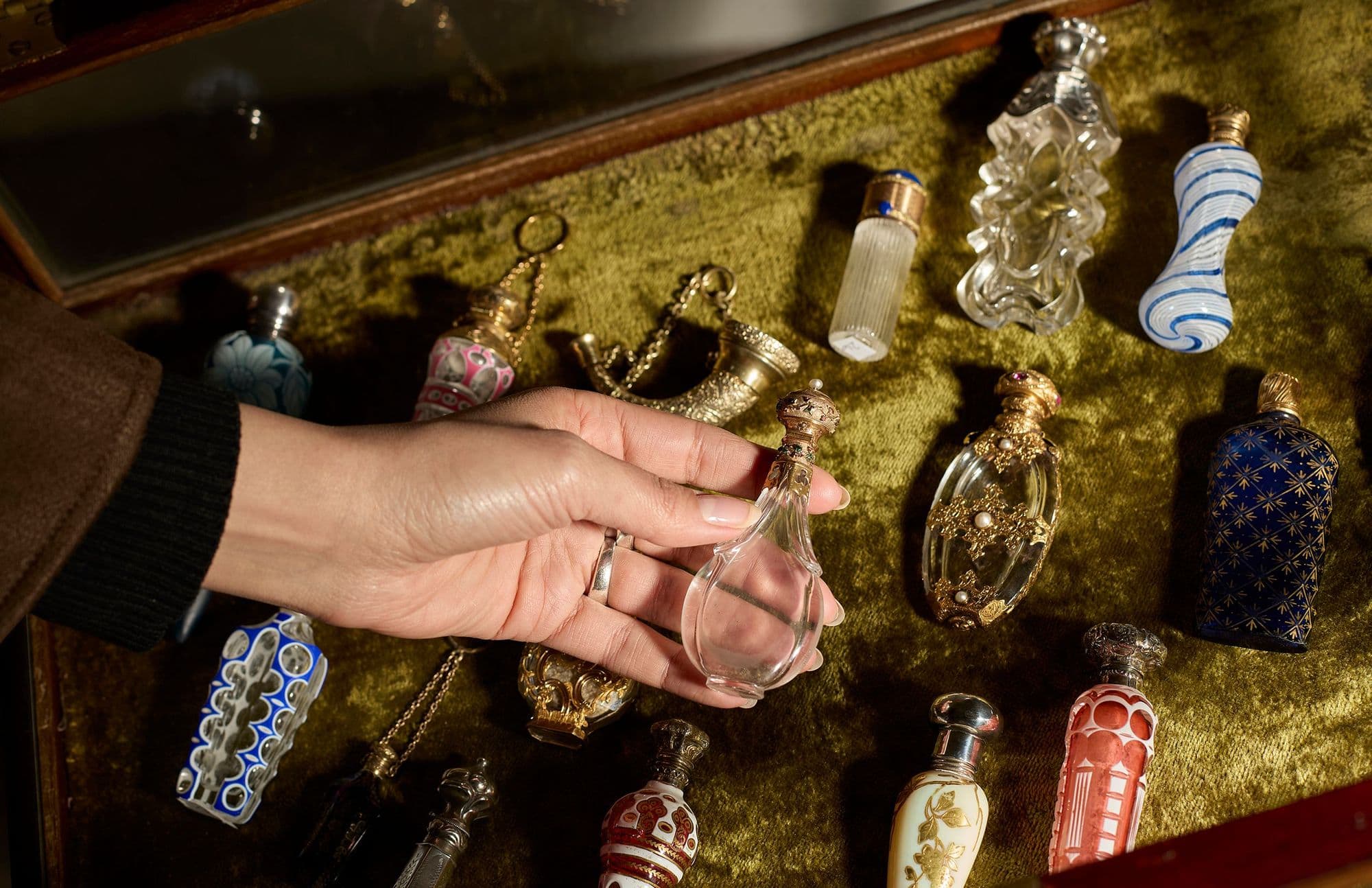
Scent bottles were produced in a wide range of materials, including gold, silver, enamel, crystal, porcelain and coloured glass. The quality of the material and the precision of its decoration can often indicate the bottle's date and place of manufacture.
Hallmarks and Maker's Marks
Silver scent bottles frequently bear hallmarks identifying the maker, assay office and year of manufacture. Glass and enamel examples are less commonly marked, although some retain retailer's labels or engraved signatures that help establish provenance.
Original Fittings
Original stoppers, chains and hinged mounts add significantly to both historical integrity and collector appeal. Replacement stoppers are common, particularly on glass bottles, so careful examination is always worthwhile.
Condition
Minor wear is expected on objects intended for daily use, but chips, cracks, repairs or heavy restoration can affect desirability. Crisp engraving, intact enamel and undamaged mounts are all signs of well-preserved examples.
Style and Craftsmanship
Decoration often provides some of the strongest clues to age and origin. Changes in shape, decorative motifs and manufacturing techniques reflect wider artistic movements, from Georgian refinement to the exuberance of the Victorian period.
How Much Are Antique Scent Bottles Worth?
Values vary considerably depending on age, rarity, maker, materials, condition and provenance. While simple nineteenth-century examples can be relatively accessible, exceptional scent bottles by renowned makers or in precious materials can command significantly higher prices.
Collectors generally place a premium on:
- Gold-mounted Georgian scent bottles
- Fine enamelled examples
- Rare cameo glass bottles
- Original fitted stoppers and mounts
- Documented provenance
- Unusual forms such as double-ended bottles or vinaigrettes
Lyon & Turnbull has handled a wide range of antique scent bottles, demonstrating the enduring appeal of these miniature works of art. A late eighteenth-century French gold-mounted enamel scent bottle and vinaigrette, inscribed gage de mon amour ("token of my love"), exemplifies the craftsmanship collectors seek, while a circa 1880 Stourbridge cameo glass scent bottle in the manner of Thomas Webb highlights the technical brilliance of Victorian glassmaking.
Whether collected for their decorative beauty, social history or craftsmanship, antique scent bottles continue to attract interest from collectors of ceramics, glass, silver and decorative arts alike.
Building a Collection
There is no single way to collect scent bottles. Some collectors focus on a particular maker, while others are drawn to a specific material such as silver or cameo glass. Many collections, however, are built through discovery rather than design.
One private collection handled by Lyon & Turnbull was assembled over twenty-five years through visits to antique fairs and travels across Britain, Europe and North America. Rather than searching for specific pieces, the collector simply bought bottles that appealed for their craftsmanship, character and beauty. The result was a wonderfully varied collection spanning Georgian and Victorian examples in gold, silver and glass.