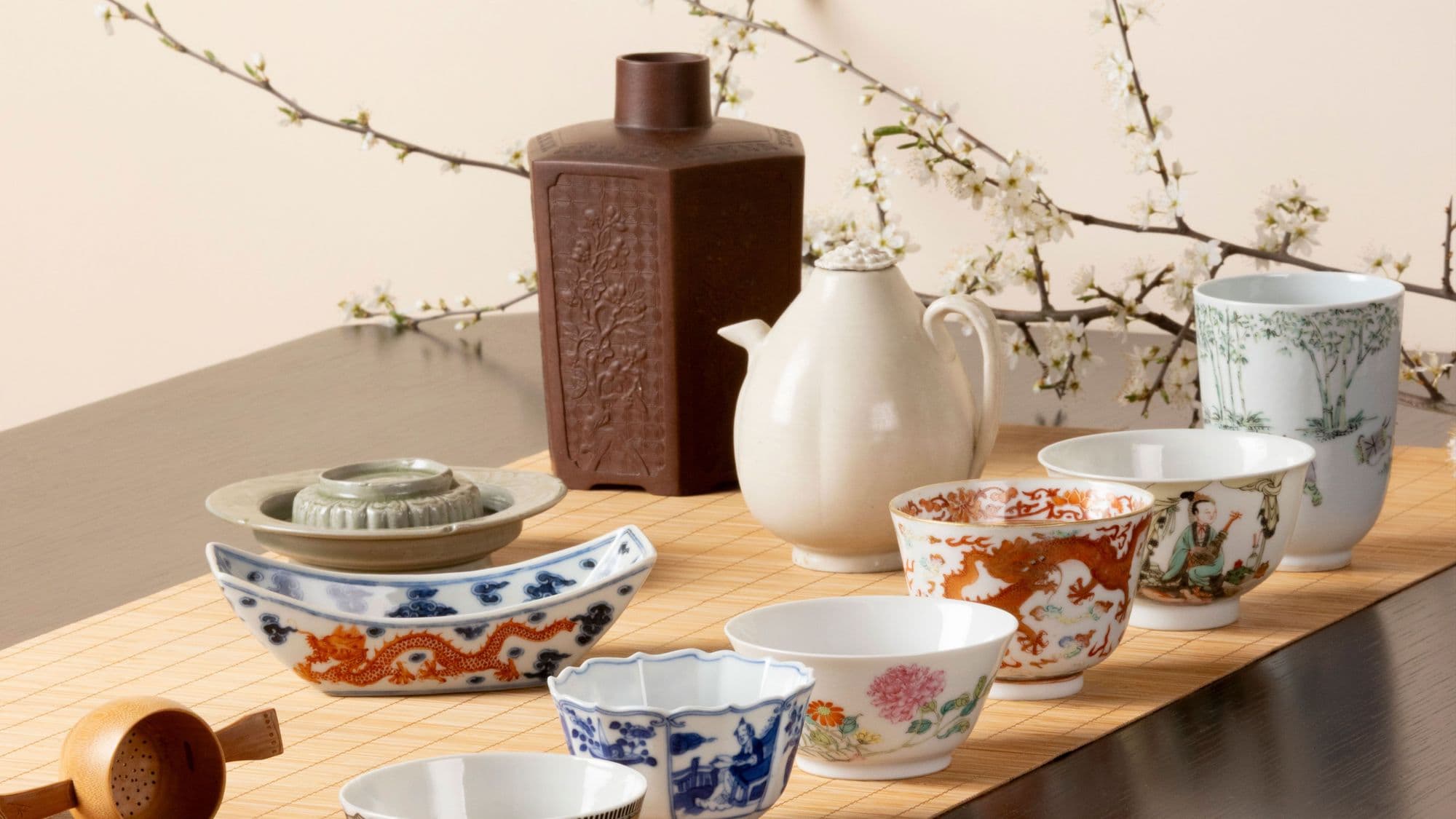
During the Song dynasty (960–1279), a refined and understated aesthetic took hold, shaped by Confucian ideals and the flourishing culture of tea connoisseurship. Among the most distinctive wares of this period are Ding wares, whose elegant forms and restrained decoration exemplify both technical ingenuity and the philosophical sensibilities of the age.
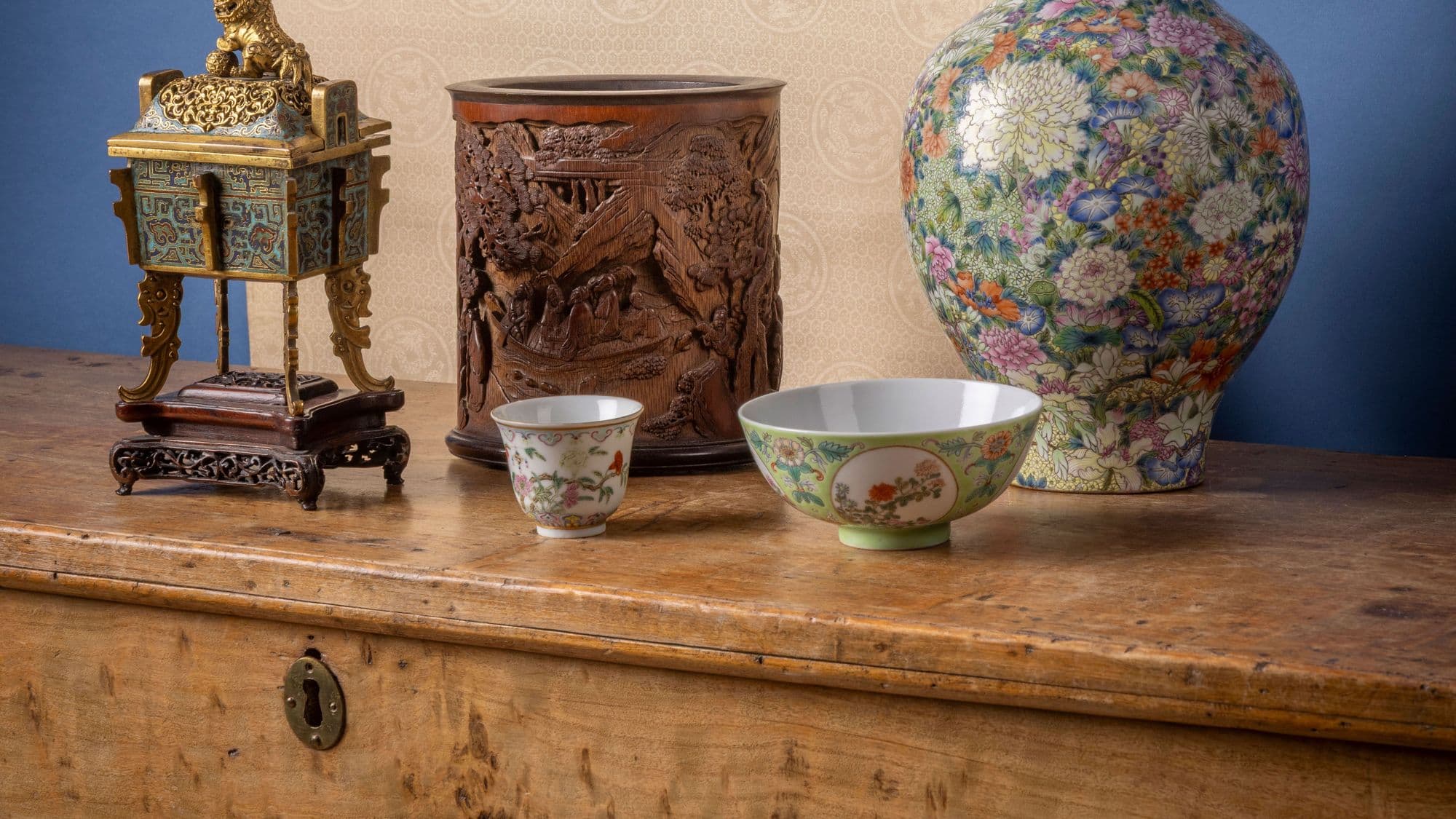
During the Ming and Qing dynasties (1368–1911), porcelain production reached new heights of technical mastery and visual sophistication. Artisans developed an increasingly rich repertoire of forms and colour palettes to satisfy imperial commissions, domestic markets, and international demand. Underglaze blue and copper-red wares, for example, embody the refined elegance of drinking culture, where delicacy of form and intricate ornamentation converge. At the same time, objects produced for export reveal dynamic cultural exchanges, demonstrating the far-reaching influence of Chinese ceramic traditions across East and Southeast Asia.
Decoration on drinking vessels often conveys the aspirations of their users. In Chinese culture, the dragon - long associated with power and auspicious authority - appears prominently, rendered in a variety of techniques from subtle anhua designs to boldly enamelled surfaces.
Other auspicious motifs are also widely represented. The Eight Buddhist Emblems, for instance, reflect spiritual symbolism and ritual significance, while floral motifs convey a sense of timeless elegance. Animal decorations offer more distinctive expressions, from lively depictions of birds to aquatic creatures, each demonstrating inventive artistry and a keen observation of the natural world.
From the elegant restraint of the Song dynasty to the vibrant and innovative polychrome designs of the Qing, Chinese tea and wine vessels evolved far beyond their utilitarian origins to become refined expressions of artistic imagination. Their changing styles mirror the broader trajectory of Chinese cultural history, shaped by an enduring interplay between inherited tradition and creative innovation, a legacy that continues to captivate both connoisseurs and scholars.