

Lot 165
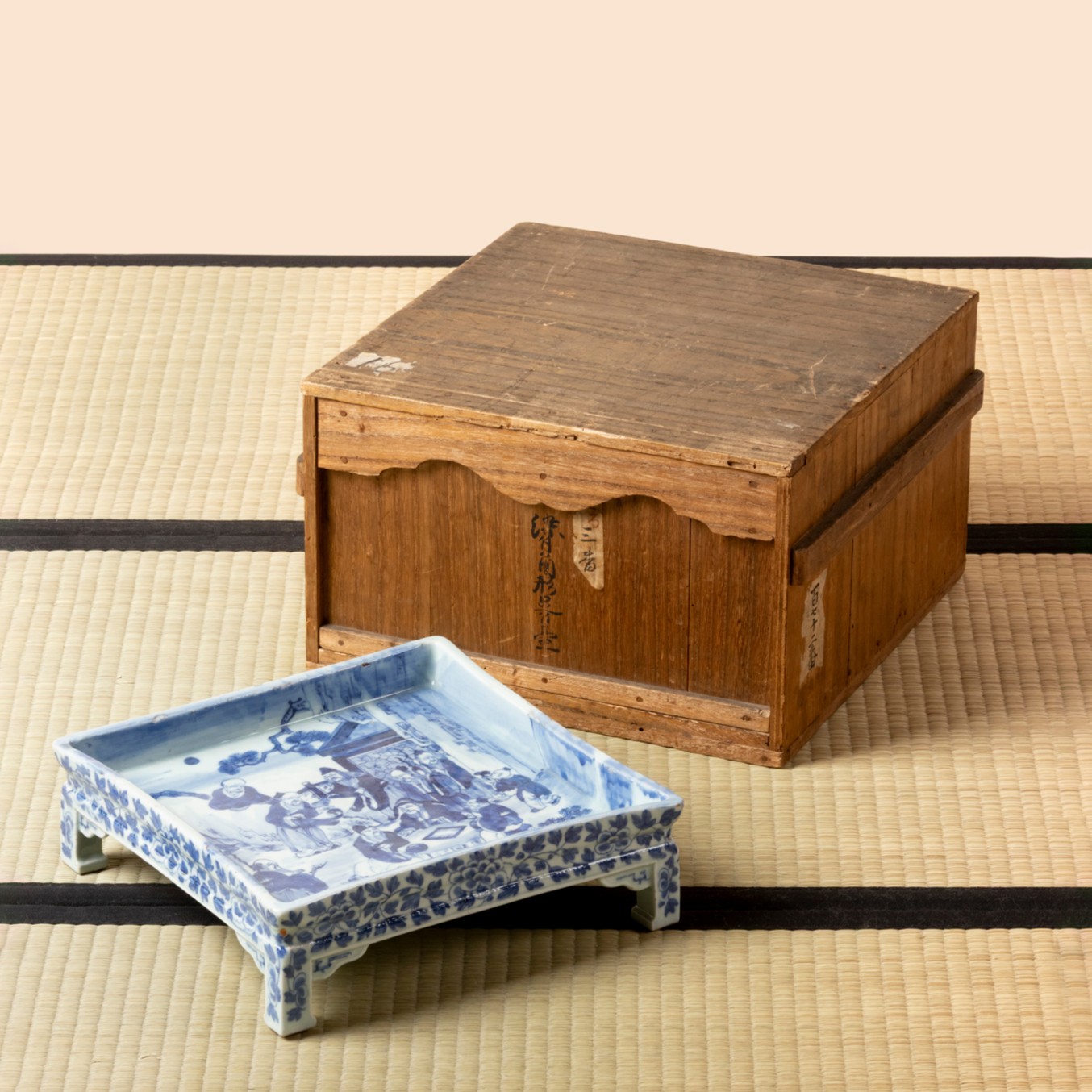
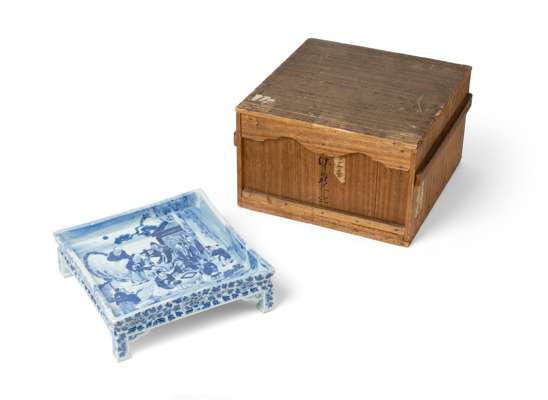
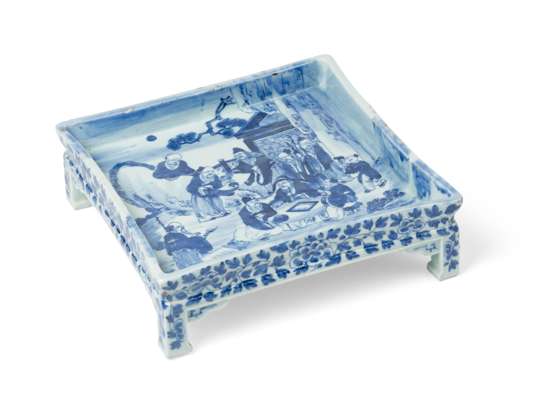
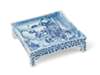
CHINESE BLUE AND WHITE SQUARE TEA TRAY
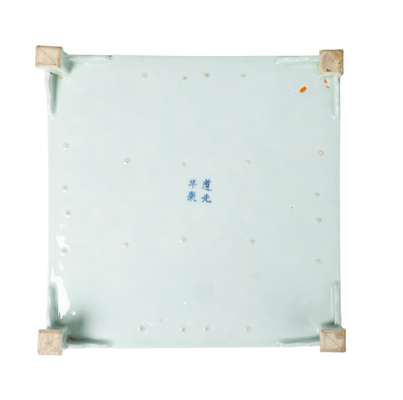
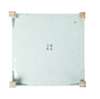
QING DYNASTY, DAOGUANG MARK AND OF THE PERIOD

Auction: 15 May 2026 from 10:00 BST
Description
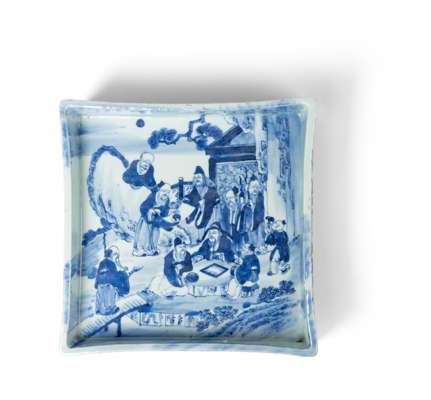
清道光款及年代 青花道教群仙圖方形茶拖盤 共箱
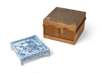
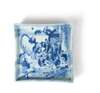
supported on four short legs, the waisted sides decorated with scrolling peonies, the interior painted with Daoist immortals involved in various pursuits in outdoor setting, including playing chess, appreciating a scroll painting with taiji motif and so on, together with a Japanese wooden tomobako box, the inner side of the cover inscribed ‘19th year of Meiji period’, corresponding to 1886AD
Dimensions
23.7cm x 23.7cm x 7.5cm
Provenance
J.A.N. Fine Art, London
倫敦骨董商J.A.N. Fine Art
Footnote
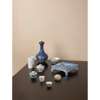
This finely made blue and white tea tray was produced at Jingdezhen kiln in China for orders from Japan. Chinese tea customs were introduced in Japan around the 12th century, the social ritual of tea spread among eminent monks at Zen temples, samurai families, and other members of the upper class. For these early practitioners of chado (‘the Way of Tea,’ also known as chanoyu, ‘hot water for tea’), the display and use of Chinese artworks and ceramics were an essential part of tea gatherings. Chinese artworks and ceramics were an essential part of tea gatherings; by using precious and exquisite Chinese objects (karamono) to decorate their tearoom and serve tea, a host could demonstrate their refined taste and prestige.
A comparable square tea tray painted with landscape in underglaze blue, the base with a four-character Jiaqing mark and dated to the Qing dynasty 18th-19th century, is in the collection of the Kyoto National Museum, museum no. GK174.
[cp1]
這件精緻的青花茶托盤,是中國景德鎮窯為日本訂單所燒製。中國的茶道習俗約於12世紀傳入日本,茶會的社交儀式在禪寺的高僧、武士家族及其他上層階級成員之間流傳開來。對於這些茶道(chado,亦稱 chanoyu,意為「茶の湯」)的早期實踐者而言,展示與使用中國藝術品及陶瓷是茶會中不可或缺的一部分。藉由在茶室中陳列珍貴精巧的中國器物(karamono,唐物)並用來奉茶,主人得以展現其高雅品味與威望。
一件與此相似、繪有青花山水紋樣的方形茶托盤,底部書「嘉慶年製」四字款,定為清代十八至十九世紀,藏於京都國立博物館,館藏編號 GK174。
[cp1]