

Lot 166
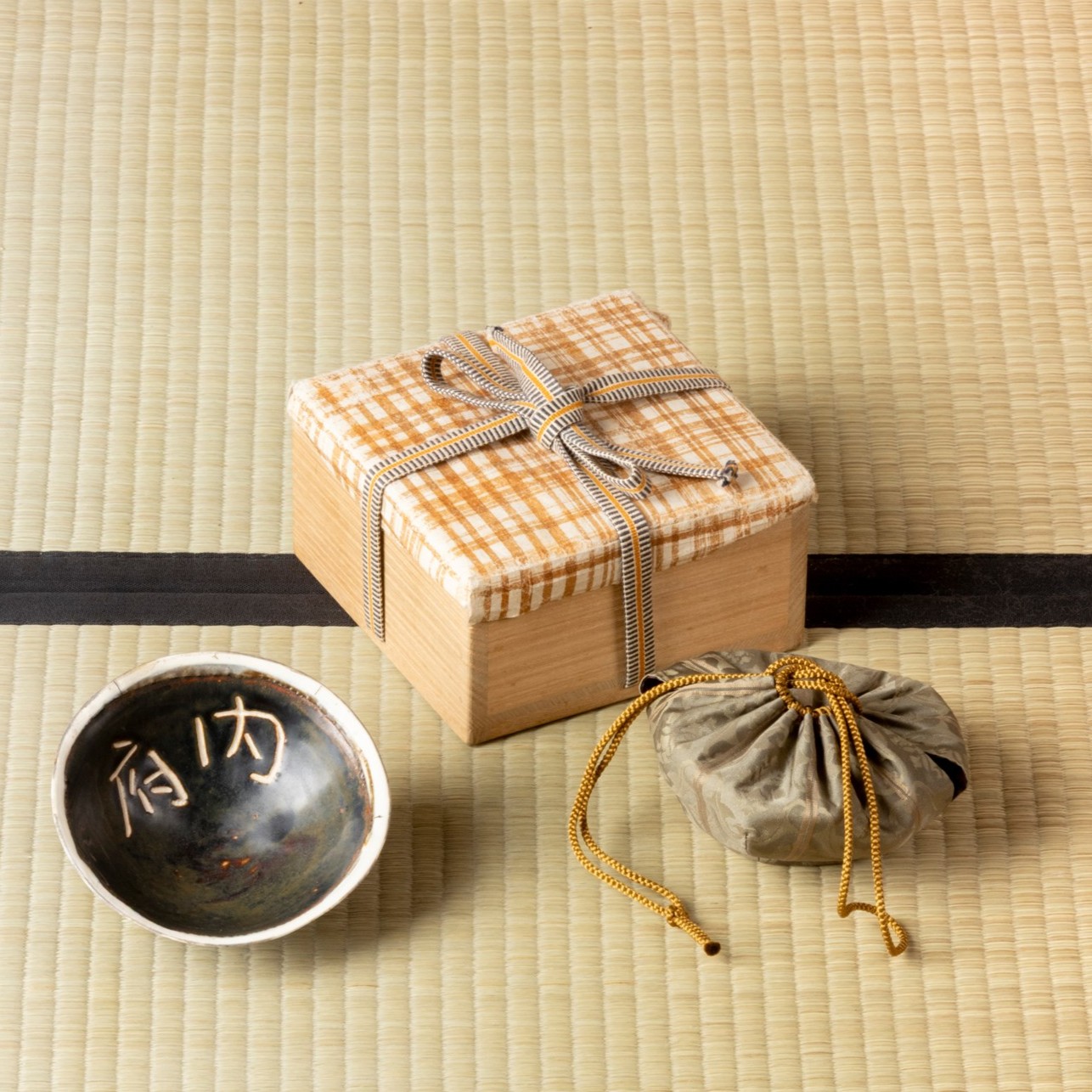
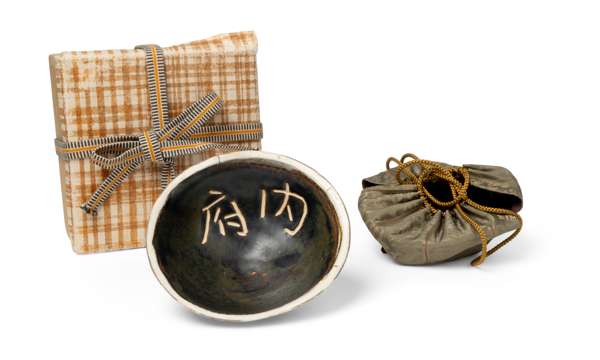
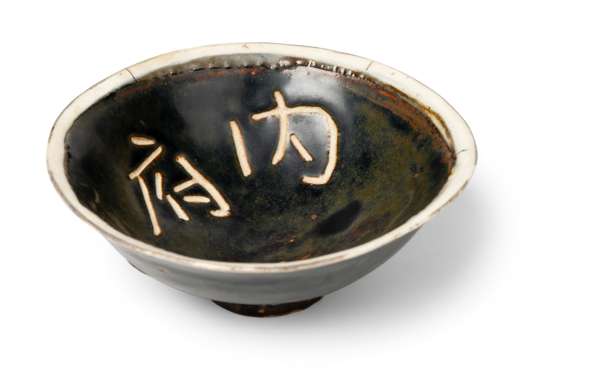
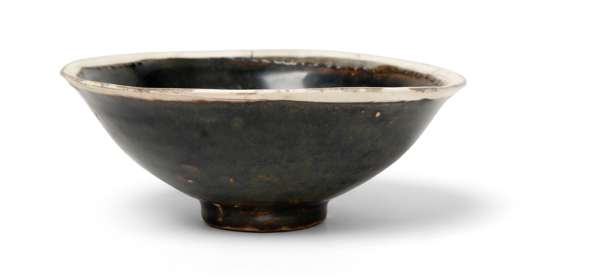
VERY RARE CHINESE BLACKISH-BROWN-GLAZED WHITE-RIMMED 'NEI FU' CONICAL TEA BOWL
SONG DYNASTY, 12TH-13TH CENTURY
Auction: 15 May 2026 from 10:00 BST
Description
宋 「內府」刻款 稀有白覆輪斗笠形茶盞 仕覆 共箱
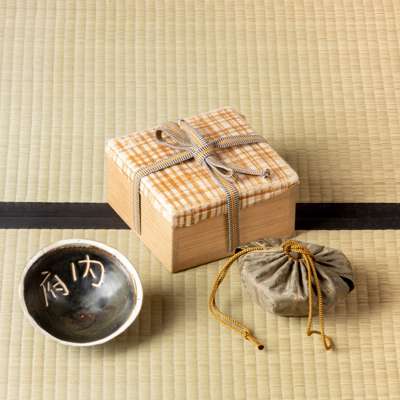
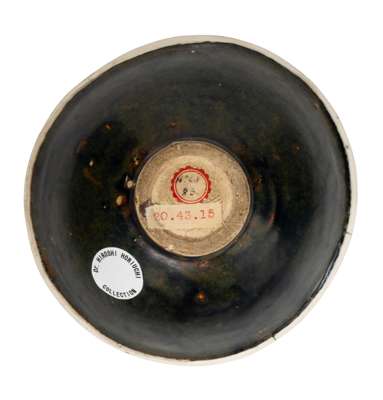
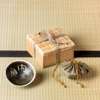
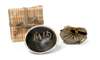
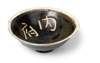
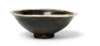
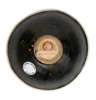
of conical form, rising to a slip-covered mouth rim, both the interior and exterior covered in an iron-rich black glaze, stopping short of the buff coloured biscuit foot rim, the interior carved with two characters, ‘Nei Fu’ (inner palace) showing the original buff stoneware body, with Japanese tomobako wooden box and cotton shifuku
Dimensions
11.8cm diameter
Provenance
Private collection; acquired from Christie's New York, 22 Sep 2023, lot 1014;
Collection of Dr. Hiroshi Horiuchi (with circular label);
Sen Shu Tey, Tokyo;
Myron S. (1906-1992) and Pauline Baerwald (1910-2000) Falk Collection, New York;
Mathias Komor, New York.
私人收藏;購自紐約佳士得,2023年9月22日,拍品號1014;
堀內洋志博士收藏(附圓形標籤);
千秋庭,東京;
福克收藏(第二部分):中國及日本工藝品;紐約佳士得,2001年10月15日,拍品445。
紐約麥倫・S・福克(1906-1992)與寶琳・貝爾瓦爾德・福克(1910-2000)夫婦收藏;
紐約馬蒂亞斯・科莫爾。
Footnote
This extremely rare tea bowl is unusual for its white rim design and the ‘Nei Fu’ mark on the interior. The white-rimmed tea bowl originated in the Song dynasty, emerging in response to the popular 'tea competition' culture. Its defining feature is a ring of white glaze at the rim, imitating costly metal mounts, while the rest of the body is covered in black glaze. The striking black-and-white contrast facilitated the observation of whipped tea foam and embodied Song aesthetics of minimalist beauty and Zen philosophy. This type of tea bowl was mainly produced in the Cizhou kiln group of northern China (such as Dangyangyu kiln) as well as the Jizhou kiln in the south. Examples using the white-rim decorative technique have been found among ceramics excavated from the Guantai kiln site of the Cizhou kilns, dating from the late Northern Song dynasty to the Yuan dynasty. Later transmitted to Japan by Zen monks, they were venerated as 'Hakufukurin temmoku' and became treasured Tang objects in the Japanese tea ceremony.
Porcelains bearing the 'Nei Fu' mark are extremely rare. Those archaeologically excavated are mostly meiping vases or large jars of the Yuan dynasty; based on current research, this piece is the only known tea bowl example. In Ching-fei Shih’s article ‘Imperial Use of Porcelain under the Mongols’, in Taida Journal of Art History vol. 15, 2003 (9), pp. 183-4, she points out that the term 'Nei Fu' was often used informally during the Yuan dynasty to refer to the imperial storehouses, and porcelains marked with 'Nei Fu' were likely intended for court use. In her article, she lists several examples and notes that these 'Nei Fu'-marked wares are mostly from the Cizhou kiln tradition, including two meiping vases discovered at the Houyingfang site: one white porcelain meiping with the 'Nei Fu' mark painted in iron pigment on the shoulder (now in the collection of the Capital Museum), and another black-glazed meiping with an incised 'Nei Fu' mark showing the original buff stoneware body. It is worth noting that the present tea bowl, like the latter meiping vase, is also a black-glazed ware with an incised 'Nei Fu’ mark showing the original buff stoneware body.
There are also Ming dynasty porcelains bearing the ‘Nei Fu’ mark, which may represent a continuation of the Yuan dynasty ‘Nei Fu’. These examples are sweet-white glazed meiping vases dated to the Yongle period of the Ming dynasty, the ‘Nei Fu’ mark inscribed in underglaze blue: one in the National Palace Museum, Taipei, museum no. Gu Ci 012840; and a pair in The Museum of Oriental Ceramics, Osaka, registration no. 00704-1. Another example is a large turquoise-glazed jar in the Sir Percival David Foundation collection at the British Museum, bearing the inscription ‘Nei Fu Gong Yong’ (‘For use in the Inner Palace’), dated to the 15th–16th century of the Ming dynasty, registration no. PDF.518.
這件極為罕見的茶碗,因其白口邊飾及內壁的「內府」款識而顯得與眾不同。白覆輪茶盞源於宋代,因應當時盛行的「鬥茶」風氣而生。其特徵為口沿飾有一圈白釉,模仿昂貴的金屬鑲邊工藝,其餘器身則施黑釉,黑白分明,既便於觀察茶湯泡沫,亦體現宋人極簡美學與禪宗思想。此類茶盞主要產自北方磁州窯系(如當陽峪窯)及南方吉州窯, 如北宋晚期至元代的磁州窯觀台窯址發掘瓷器中均有發現運用白覆輪裝飾技法。後隨禪僧東傳日本,被尊稱為「白覆輪天目」,成為日本茶道中備受珍視的唐物名品。
帶有「內府」款的瓷器極為稀少,考古出土多為元代梅瓶或大罐,茶碗據目前研究所知僅本品一例。施靜菲在其文章〈蒙元宮廷中瓷器使用初探〉,國立臺灣大學美術史研究集刊,第15期,2003 (9),頁183-4指出,「內府」一詞在元代常非正式地用來指稱皇家庫房,而帶有「內府」款的瓷器可能為宮廷用器。在施靜菲的文章中列出數例,並指出這些有「內府」款的作品多為磁州窯系的作品,包含在后英房遺址中發現的兩件梅瓶:一件白瓷梅瓶肩上有鐵繪「內府」款(現藏於首都博物馆)); 又一件黑釉梅瓶有露胎「內府」刻款。值得注意的是,本件茶碗與後面一件梅瓶相同,同為黑釉露胎「內府」刻款。
另有明代「內府」款瓷器,或爲元代「内府」的某种延续:三件定年明永樂的甜白釉梅瓶,以青花書「內府」款,一件現藏於台北故宮博物院,館藏號:故瓷012840;一對藏於大阪市立東洋陶瓷美術館, 登錄編號:00704-1。英國大英博物館大衛德基金會藏一件孔雀藍釉大罐,銘「內府供用」款,定年明代15-16世紀,館藏號:PDF.518。
[cp1]