From the Isle of Man to Liberty of London
Born on the Isle of Man in 1864 to Scottish parents, Knox spent his formative years immersed in the island’s remarkable landscape and history. Its surviving Neolithic monuments, Celtic crosses and layers of Christian and Viking heritage would become enduring sources of inspiration.
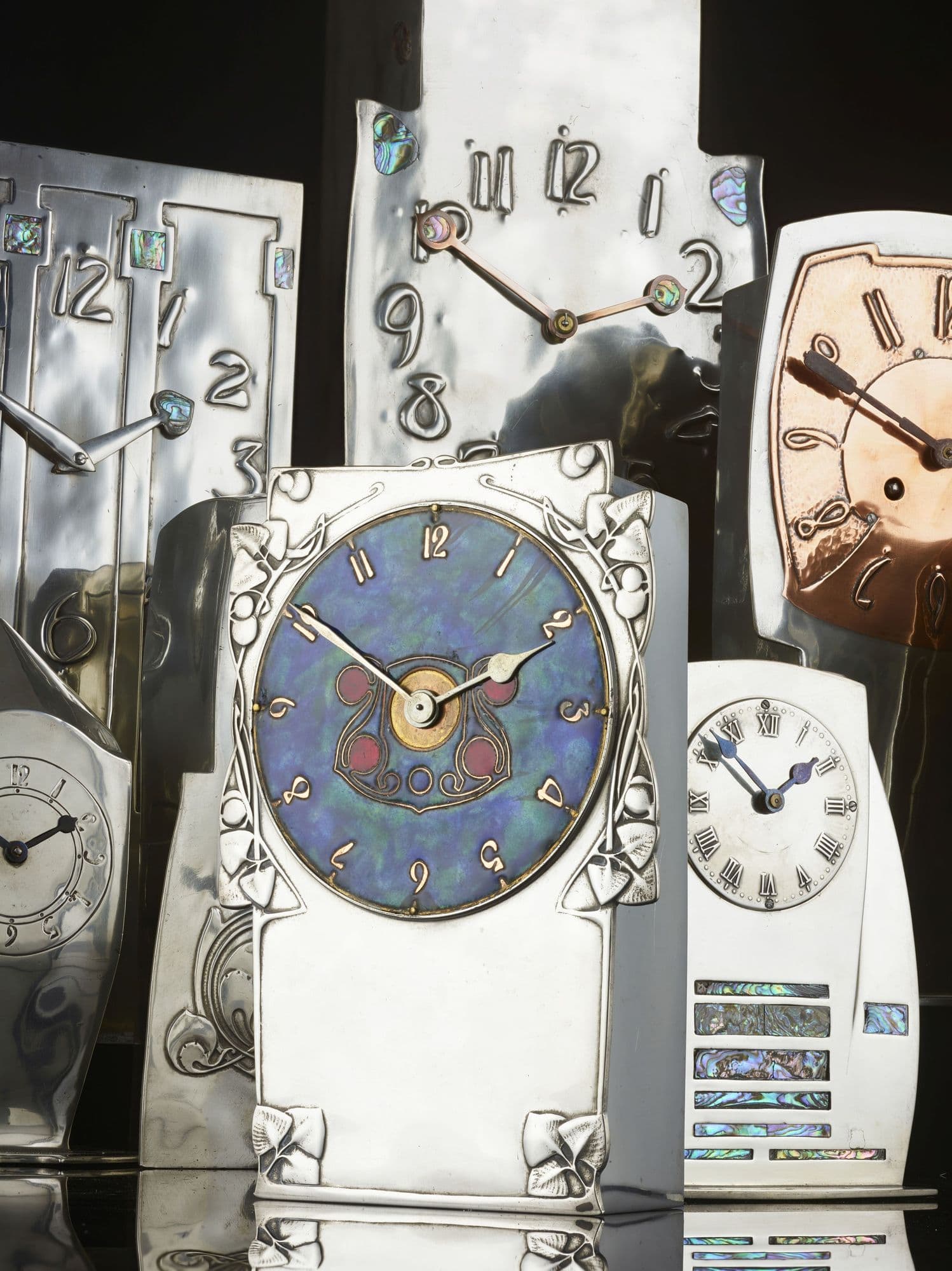
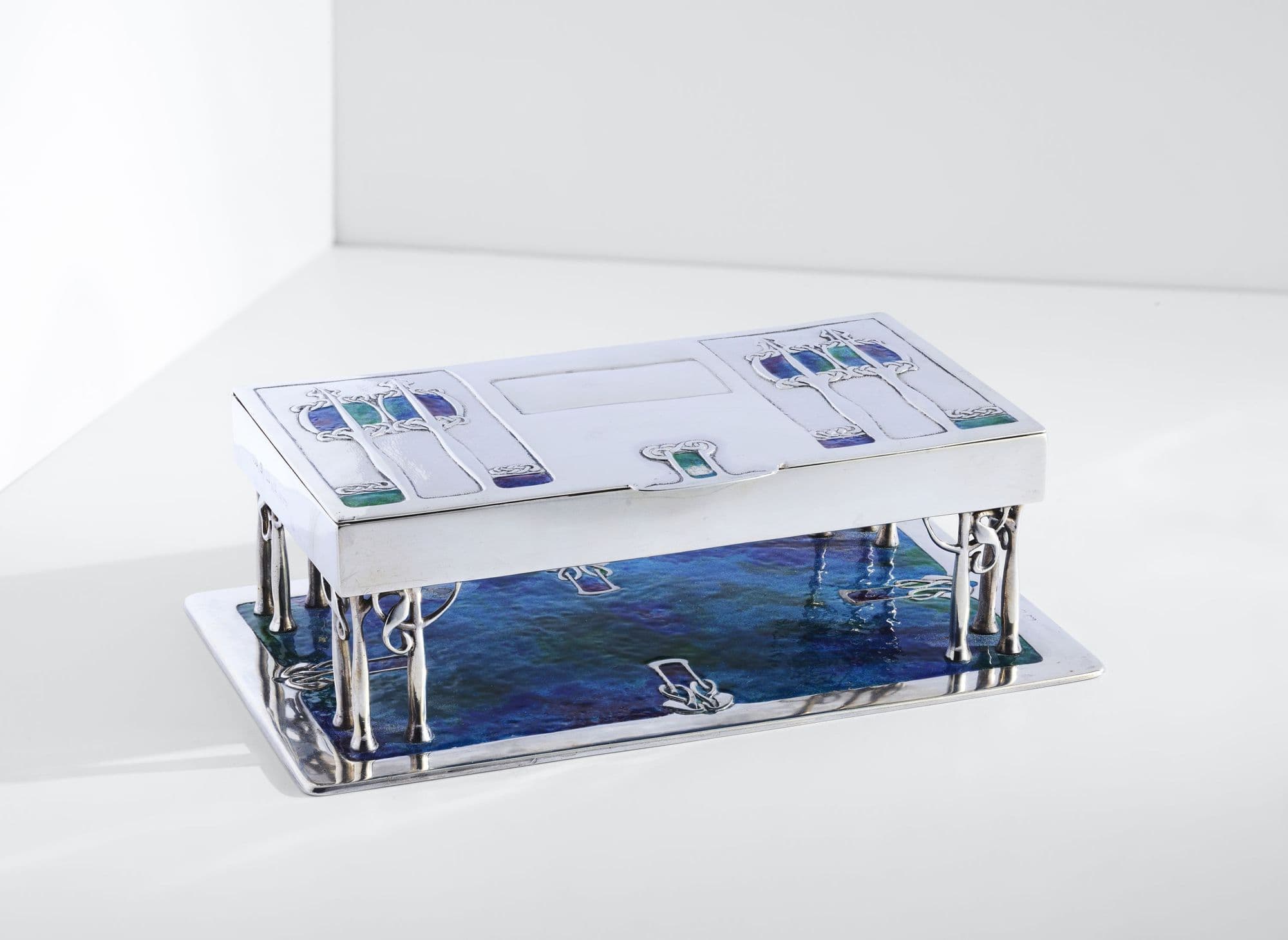
By the late 1890s Knox had established a connection with the London retailer Liberty & Co. His arrival coincided with renewed enthusiasm for Celtic art and design in Britain, and he became a principal designer for two ranges through which Liberty responded to this growing interest: Cymric and Tudric.
Launched in 1899, Cymric was Liberty’s prestigious silver range. Its name, meaning “Welsh”, evoked Britain’s Celtic past, while its objects combined traditional craftsmanship with strikingly contemporary design. Pieces were individually hand-finished and many designs were produced only in relatively small numbers.
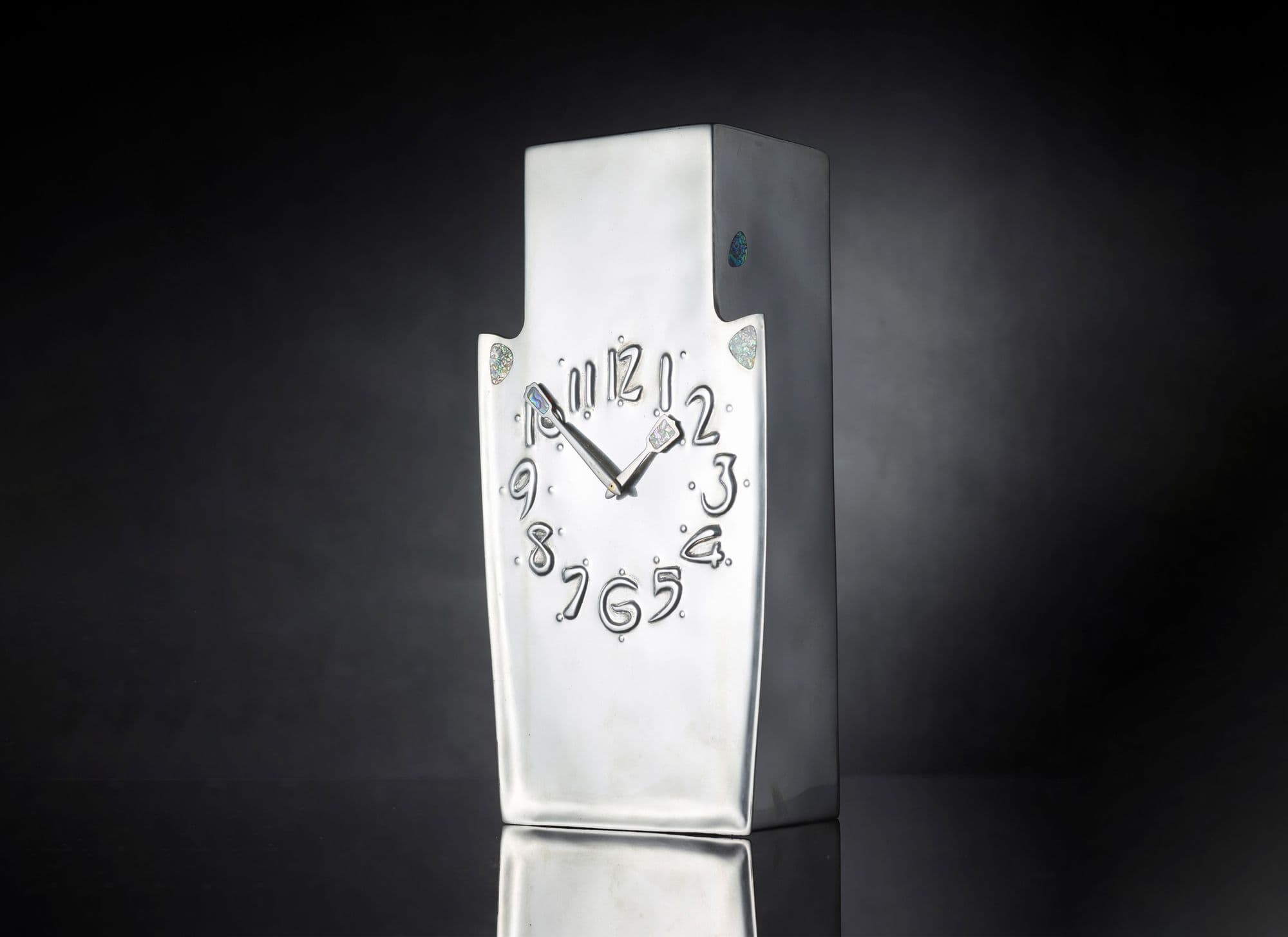
Tudric followed in 1901. Primarily executed in pewter, the use of moulds allowed these designs to be produced more widely and at a more accessible price point. Like Cymric, the range looked towards the past without simply reproducing it. Knox transformed historical motifs into an increasingly abstract and modern vocabulary.
Although his association with Liberty ended in 1912, the designs Knox created during this period established his lasting reputation. His work occupies a fascinating position at the intersection of Arts & Crafts, the Celtic Revival, Art Nouveau and the emerging language of twentieth-century Modernism.