Lot 273
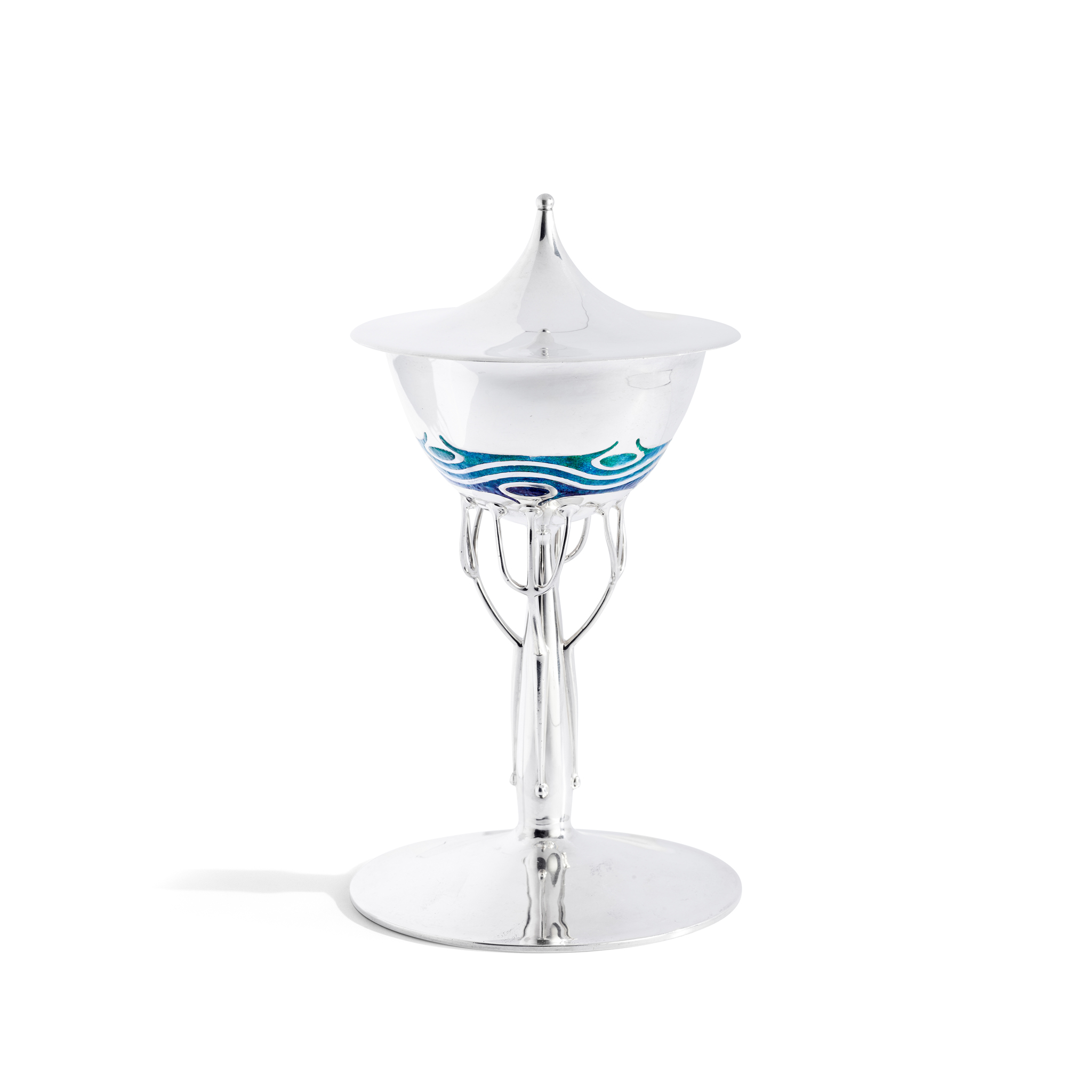
ARCHIBALD KNOX (1864-1933) FOR LIBERTY & CO., LONDON
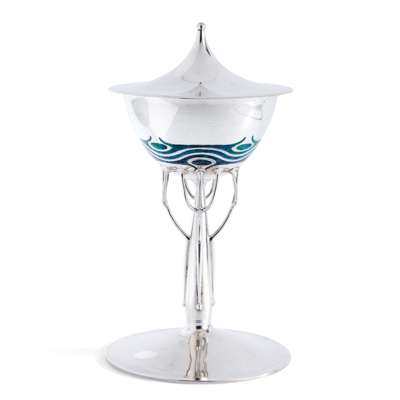
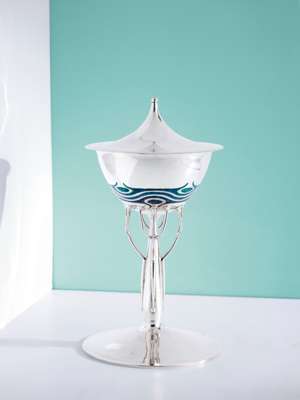
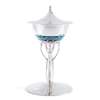
RARE 'CYMRIC' COVERED CUP, 1900
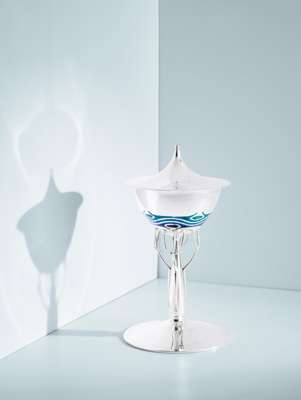


Auction: Design Since 1860 Day Two | Thurs 15th October | Lots 246 to 524
Description
silver, enamel, model 251, stamped to base CYMRIC/ L&CO, hallmarked Birmingham 1900, further hallmarked to cover Birmingham 1900, total weight 704g
Dimensions
26.5cm high, 14.8cm diameter at base
Footnote
Exhibited: Manx Museum, Douglas, Isle of Man Knox: Order & Beauty, 5th April - 1st March 2026
Literature: Der Moderne Stil, Julius Hoffman, 1903, plate 91 illus.
Levy M. Liberty Style The Classic Years: 1898-1910, Rizzoli 1986, p. 27 illus.
Martin S. Archibald Knox, Academy 1995, p. 78 illus.
Tilbrook A. The Designs of Archibald Knox for Liberty & Co., Richard Dennis 2000, p. 140, fig. 124 illus.
Martin S. Archibald Knox, ArtMedia Press 2001, pp. 40 and 179 illus.
Manx National Heritage and The Archibald Knox Forum Knox: Order & Beauty, exhibition catalogue 2025, p. 30 where this covered cup is illustrated.
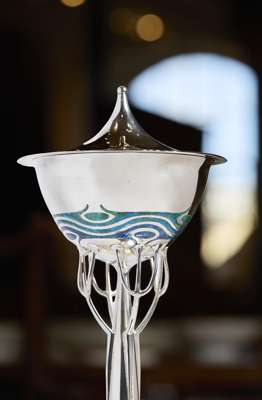
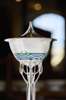
Knox’s unique interpretation of the rich design landscape within which he sat is played out into his early 20th century Liberty designs. This covered cup is one of only a handful executed of this magnificent object, crafted by hand rather than a production piece. The bowl of the cup is ethereally connected to the stem by slender silver branches, creating a sense of delicate elongation aligned with the Art Nouveau style. The enamel however has an abstracted Celtic spirit; the familiar knot form translated into an unravelled series of waves and dots.
The Liberty convention of not naming their designers in their catalogues and on their work resulted in limited contemporary recognition. Interestingly Knox was credited as the designer of this covered cup when it was illustrated in the 1903 Der Moderne Stil, perhaps the only occasion he was recognised in this way.
Archibald Knox
Designer Archibald Knox has become synonymous with early 20th century pieces by London based retailers Liberty & Co. Born on the Isle of Man in 1864 to Scottish parents, he spent his early years enchanted by and immersed in the rich history and striking iconography of his island home. By the late 1890’s Knox had moved to London, at which point his association with Liberty & Co. had its genesis, his designs drawing from the combined Neolithic, Celtic, Christian and Viking archaeology of his Manx upbringing.
Knox’s coming of age coincided with an increased demand for Celtic design motifs, following the discovery of two ancient Celtic art treasures in the 1880’s. It was as part of this Celtic Revival movement that Liberty & Co. launched two new ranges, Knox being a principal designer for both.
The first range was Cymric, launched in 1899 as the premium line and executed in silver. The name Cymric means ‘Welsh’, drawing from and presumably aiming to capitalise on the contemporary renewed interest in Britain’s Celtic roots. Cymric designs were individually hand-finished by craftsmen and were each only realised a small number of times.
In 1901 Liberty’s added their second Celtic inspired range, Tudric. Tudric pieces were primarily composed of the more affordable pewter and being produced in iron moulds allowed for a greater number of each design to be made. The name Tudric has more obscured origins than its sister range. Tudric is reminiscent of Tudor, the English royal house, and the 6th century Welsh saint Tewdrig. Both reference historical, British identity, but the brand name is essentially a Liberty invention.
Knox’s association with Liberty’s ended in 1912, yet the enduring impact of his Cymric and Tudric ranges have seen him become regarded as a key figure in the rich tapestry of early twentieth design, his work encompassing Arts & Crafts, Celtic Revival, Art Nouveau and early Modernism.