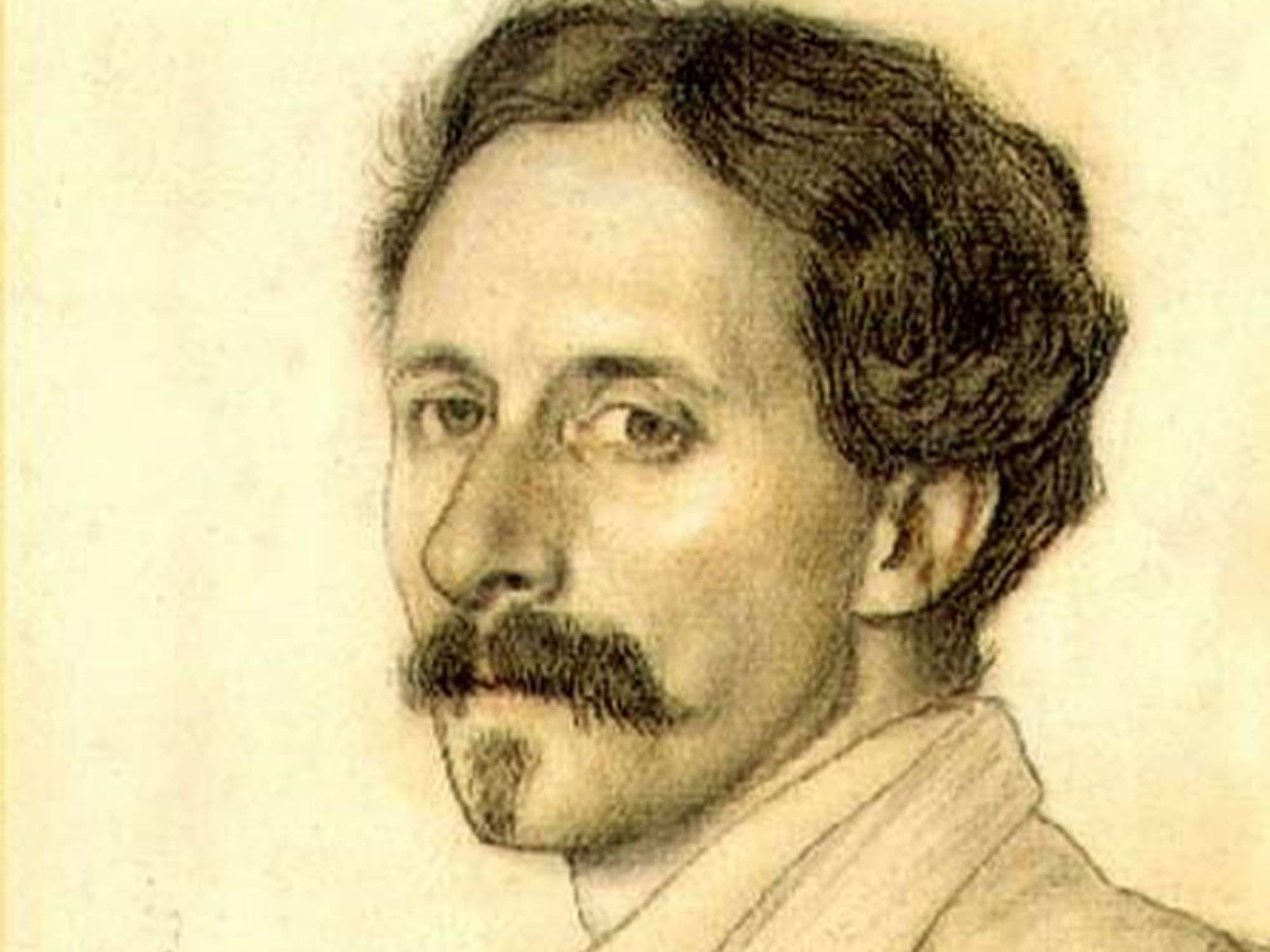
Born in Sheffield in 1873, Omar Ramsden graduated from the Sheffield School of Art in 1897. During his evening classes there he met Alwyn Carr, and both won four-year scholarships, initially causing a rivalry, the result of which was fantastic creativity. Following completion of their studies, and now good friends, they travelled to Europe, being exposed to and acquiring artistic inspiration in the process.
In February 1898, now back in London, they established a partnership and registered their mark at Goldsmith’s Hall. In their first year they won a prestigious open design competition to create a mace for the city of Sheffield, the proceeds from which enabled the opening of their Stamford Bridge Studios premises in Chelsea. In 1901 they moved to Albert Studios in Battersea before opening St Dunstan’s Studios in Fulham in 1905, the name taken from the patron saint of silversmiths.
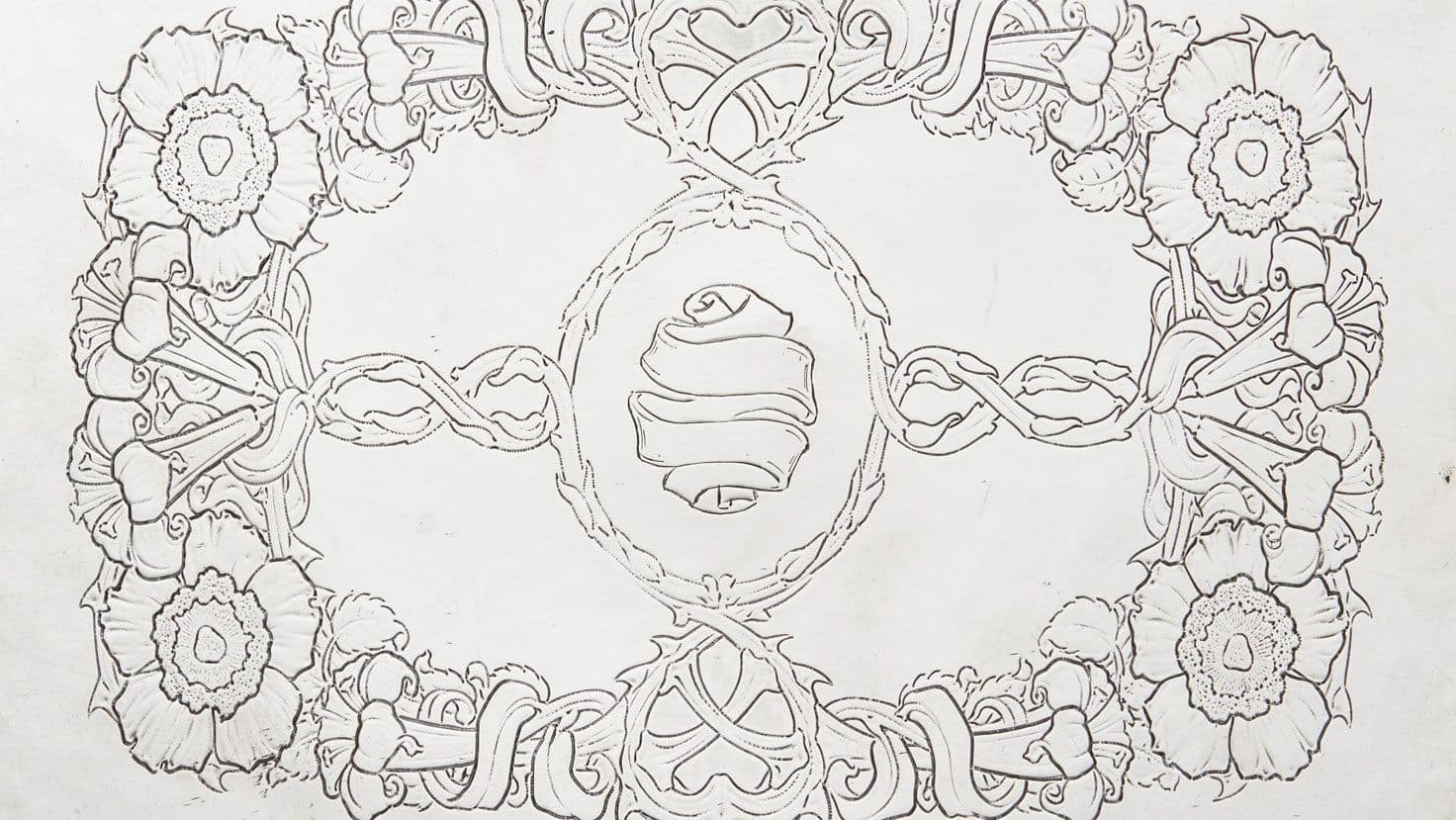
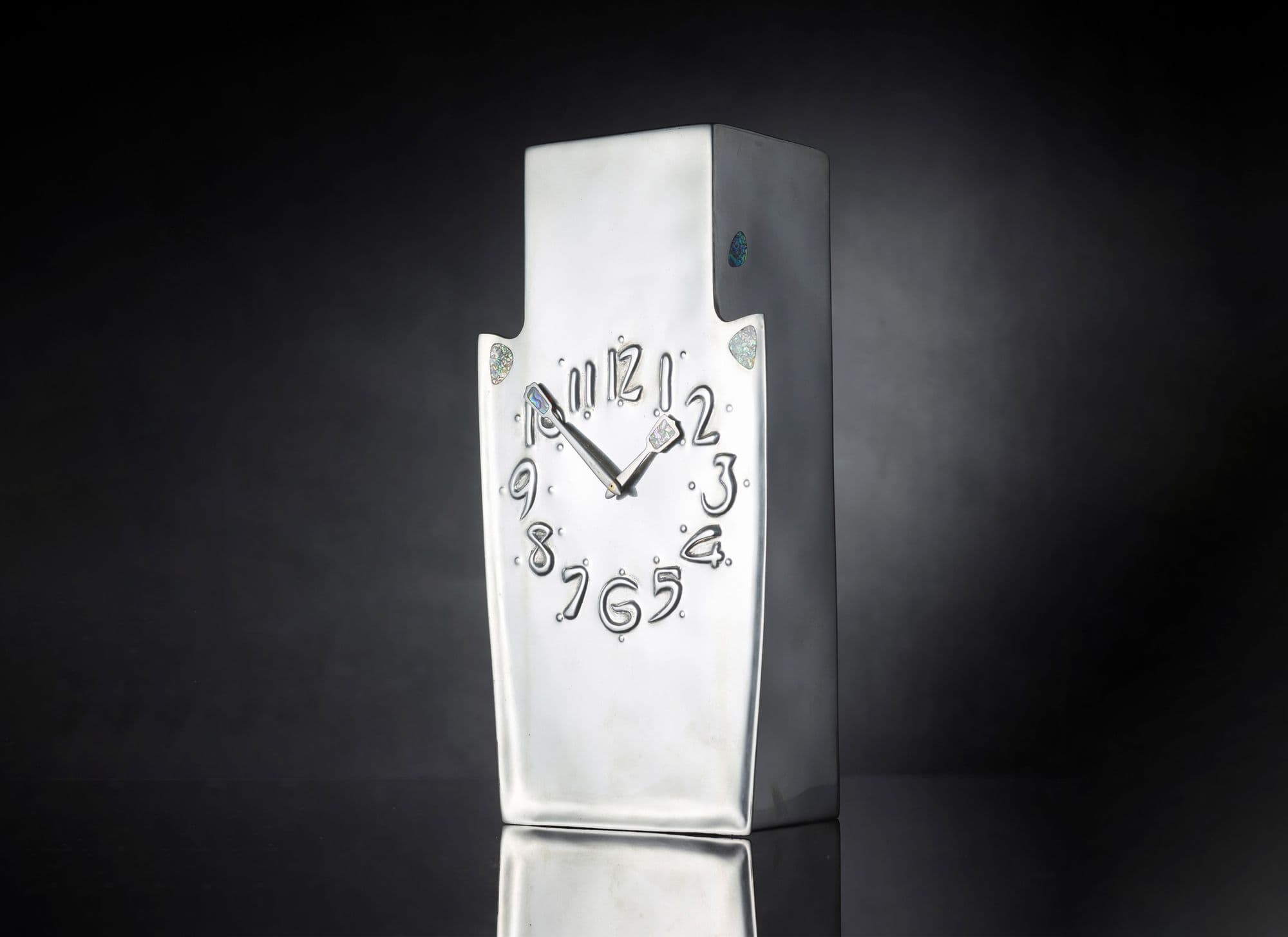
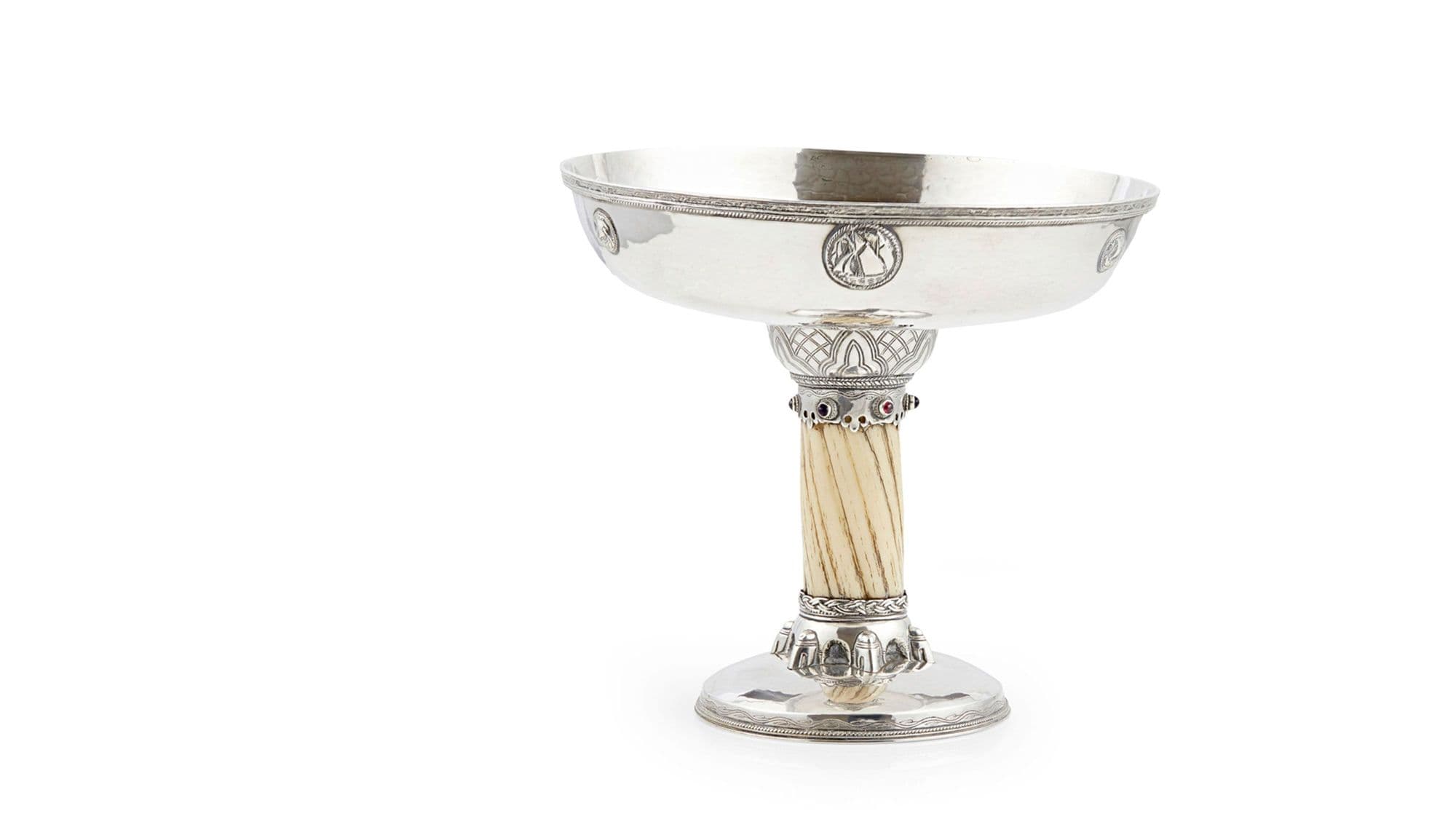
Producing Arts & Crafts silver which incorporated Celtic and medieval inspiration, their work marked a departure from the conservative designs of the Victorian era. The pair were at the forefront of design and marketing whilst the metalwork was carried out by workshop assistants. Such was their renown that the St Dunstan’s workshop became a fashionable location for London’s social elite to come and commission bespoke pieces from the sought-after designers and has even been compared to a salon in its convivial atmosphere.
The partnership was dissolved in 1919, but the pair remained lifelong friends. Ramsden carried on the running of the workshop whilst Carr continued in silver design and branched out into wrought iron. Ramsden continued working in his signature style, playfully signing many of his pieces ‘Omar Ramsden me fecit’, ‘Omar Ramsden made me’, just as medieval and renaissance artists had done before him.
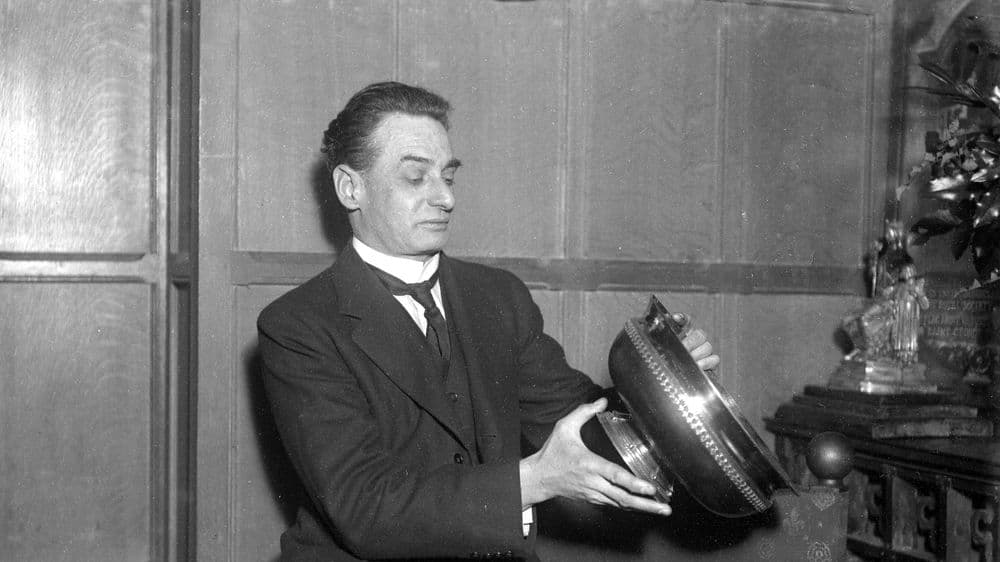
Illustrated: Omar Ramsden of St Dunstan's Seymour Place Fulham Alamy 2Y6K08B