The life of Alwyn Charles Ellison Carr is entwined with his better-known associate Omar Ramsden. Born in 1872, it was in 1890 at the Sheffield School of Art that they met, when Carr was undertaking evening classes.
Both were recognised for their talent, winning four-year scholarships from the institution, and initially a rivalry existed between the pair, the result of which was fantastic creativity. Following completion of their studies, and now good friends, they travelled to Europe, being exposed to and acquiring artistic inspiration in the process.
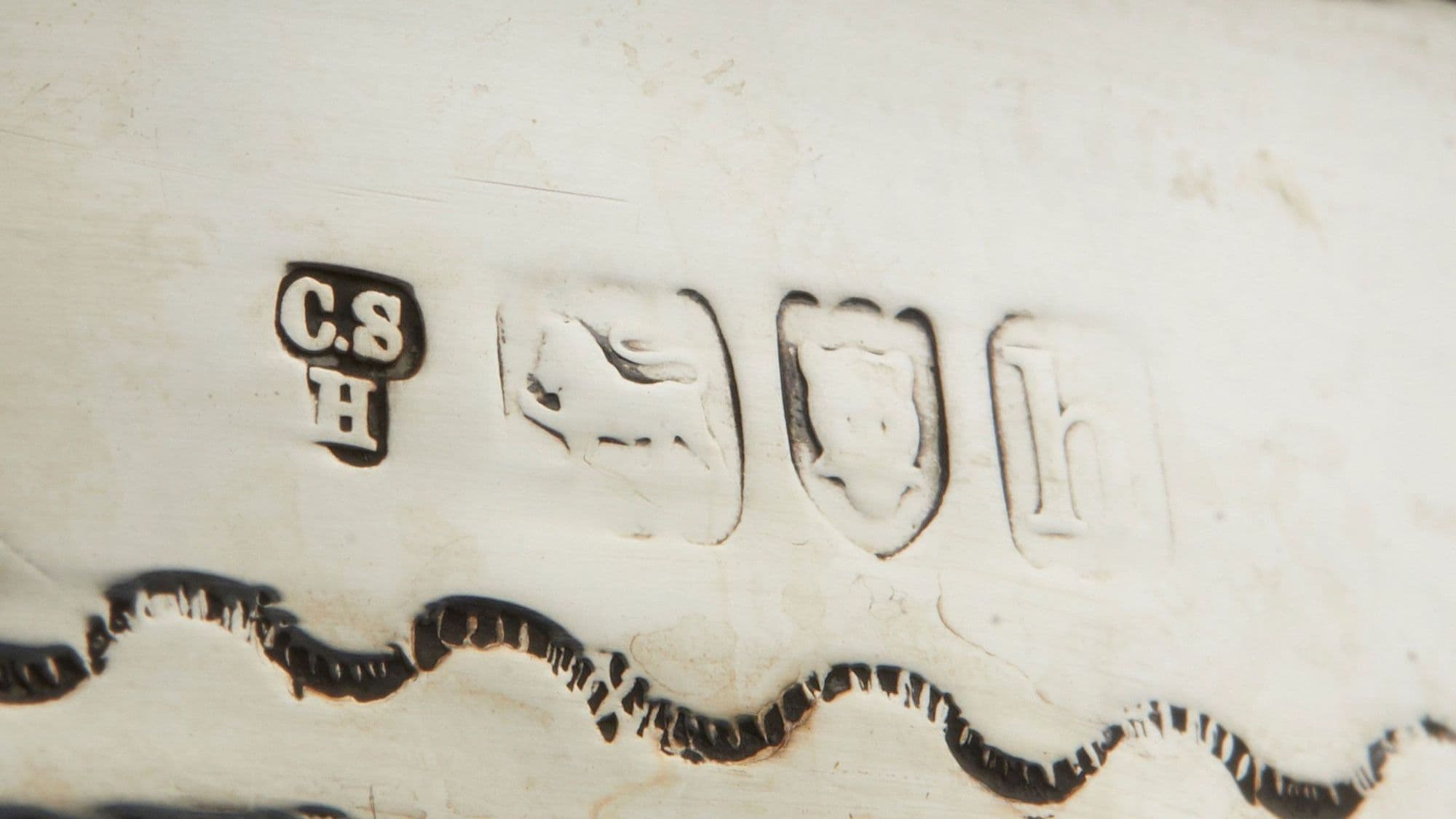
In February 1898, now back in London, they established a partnership and registered their mark at Goldsmith’s Hall. In their first year they won a prestigious open design competition to create a mace for the city of Sheffield, the proceeds from which enabled the opening of their Stamford Bridge Studios premises in Chelsea. In 1901 they moved to Albert Studios in Battersea before opening St Dunstan’s Studios in Fulham in 1905, the name taken from the patron saint of silversmiths.
Carr and Ramsden were at the forefront of design and marketing whilst the metalwork was carried out by workshop assistants. Both were adherents to the Arts & Crafts movement, with Carr’s work emphasising balance and proportion, his designs blending traditional more naturalistic elements with the innovative. He also combined silver with enamel. Such was their renown that the St Dunstan’s workshop became a fashionable location for London’s social elite to come and commission bespoke pieces from the sought-after designers and has even been compared to a salon in its convivial atmosphere.
The partnership was dissolved in 1919, with Ramsden carrying on the running of the workshop. Carr meanwhile continued in silver design and branched out into wrought iron, yet it is his pieces from the St Dunstan’s period for which he is held in highest regard.