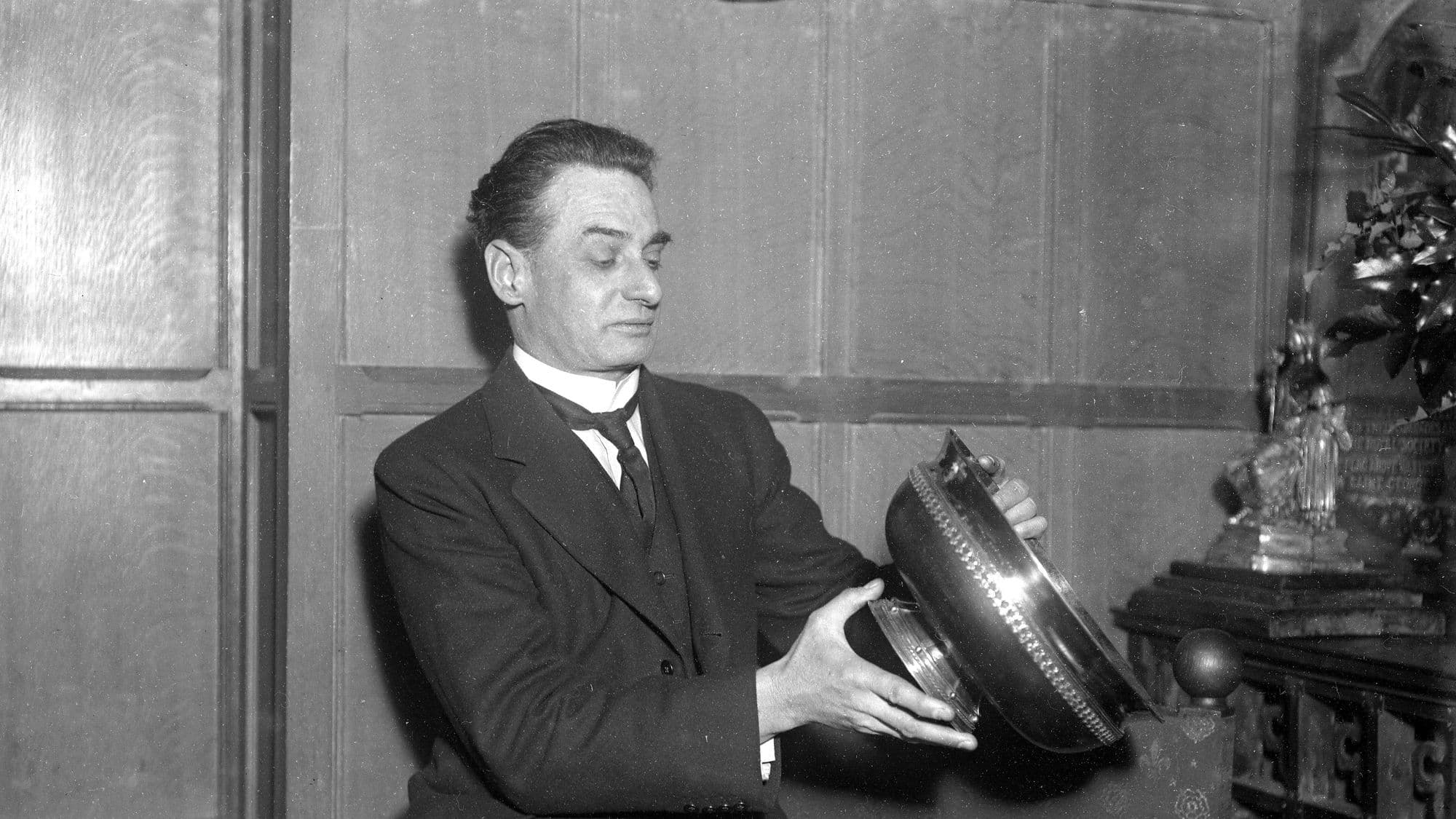
Charles Boyton was a fourth-generation silversmith working in London, his great-grandfather, also Charles, having registered his first mark in 1825.
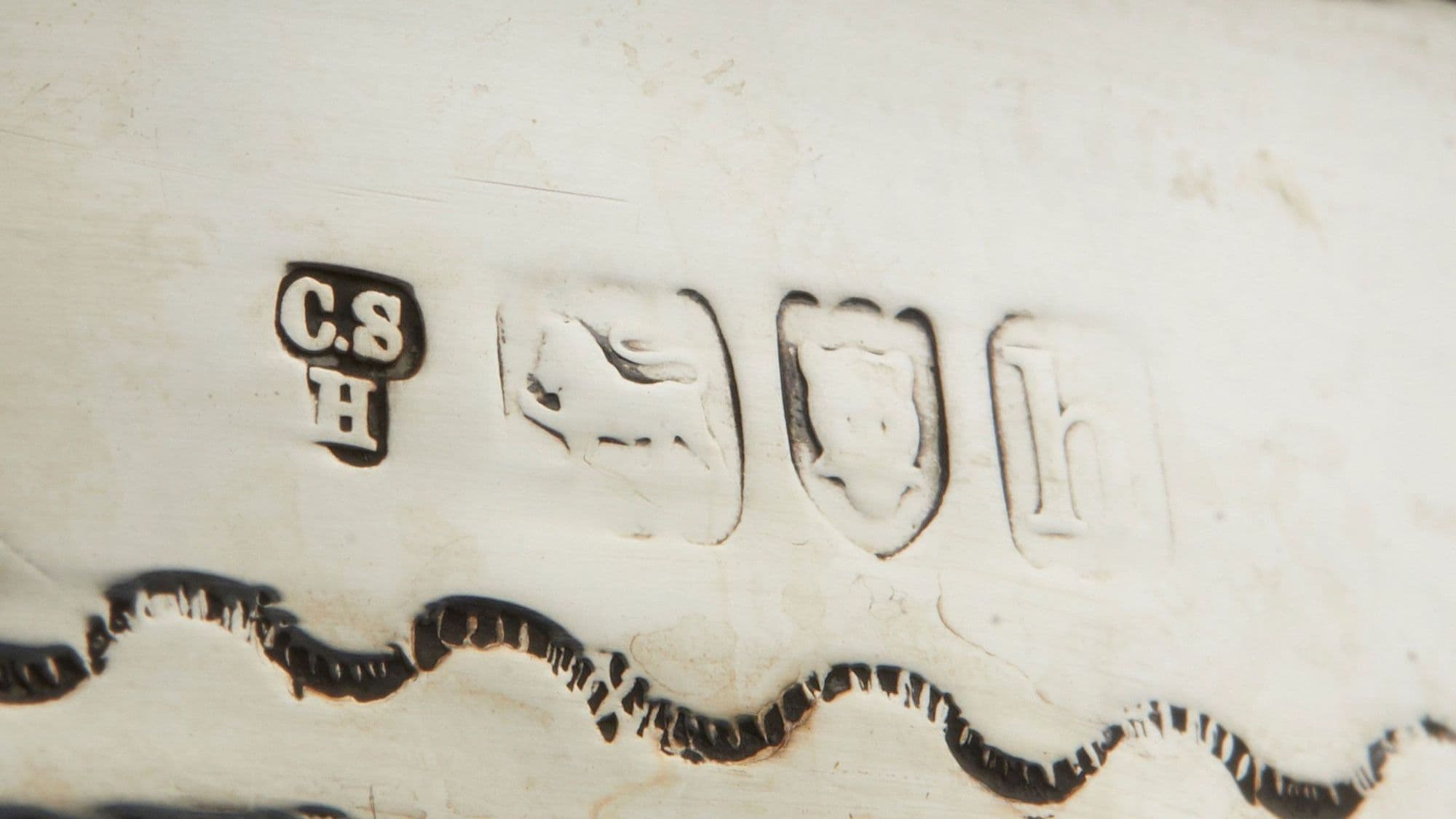
In 1919, under the founder’s great-grandson’s tenure, the company converted to the limited company Charles Boyton & Son Ltd. and became a wholesale manufacturer of electroplate and silver; their products were as diverse as surgical instrument cases and propellers. Economic difficulties following the Great Depression saw the creation of a new company under the same name Charles Boyton & Son Ltd. in 1933. The following year however Boyton left the firm and set up his own business in Marylebone Lane. It was from these premises that Boyton produced pieces stamped with his mark CB and engraved with a facsimile signature.
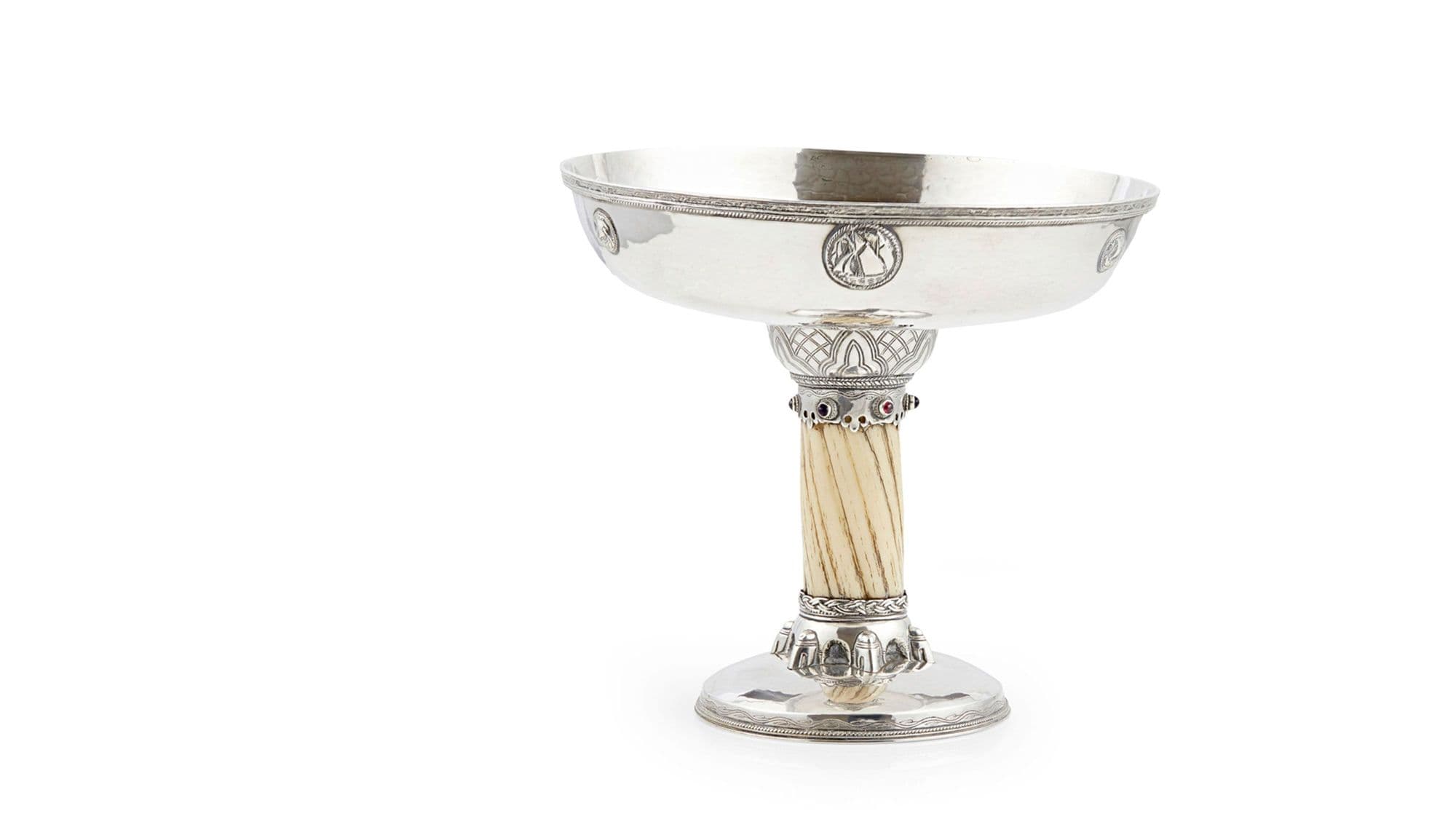
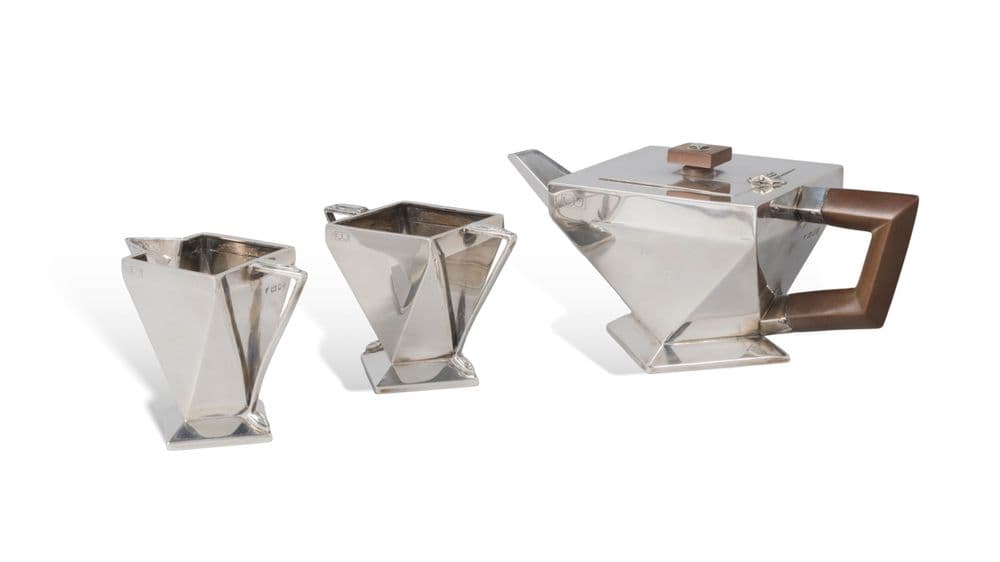
Between 1934 and the beginning of the First World War Boyton produced mostly Art Deco designs and had some success. The challenge was finding buyers in these straightened financial times, given the cost of Boyton’s hand-wrought silver designs. Indeed, Boyton is remarkable for having one of the few workshops to operate in Britain between the wars producing high-quality silver in the modern style. One of Boyton’s main competitors was Omar Ramsden, who was working in the Arts & Crafts style. It was during this period that Boyton designed a porringer for Princess Margaret Rose, Queen Elizabeth II’s sister, the flower finial and floral spray decorated handles of which are far more in keeping with the Arts & Crafts tradition than more modern tastes. It has been suggested that this commission is evidence of Boyton bowing to pressure to produce more traditional designs.
When war was declared in 1939 Boyton’s staff were conscripted and he was forced to close his workshop and redirect his energies. He and his family moved to Aldburgh in Suffolk where he helped with coal rationing whilst his wife was working with refugee children.