What Is an Intaglio Ring?
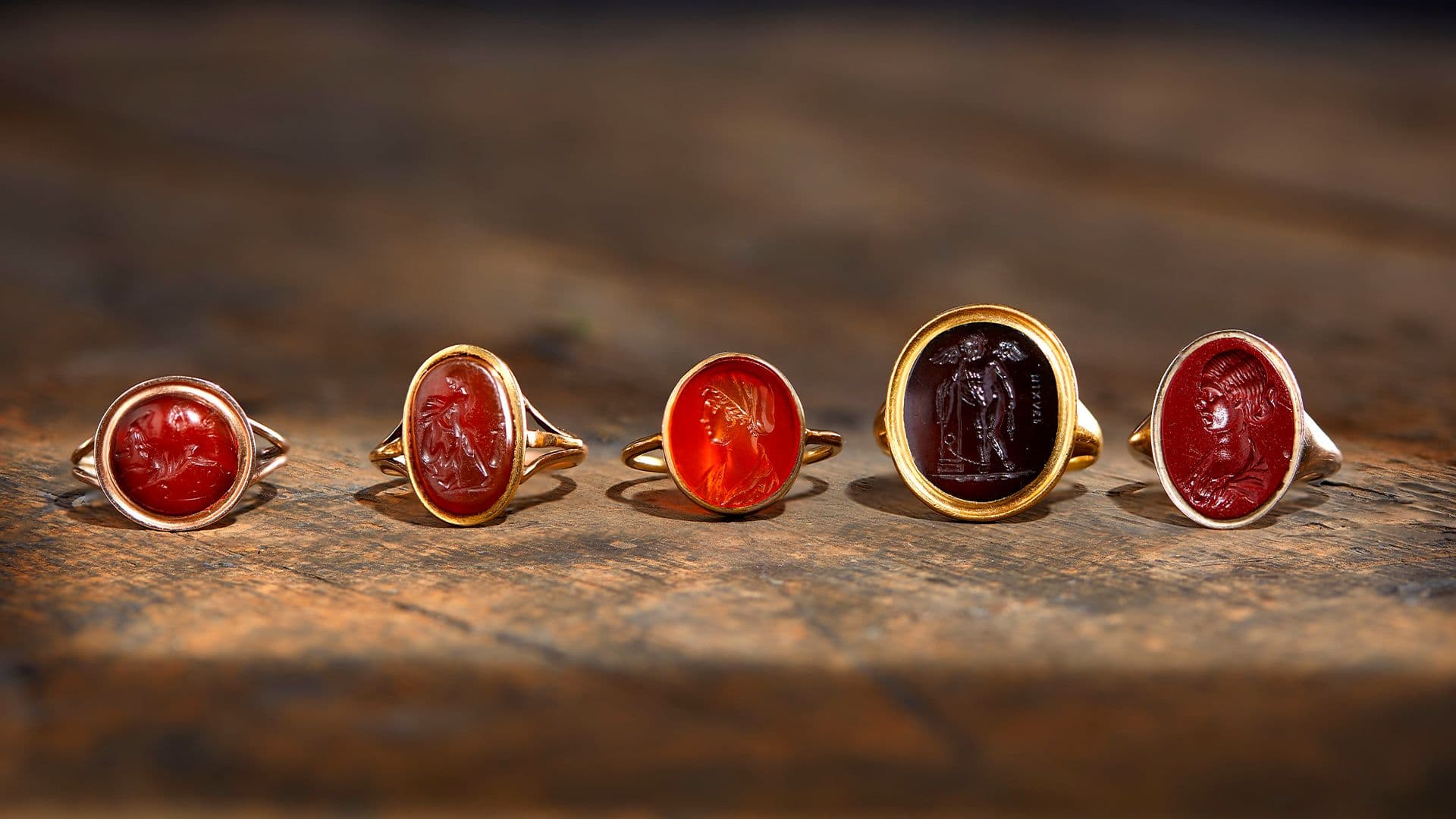
An intaglio ring features a gemstone engraved below the surface rather than carved in relief. Designed to leave a raised impression when pressed into wax, intaglios originally served as personal seals, making them both practical objects and highly personal possessions.
Unlike cameos, where the image stands proud of the stone, intaglios are carved into it. This demanding technique requires exceptional precision and remains one of the finest achievements of gemstone engraving.
The Roman Emperors Who Wore Intaglio Rings
During the Roman Empire, engraved rings were an essential part of public and private life. Emperors, senators and military commanders used intaglios to authenticate official documents, while wealthy citizens commissioned engraved gemstones displaying portraits, deities or scenes from classical mythology.
Many surviving Roman intaglios depict figures including Augustus, Hadrian, Marcus Aurelius and members of the imperial family. Others celebrate gods such as Apollo, Mercury and Minerva, reflecting both religious belief and personal taste.
These ancient gemstones were often treasured long after the fall of Rome, passing through generations before being remounted into later jewellery.
The Grand Tour and Europe's Passion for Intaglios
During the eighteenth and nineteenth centuries, Britain's aristocracy rediscovered the beauty of engraved gems through the Grand Tour.
Travelling across Italy and Greece, collectors returned home with ancient Roman intaglios alongside newly carved works inspired by classical antiquity. Owning engraved gems became a mark of education and refinement, and some of Europe's greatest collections were assembled during this period.
Many of these gems were later mounted as rings, allowing collectors to wear both antiquity and artistry on the hand.
Luigi Pichler: The Master Engraver
Few names are more closely associated with nineteenth-century intaglios than Luigi Pichler (1773-1854).
Born into one of Europe's foremost engraving families, Pichler became celebrated for the delicacy of his carving and his remarkable ability to recreate the spirit of ancient Roman gems. His patrons included Emperor Francis I of Austria and Pope Pius VII, while his work is now held in museum collections worldwide.
Among the finest examples handled by Lyon & Turnbull was a signed sardonyx intaglio depicting a weeping Cupid, symbolising repentance. Originally part of the Duke of Wellington Collection, it sold for £22,500, illustrating the continued demand for exceptional engraved gems by recognised masters.
The Duke of Wellington's Intaglio Collection
Arthur Richard Wellesley, 2nd Duke of Wellington, was one of Britain's most distinguished collectors of engraved gems.
Throughout the nineteenth century he assembled an exceptional collection of ancient and contemporary intaglios, many later exhibited in The Wellington Gems at S. J. Phillips, London. The collection included Roman intaglios dating to the second century AD alongside works by leading contemporary engravers including Luigi Pichler.
When selected examples later appeared at Lyon & Turnbull, they demonstrated not only the Duke's discerning eye but also the enduring appeal of engraved gems across generations of collectors.
Ancient History Carved in Stone
One particularly fascinating example from the Wellington Collection depicts Manlia Scantilla, briefly Empress of Rome in AD 193.
Her husband, Didius Julianus, famously purchased the Roman throne from the Praetorian Guard before being overthrown only months later by Septimius Severus. Although her reign lasted little more than three months, Manlia's portrait survives through engraved gemstones like these, preserving a remarkable chapter of Roman history in miniature.
It is stories such as these that make intaglio rings so compelling. Each engraved gemstone represents not only exceptional craftsmanship but also a tangible connection to the people, politics and mythology of the ancient world.
Why Collectors Still Seek Intaglio Rings
Collectors are drawn to intaglio rings for many reasons.
They combine jewellery with sculpture, archaeology and classical history in a single object. The most desirable examples often feature:
- Ancient Roman or Greek engraved gems
- Signed works by renowned engravers such as Luigi Pichler
- Classical mythological subjects
- Distinguished provenance
- Original antique mounts
- Exceptional carving and preservation
No two intaglio rings are exactly alike, making each an individual work of art with its own story to tell.
Intaglio Rings at Auction
Interest in antique intaglio rings continues to grow as collectors seek jewellery with historical depth and exceptional craftsmanship. Rings with distinguished provenance, important engraved gems or links to notable collections regularly attract international attention at auction.
At Lyon & Turnbull, our jewellery specialists have handled significant collections of antique intaglios, from ancient Roman carvings to nineteenth-century masterpieces by Luigi Pichler. Together, they demonstrate why these remarkable rings remain among the most fascinating forms of antique jewellery.