The Purpose of Mesopotamian Cylinder Seals
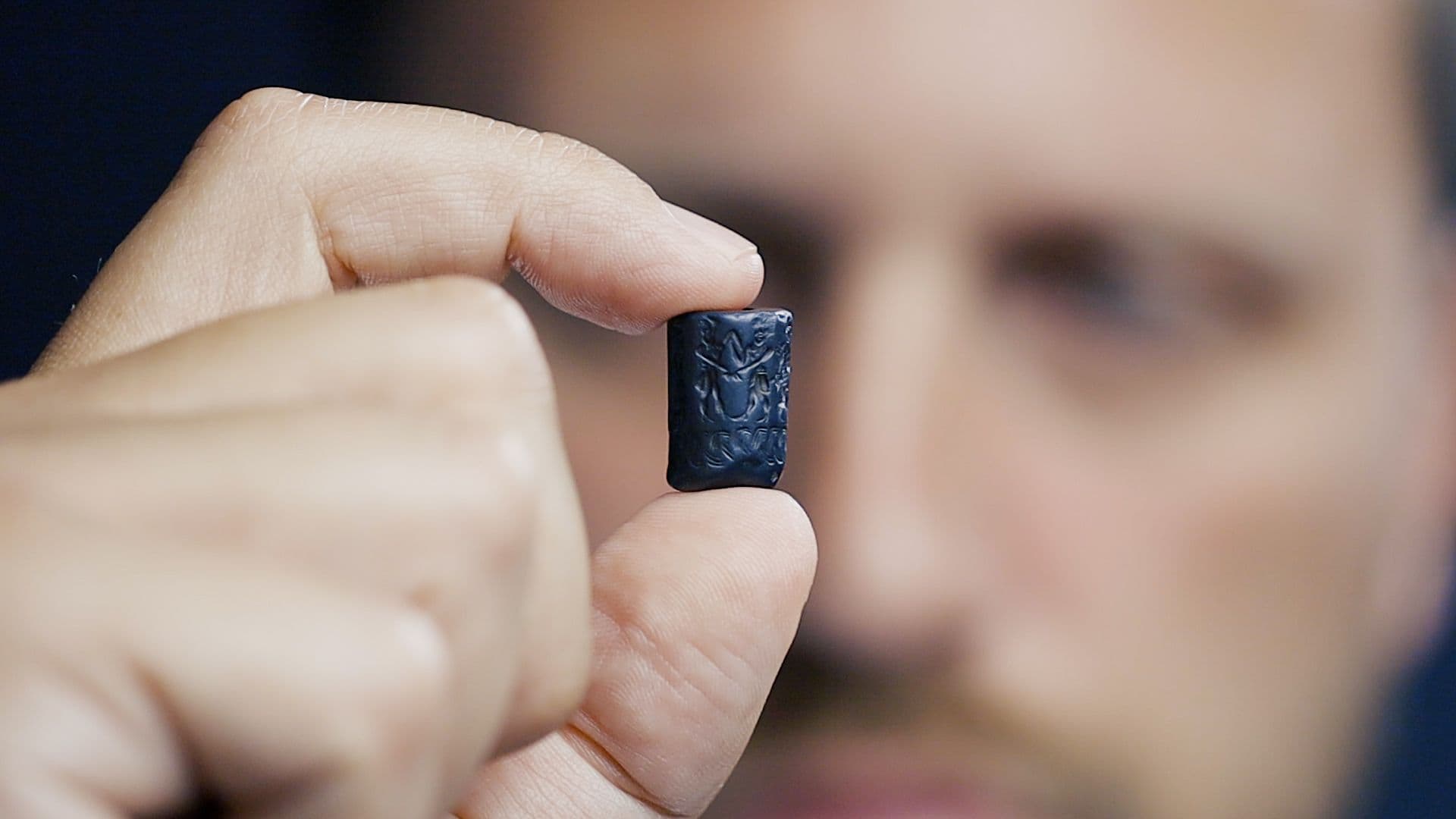
First created in the fourth millennium BC, carved cylinder seals allowed for the development of more intricate designs than simple stamps. Made from stone, metals, glass, and organic materials such as bone and wood, the seals were carved in intaglio with small drills and pierced through the centre for ease of rolling over clay. Their designs were used to mark clay tablets recording legal or commercial transactions, in a manner similar to signatures today, as well as jars and doors to ward against illicit opening. When not in use, the cylinders were worn around the neck or pinned on clothing, and were considered family heirlooms, passed down for generations. This may be tied to the belief that they were apotropaic, able to ward off evil for the wearer. The use of seals for legal, physical, and magical protection illustrates their deeply personal value across multiple generations.
The use of seals as personal identifiers meant that their iconography functioned to articulate the organisation of Mesopotamian society. The frequent inclusion of divine figures, as seen with the sun god Shamash on the Old Babylonian Rock Crystal cylinder seal, served to distinguish elite owners from the masses through divine association. Some seals directly showed worshippers in the act of gifting an animal to the god, as seen on the Babylonian Hematite cylinder seal. It has been argued that the regularity of depictions of the divine on the seals directly referenced the cult statues of the Third Dynasty of Ur, which were central to ritual activity. Such depictions of worshippers as seen on the Babylonian Hematite seal may therefore depict real-life religious rituals.
Seals not only reflected religious values, but also political ones. In both examples mentioned above, the divinity shown is the sun god Shamash, who is frequently equated with justice and order. The famous Babylonian legal text, the Code of Hammurabi, and the many commercial and legal documents on which cylinder seals were used, show a society preoccupied with the correct practice of the law. Political changes are also reflected in the iconography of seals. The declining popularity of depictions of the King on Babylonian cylinder seals directly reflects the breakdown of the centralised political and economic system in Babylon under Samsuiluna and the subsequent belief in the king's deteriorating divine support. Material culture never exists in a vacuum, and these seals are the perfect example of how iconography was manipulated to reflect authority and emphasise power relationships in ancient societies.
The Sassanian stamp seals in the collection document ancient Persian society in a similar way to cylinder seals. While stamp seals shared a seemingly uniform iconography, they were still a personal signifier of identity, with different motifs reflecting varied values. The fire altar represented one of the most important rites in Zoroastrianism, whilst the bull was illustrative of the economic and religious importance of cattle to the livelihoods of the Persian peoples.