Renaissance and Grand Tour Collecting
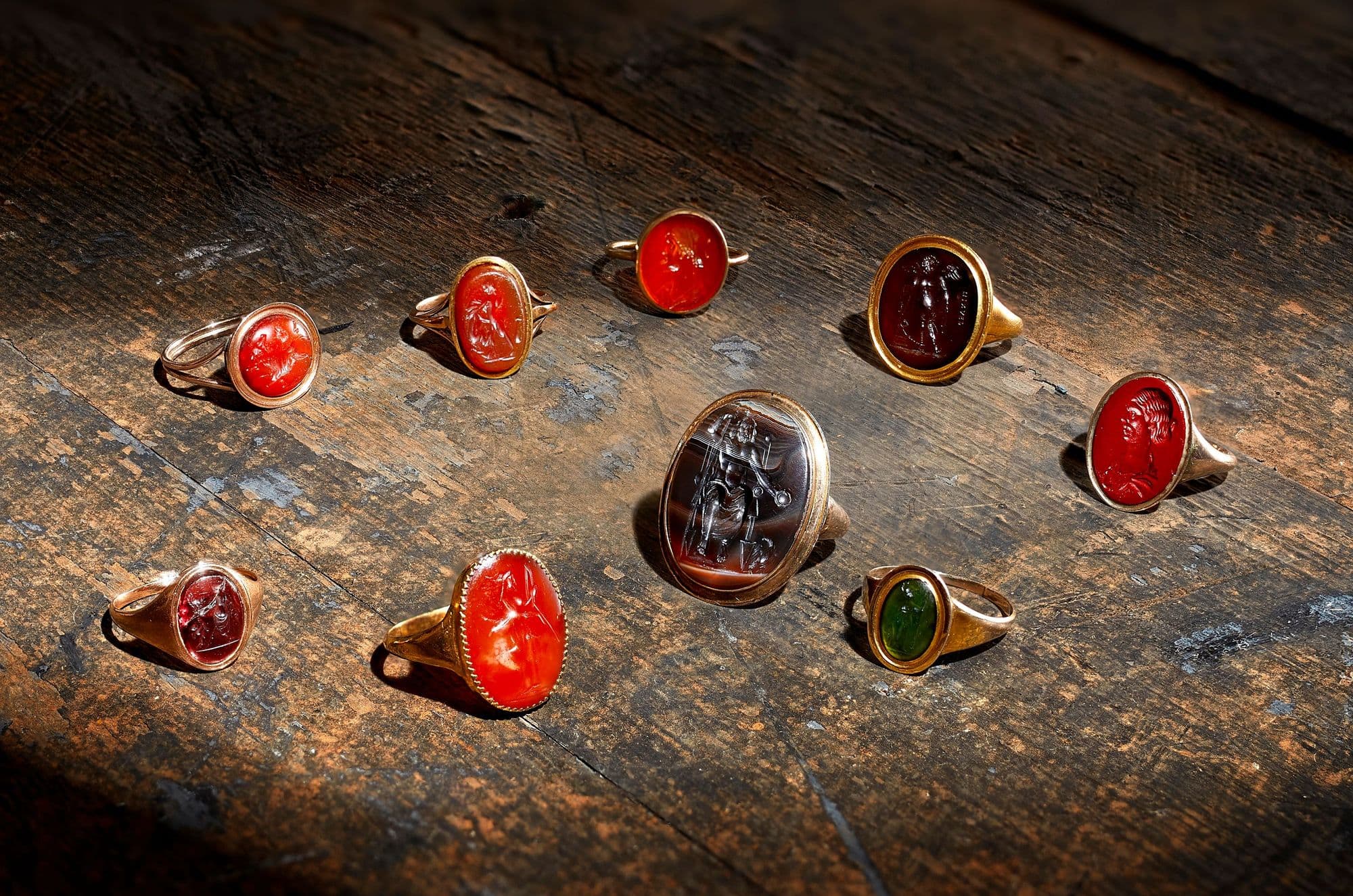
Interest in intaglios experienced a significant revival during the Renaissance, when renewed fascination with the classical world encouraged collectors to seek out ancient artefacts and engraved gemstones.
The eighteenth century saw another surge in popularity through the Grand Tour, the educational journey undertaken by wealthy Europeans through Italy and other cultural centres. Intaglios became highly desirable souvenirs, valued as portable works of art that demonstrated both taste and knowledge of classical civilisation.
Rome emerged as an important centre for gem engraving, attracting skilled craftsmen and enthusiastic collectors alike.
Famous Collectors of Intaglios
The appeal of intaglios has attracted collectors for centuries. Historical figures associated with notable collections include Julius Caesar and Marcus Aurelius in antiquity, while later collectors included Thomas Howard, Earl of Arundel, William Cavendish, Duke of Devonshire, and the Duke of Wellington.
These collections helped preserve many important examples and contributed to the enduring appreciation of engraved gemstones as both works of art and historical artefacts.
Why Collectors Value Intaglios
Intaglios occupy a unique position between jewellery, sculpture and archaeology. Collectors are often drawn to them for several reasons:
Craftsmanship
The level of skill required to carve detailed images on such a small scale remains extraordinary.
Historical Significance
Many examples provide direct links to ancient civilisations and historical figures.
Artistic Merit
Intaglios demonstrate remarkable artistic achievement despite their miniature size.
Collectability
From ancient examples to eighteenth and nineteenth-century revival pieces, intaglios offer a wide range of collecting opportunities.
Jewellery
Many intaglios have been mounted in rings, brooches, pendants and other jewellery, allowing them to be appreciated both as artworks and wearable objects.
Intaglios Today
Collectors continue to seek intaglios for their beauty, rarity and historical significance. Whether carved in antiquity or during later periods of revival, these engraved gemstones remain among the most fascinating objects in the history of jewellery and decorative arts.
Their continued appeal lies in the unique combination of artistry, craftsmanship and history that each piece embodies. Small in scale but vast in cultural significance, intaglios continue to captivate collectors more than two thousand years after they first appeared.