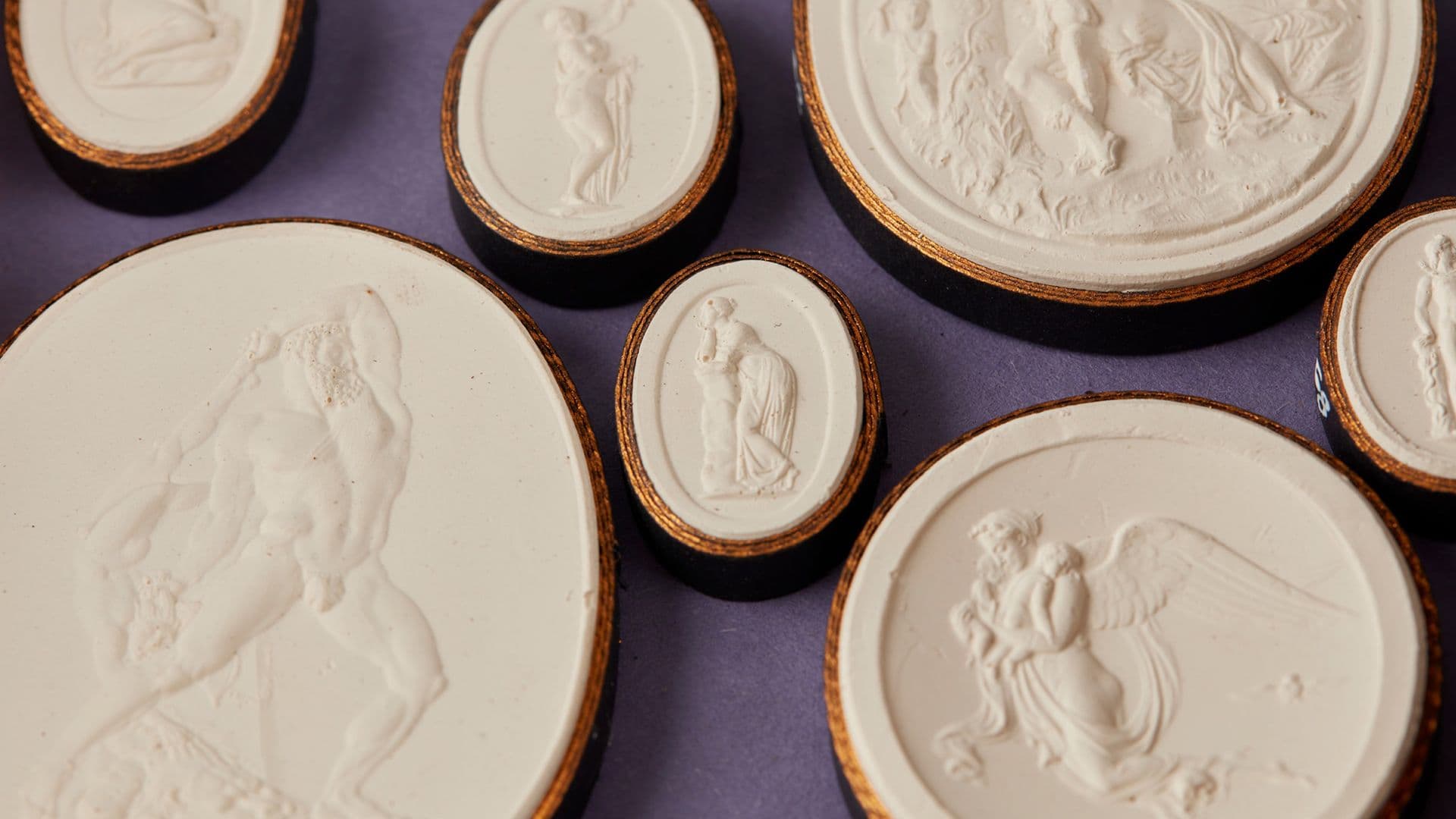
Rome and the Revival of Classical Gem Engraving
While interest in engraved gemstones never entirely disappeared, the Renaissance and later the eighteenth century saw significant revivals in gem carving and collecting.
Rome became the centre of this renewed enthusiasm. Archaeological discoveries and growing interest in classical civilisation attracted collectors, scholars and craftsmen from across Europe. Engravers looked to ancient examples for inspiration, recreating classical subjects and developing new works in the same tradition.
The city's workshops supplied a growing market of Grand Tour visitors eager to bring home a piece of antiquity.
Grand Tour Sculpture and Antiquities
Cameos and intaglios formed only part of a broader collecting culture. Travellers also acquired sculptures, bronze reductions, architectural models, antiquities and plaster casts of celebrated works of art.
These objects helped shape interiors across Britain and Europe, influencing architecture, decorative arts and collecting tastes for generations. The neoclassical movement that swept through Europe during the eighteenth century owes much to the objects and ideas carried home by Grand Tour travellers.
Famous Collectors of Carved Gems
The fascination with cameos and intaglios stretches far beyond the Grand Tour itself.
Historical figures associated with important collections include Julius Caesar and Marcus Aurelius in antiquity. Later collectors included Thomas Howard, Earl of Arundel, William Cavendish, Duke of Devonshire, the Dukes of Marlborough and Catherine the Great of Russia.
Their collections helped preserve important examples and contributed to the enduring popularity of engraved gemstones among scholars and collectors.
Why Grand Tour Objects Remain Collectible
Today, Grand Tour material continues to appeal to collectors for many reasons.
Historical Significance
These objects provide insight into European travel, education and collecting during the eighteenth and nineteenth centuries.
Classical Inspiration
Many examples reflect a fascination with Ancient Greece and Rome that continues to resonate today.
Craftsmanship
Whether carved in hardstone, cast in plaster or sculpted in marble, Grand Tour objects often demonstrate exceptional artistic skill.
The History of Collecting
Many collectors are drawn not only to the objects themselves but also to the stories of the individuals who acquired them.
Collecting Grand Tour Objects Today
From carved gemstones and plaster casts to sculpture and antiquities, Grand Tour objects remain a fascinating collecting field. They occupy a unique position between art, archaeology and social history, offering a glimpse into a period when travel, learning and collecting were inseparable.
More than souvenirs, they are enduring reminders of Europe's artistic heritage and the generations of collectors who sought to preserve and celebrate it.