The History of Signet Rings
The history of signet rings stretches back more than four millennia. Archaeological evidence shows engraved seals were already in use in the civilisations of ancient Mesopotamia and Egypt, where they authenticated trade, secured goods and identified ownership.
The Romans later popularised signet rings across Europe. Emperors, military commanders, merchants and senators wore engraved rings bearing family emblems, mythological figures or personalised devices. Official correspondence was sealed with hot wax before being impressed with the ring, confirming both its authenticity and authority.
As the Roman Empire expanded, so too did the use of signet rings, establishing a tradition that would continue throughout medieval and modern Europe.
Signet Rings and Heraldry
By the Middle Ages, signet rings had become closely associated with heraldry. Noble families, landowners, bishops and monarchs used engraved rings bearing coats of arms to validate official documents.
In a largely illiterate society, the wax seal carried legal authority. Breaking a seal suggested tampering, while its impression identified the sender beyond doubt.
Many traditions still associated with signet rings today, including heraldic engraving and family crests, have their roots in this period.
The History of Signet Rings in Britain
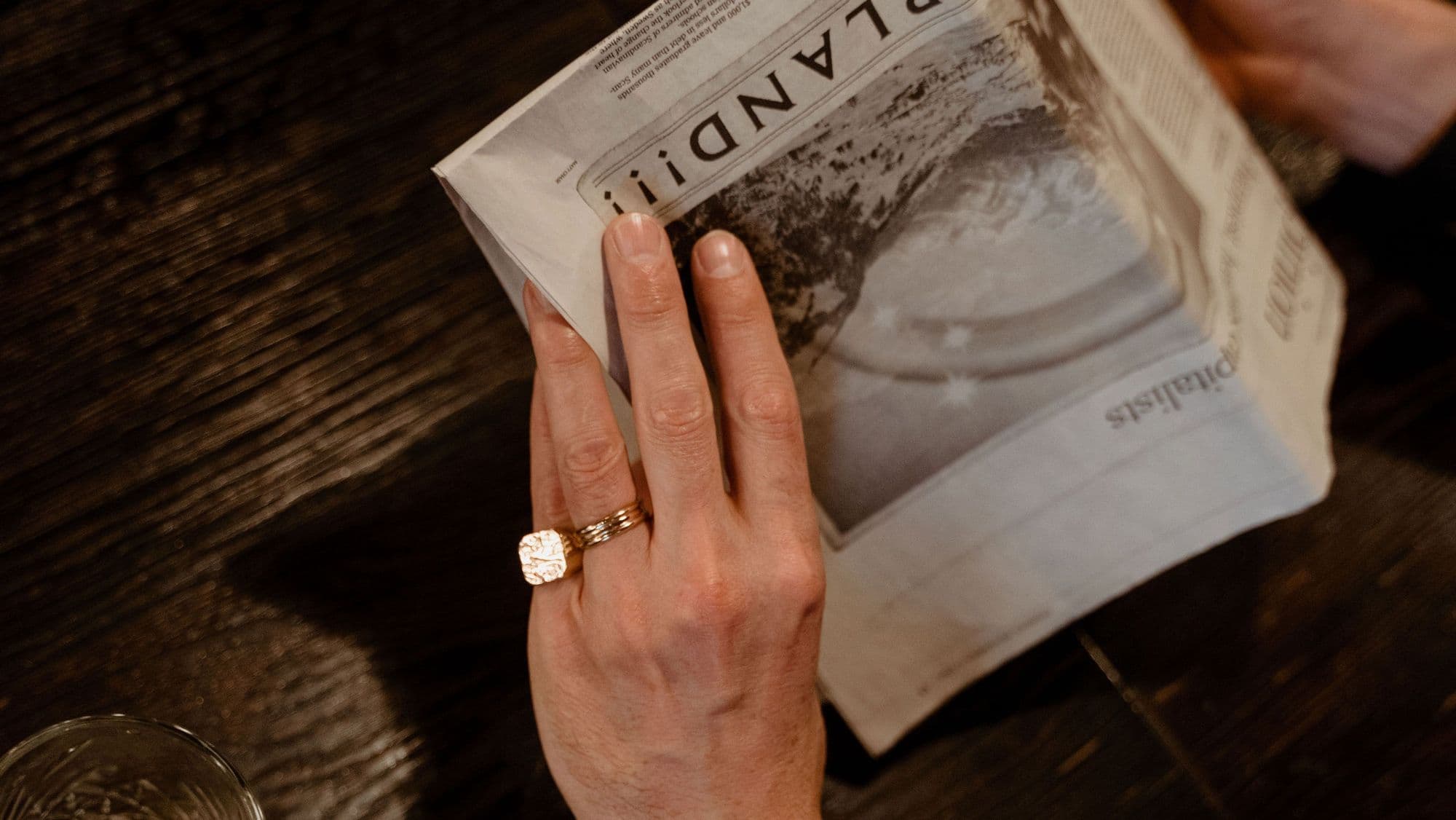
Signet rings have played an important role in British jewellery for centuries. During the Georgian, Victorian and Edwardian periods they became both practical accessories and deeply personal possessions, often engraved with family crests, initials or symbolic motifs.
Victorian examples demonstrate remarkable variety. Some feature carved hardstones such as carnelian, bloodstone or sardonyx, while others display finely engraved gold bezels or antique intaglios. Many were commissioned to commemorate marriages, inheritances or significant family events.
Although changing fashions influenced their appearance, signet rings remained closely connected with family identity, tradition and craftsmanship.
Why Are Signet Rings Engraved Backwards?
One of the defining features of a traditional signet ring is that its design is engraved in reverse. This may seem unusual at first, but it was essential to the ring's original purpose.
Historically, signet rings were used to create seals by pressing the engraved bezel into hot wax. Because the design was carved as a mirror image, the impression left in the wax appeared the correct way round. This allowed coats of arms, monograms and other personal devices to be read clearly on letters, legal documents and official records.
The engraving itself is known as an intaglio, a technique in which the design is cut into the surface of the stone or metal rather than raised above it. Hardstones such as carnelian, sardonyx, bloodstone and onyx were particularly well suited to this type of engraving, combining durability with the fine detail needed to produce a crisp impression.
Why Do People Still Wear Signet Rings?
Despite no longer serving as official seals, signet rings continue to appeal for many of the same reasons they always have.
Today they may represent:
- Family heritage
- Personal identity
- Important life events
- Individual style
- A passion for antique jewellery
Some are inherited through generations, while others are newly commissioned or collected for their craftsmanship and historical interest. Their combination of personal meaning and historical significance continues to attract collectors and jewellery enthusiasts alike.