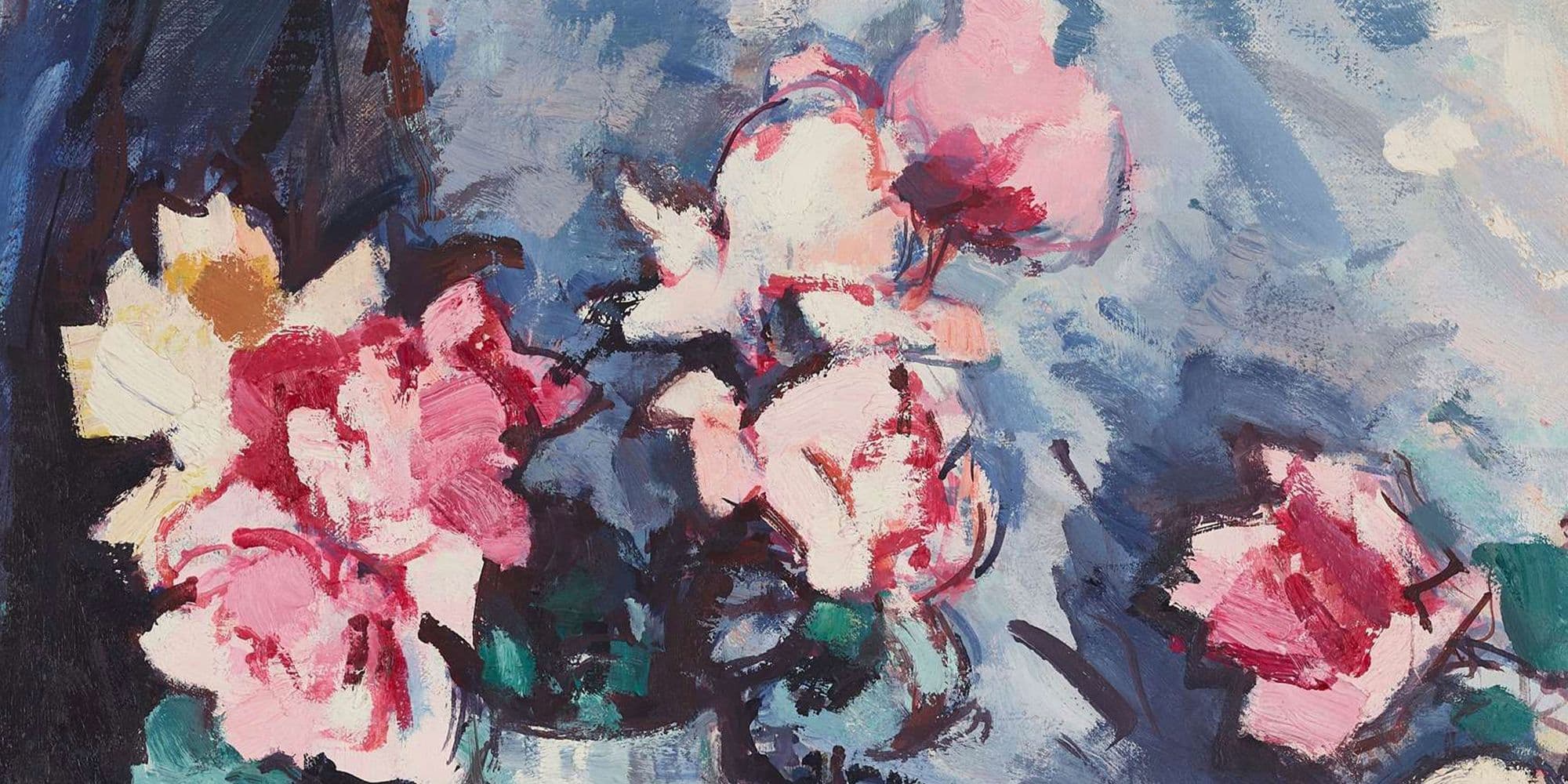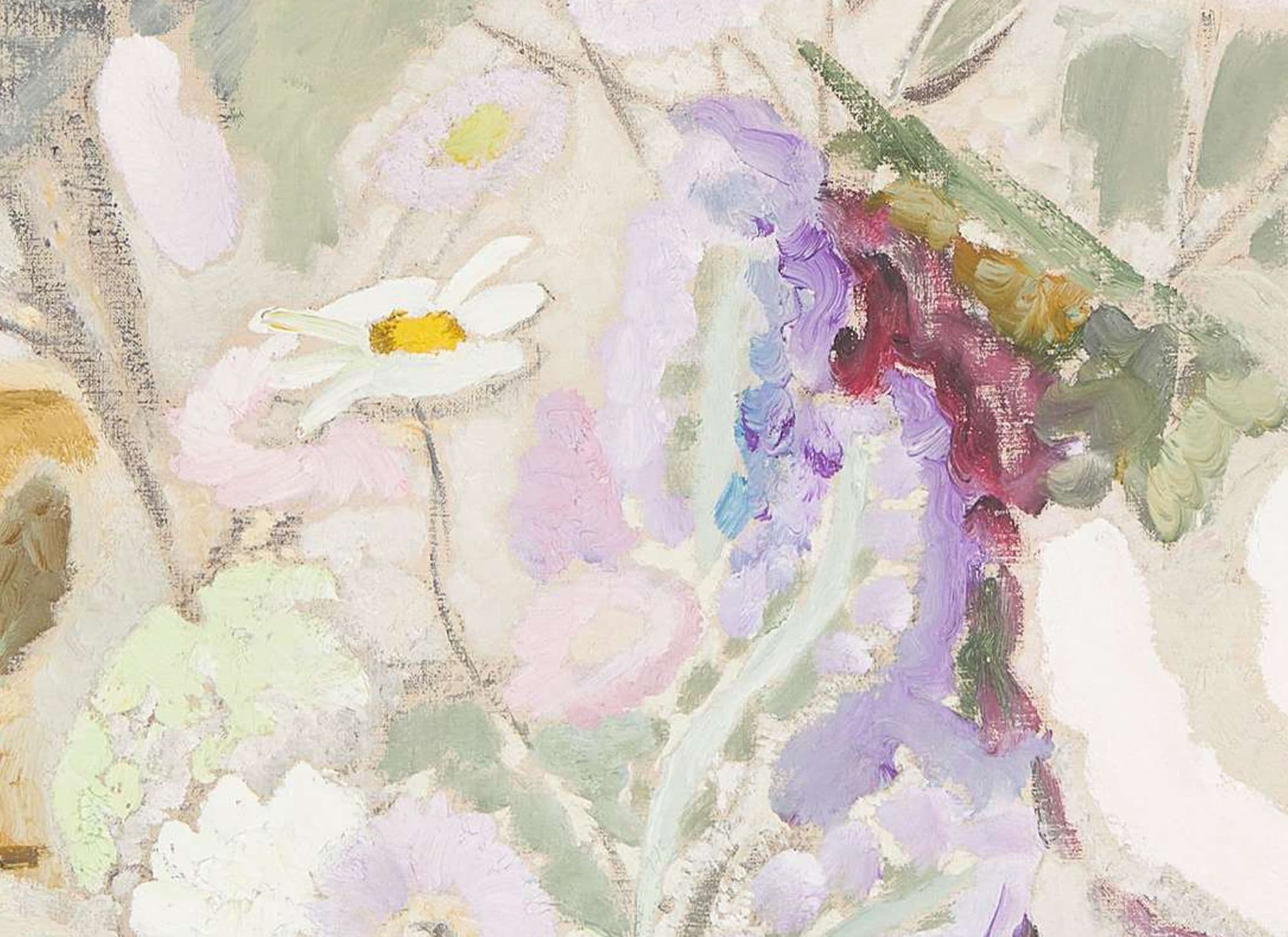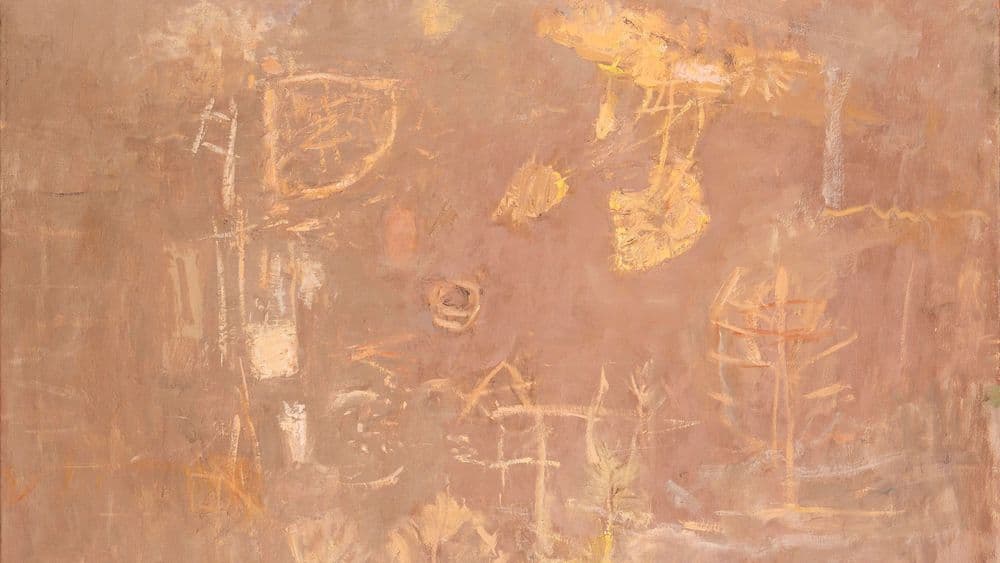
Mary Potter was a distinctive voice in twentieth-century British painting, known for her luminous handling of colour and her quiet yet searching exploration of interior and urban space. Over a long and independent career, she developed a visual language that balanced structural discipline with subtle spiritual intensity.
Born in Beckenham, Kent, in 1900, Potter studied at the Slade School of Fine Art under Henry Tonks. The rigour of her training grounded her early work in careful draughtsmanship, but she soon gravitated toward a more personal approach shaped by close observation and atmosphere rather than strict academic convention.
During the interwar years, Potter established herself within London’s modernist circles. She was associated with artists including Cedric Morris and exhibited at the Lefevre Gallery, positioning her within the broader current of British modernism. Yet she remained stylistically independent, never fully aligning herself with a single movement. While her contemporaries pursued abstraction or overt surrealism, Potter focused on interiors, harbours, city streets and churches, subjects rendered with restrained palette and delicate tonal shifts.
Religion played a central role in Potter’s life and work. A committed Catholic, she increasingly imbued her paintings with a contemplative sensibility. Light became a structuring element in her compositions, filtering through windows, illuminating altars, dissolving architectural detail into fields of colour. In later decades, her paintings moved closer to abstraction, with form simplified and atmosphere heightened, yet always rooted in observed reality.
Potter travelled widely, particularly to France and Italy, absorbing the light and architectural forms of Mediterranean towns. These experiences deepened her interest in spatial tension and the interplay between geometry and colour. Her mature works often depict churches and cloisters as quiet, emptied spaces, charged less by narrative than by stillness and presence.