Francis Bacon is one of the most significant figures in 20th Century British Art and Modern British Art. He evolved his own distinctive visual approach which distorted the figure, offering a visceral violence and discomfort to his imagery.
His own reputation as a self-taught artist, openly gay in a largely hostile society, comfortable moving between the different strata of society and with extreme highs and lows in his personal life, fed the narrative and intrigue around his artwork.
An adamant atheist, Bacon was nevertheless pre-occupied by specific religious imagery in his work, returning to the intensity, violence and suffering of the Crucifixion event. He also repeatedly worked in a series of three panels, the traditional triptych form.
He is primarily known for his intensely psychological paintings, but his engagement with printmaking offers an important extension of his broader exploration of the human figure.
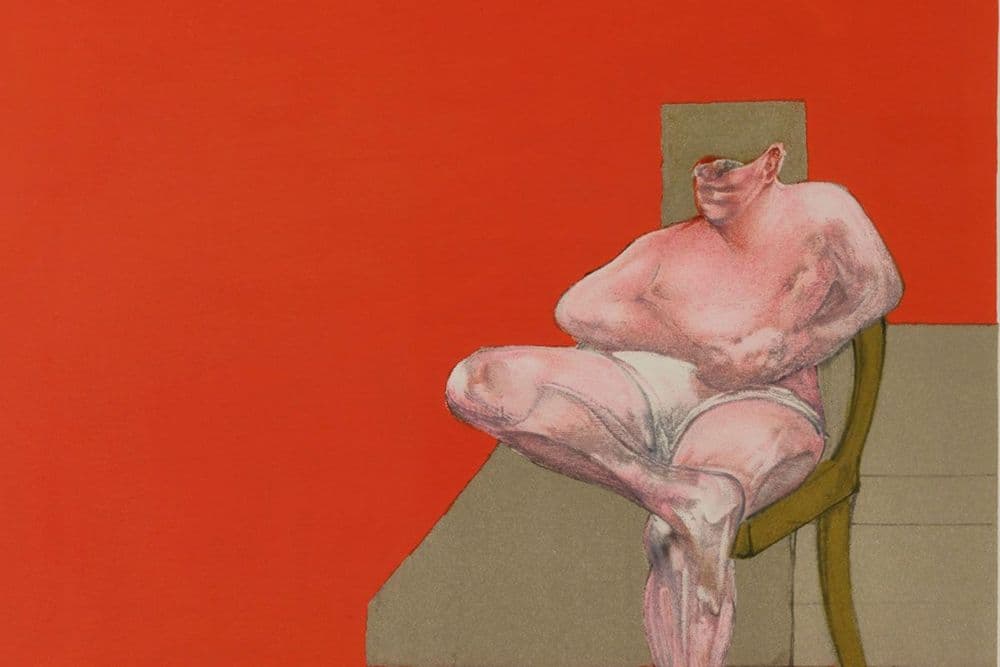
Bacon’s prints are largely derived from his painted works, with many produced as lithographs or screenprints that translate his distorted, expressive figuration into a printed edition. These works retain the visceral intensity of his painting practice, with fragmented bodies, blurred forms and stark spatial environments rendered through flattened tonal contrasts and dramatic compositional cropping. Rather than treating printmaking as an experimental studio process, Bacon’s printed works function more as extensions of key painted themes, including the isolation of the figure, existential anxiety and psychological tension. His prints are highly sought after today and continue to reinforce his status as one of the most influential figurative artists of the twentieth century.
In 1985, TATE held a major retrospective of his work, with the statement celebrating our ‘greatest living painter.’