How Poynter Uses Jewellery to Tell Zenobia's Story
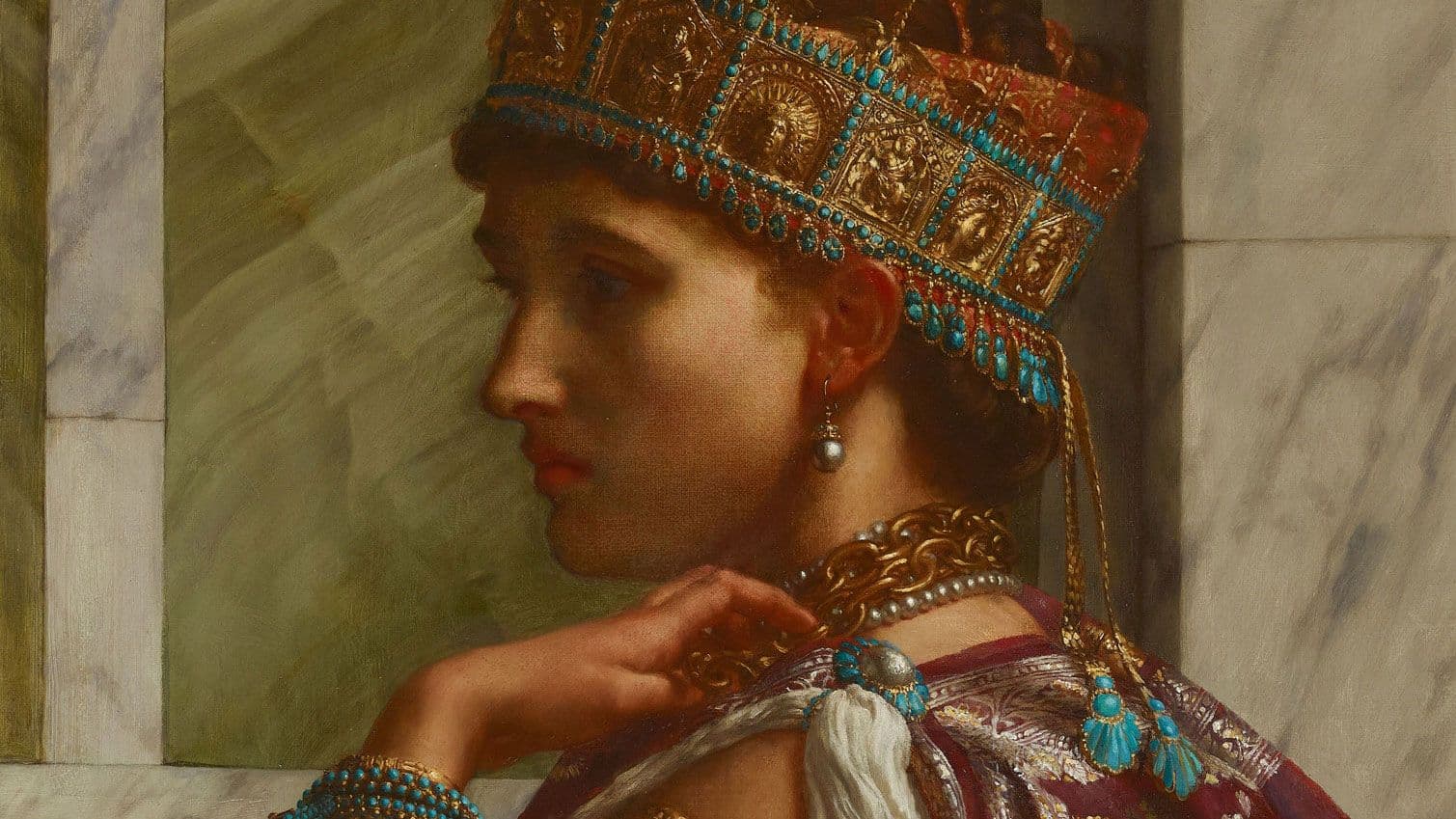
Poynter leads further into the symbolism. Zenobia’s captivity is not immediately noticeable so numerous are her jewels that we lose sight of her chains, almost alluding to the notion that her captivity, her tamed spirit, is an important aspect of her appeal. Her pearls, symbols not only of her wealth but of purity, tears and mourning are wrapped around the chains about her neck, a blunt reference to the source of her sorrow.
Indeed, rather than railing against her captivity as one may expect of such a warrior queen, she seems to quietly contemplate them, softly caressing them as she looks out of the frame and contemplates her fate. And well she might, the Zenobia we see here is far from the reality of the ancient queen, defeated and contemplating a life in the court of her captor as his curiosity, but this Zenobia carries a different burden, the weight not just of her chains but of the layers of symbolism which have come to cloak her over the centuries, to the modern viewer she represents so much more than just a conquered queen.
The snakes coiled around Zenobia's arms and wrists would have been immediately recognisable to Poynter's audience, and their multiple layers of meaning would not have been lost on contemporary viewers. They were deeply romantic symbols. In 1839, Prince Albert presented Queen Victoria with an emerald, ruby and diamond engagement ring in the form of a coiled serpent, beginning one of the nineteenth century's most celebrated royal love stories.
Serpents were associated with everlasting love, but they could also symbolise wisdom, renewal and eternity. Equally, they carried older associations with temptation. By adorning Zenobia with so many serpents, Poynter may have been hinting at what he perceived as her pride or ambition. Turquoise, highly prized in Persia and a subtle reference to Zenobia's eastern origins, adds another layer of symbolism. Long believed to protect its wearer from misfortune, it ultimately offers no defence against the fate that has already overtaken her.
How History Chose to Remember Zenobia
This depiction of Zenobia seems to reveal more about nineteenth-century, often male-dominated perceptions of powerful women than it does about the historical queen herself. Far more palatable is a beautiful women, calmly contemplating her folly, carefully tamed by the male administration than a competent warrior and stateswoman. Is it Zenobia in all her beauty and jewels that Poynter and his peers find beautiful or the triumphant relief that their status-quo lives to fight another day?
Let her better be remembered as she was, a trail-blazing women, not defined by her chains, but by the richness of her achievements and let her portrait symbolise a need to celebrate this in a new century.