Sir Edward Poynter was one of the leading figures of Victorian academic painting, renowned for his grand historical, classical and biblical compositions. Born in Paris to British parents, he studied in London before continuing his artistic training under Charles Gleyre in Paris, where he was a contemporary of artists including James McNeill Whistler and George du Maurier.
Drawing inspiration from classical antiquity and the ancient Mediterranean world, Poynter became known for meticulously researched scenes distinguished by their technical precision, rich colour and archaeological detail. Works such as Israel in Egypt, The Visit of the Queen of Sheba to King Solomon and Diadumene exemplify his ability to combine academic draughtsmanship with dramatic narrative and idealised beauty.
Beyond his career as a painter, Poynter played a significant role in shaping British art institutions. He served as Director of the National Gallery, President of the Royal Academy from 1896 until his death, and was one of the most influential advocates of academic art in late nineteenth-century Britain. He also produced designs for mosaics, murals and decorative schemes, contributing to major public buildings and churches.
Today, Poynter is recognised as a leading representative of Victorian Classicism. His paintings remain sought after by collectors of nineteenth-century British art, while his depictions of the ancient world continue to be admired for their elegance, scholarship and technical accomplishment.
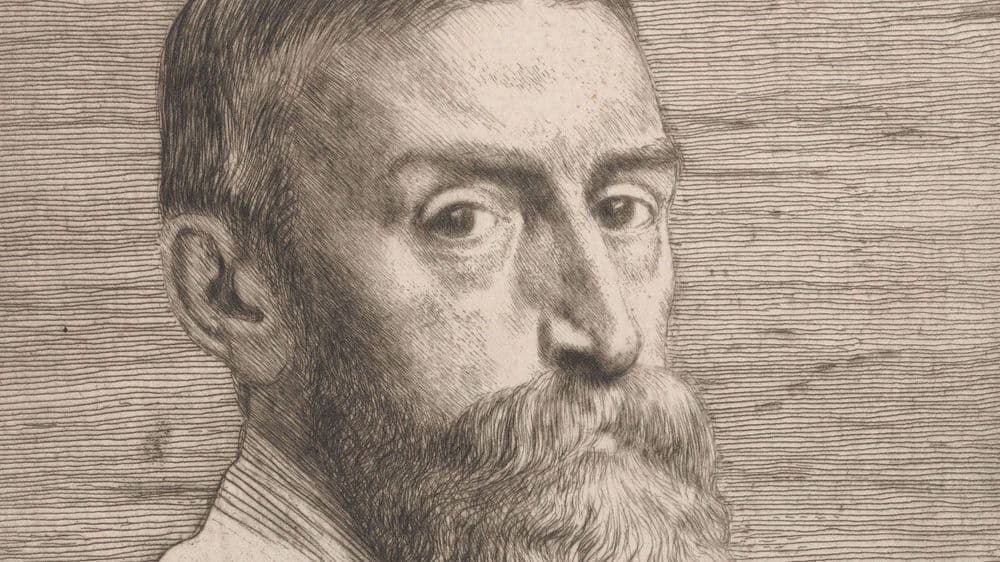
Illustrated: Sir Edward John Poynter by Alphonse Legros, CC0, via Wikimedia Commons