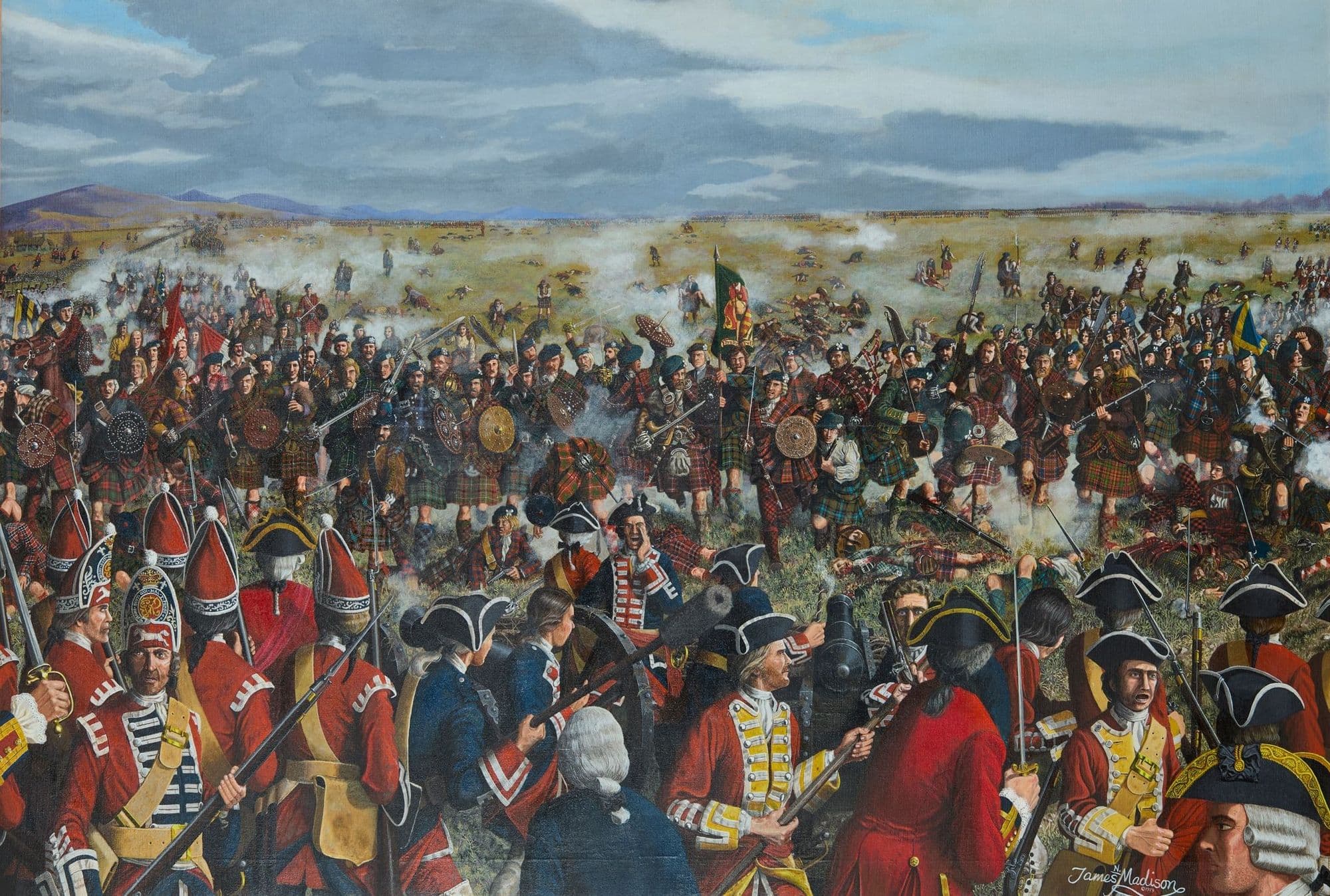
Few battles have captured the imagination of artists quite like the Battle of Culloden. Fought on 16 April 1746, it lasted little more than an hour but brought the Jacobite Rising of 1745 to a decisive end.
As the last pitched battle fought on British soil, Culloden occupies a unique place in Scottish history and generations of artists have returned to its dramatic events to interpret, commemorate and question what happened on Drummossie Moor.
From eighteenth-century depictions to carefully researched modern reconstructions, artists have helped shape how generations have imagined the Battle of Culloden.
Why Has the Battle of Culloden Been Painted So Often?
Culloden represents far more than a military engagement. It marks the end of the Jacobite cause, the defeat of Charles Edward Stuart's army and the beginning of profound political and cultural change in the Highlands. For artists, it offers powerful themes of courage, tragedy, identity and remembrance.
Unlike many eighteenth-century battles, Culloden has remained part of Scotland's national conversation through literature, music, museums and family history. That continuing interest has ensured artists continue to revisit the subject nearly 280 years later.
Quick answer: The Battle of Culloden has inspired artists for almost three centuries. From eighteenth-century eyewitness interpretations to modern historical reconstructions, paintings of Culloden have shaped how we remember the final Jacobite battle, the Highland charge and one of the defining moments in Scottish history.
Illustrated below: The Battle of Culloden Woodcut Painting by David Morier (died 1770), Public domain, via Wikimedia Commons | The Victory Obtain'd over the Rebels, at Culloden, by the Duke of Cumberland by Charles Corbett (publisher), CC BY-SA 4.0, via Wikimedia Commons | An Incident in the Rebellion of 1745 by David Morier, Public domain, via Wikimedia Commons