

Lot 531
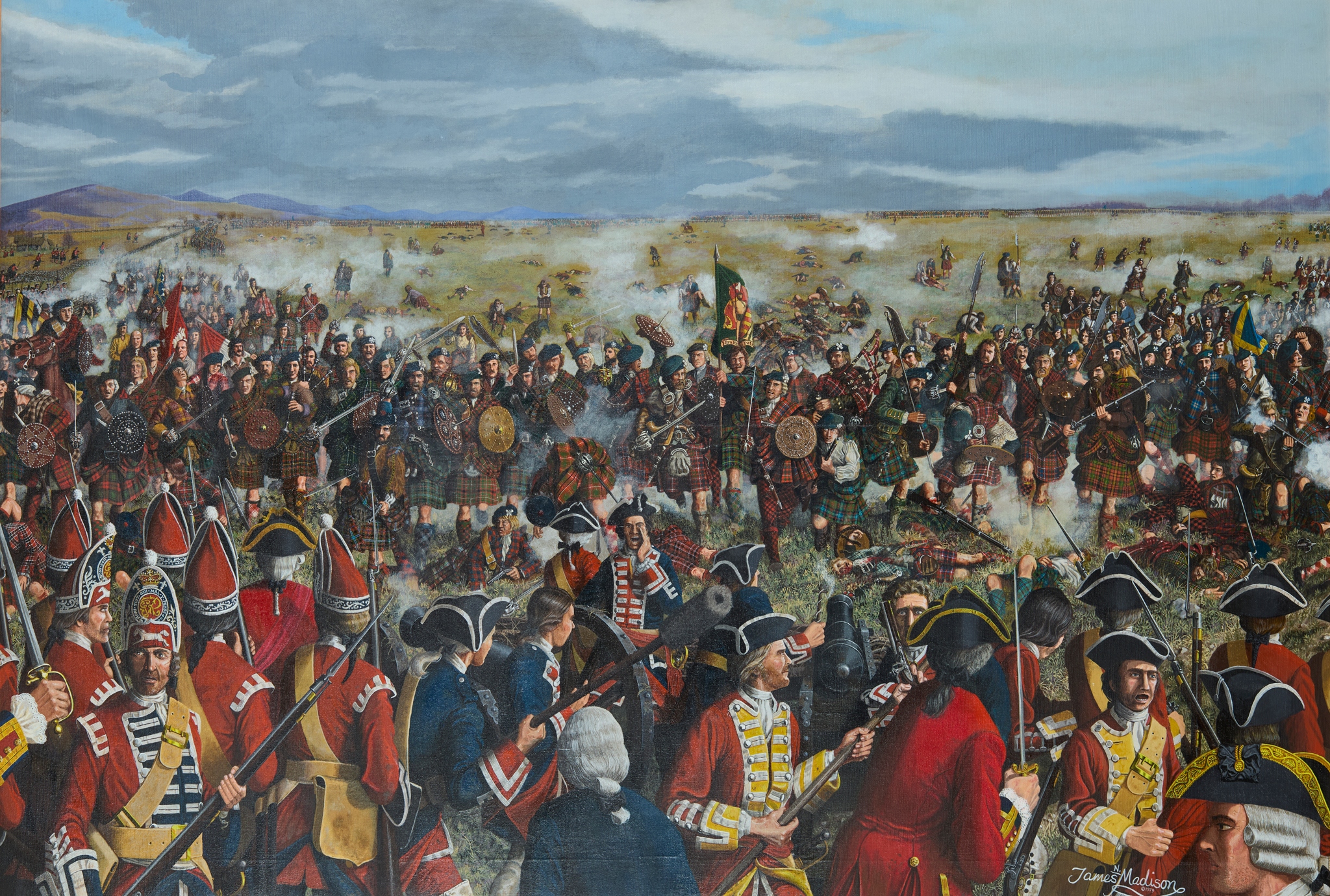
JAMES N. MADISON (1940-1982)
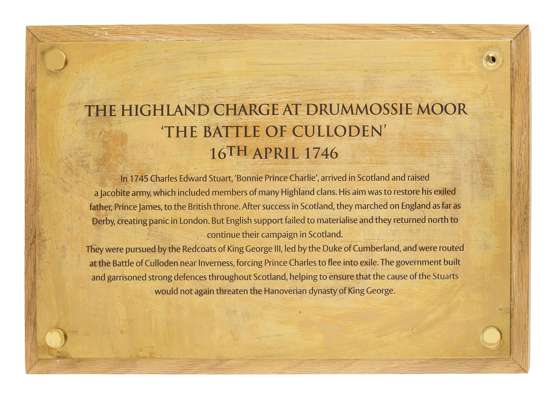
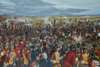
THE HIGHLAND CHARGE OF DRUMMOSSIE MOOR - THE BATTLE OF CULLODEN, 16th APRIL 1746

Auction: Day Two | Thursday 20 August from 10am | Lots 199 - 555
Description
Signed lower right, oil on canvas, 1979, glazed and framed
Dimensions
121cm (high) x 183cm (wide), 196cm x 134.5cm (frame)
Provenance
Previously on loan to Historic Scotland, accession number NHS342
Footnote
Few events have occupied such a powerful place in Scotland's historical imagination as the Battle of Culloden. Fought on Drummossie Moor, near Inverness, on 16 April 1746, it brought the Jacobite Rising of 1745 to its dramatic conclusion. Lasting little more than an hour, the battle marked the final pitched engagement fought on British soil and ended the Stuart claim to the throne as a viable military cause. The years that followed witnessed profound changes throughout the Highlands, including the suppression of traditional Highland dress, the disarming of the clans, and the gradual dismantling of the ancient clan system.
It was this defining moment that inspired Scottish artist James N. Madison. Throughout his career, Madison became recognised for his dramatic reconstructions of Scotland's military history, particularly those associated with the Jacobite period. His paintings sought not merely to illustrate historical events but to immerse the viewer within them, combining careful historical research with an instinctive understanding of movement, atmosphere, and narrative.
Rather than portraying the inevitable Jacobite defeat, Madison chooses the battle's most dramatic and decisive moment—the Highland charge itself. Unlike many earlier depictions of Culloden, which often isolate individual heroes or romanticise the aftermath, Madison presents the battle as organised chaos. Every part of the canvas is alive with movement. Officers issue commands amidst clouds of musket smoke, regimental colours rise above the mêlée, while ranks of red-coated infantry brace themselves against the advancing Highlanders. The viewer is placed almost within the Government line itself, confronted by the momentum of the Jacobite assault as it crashes towards the waiting bayonets.
Madison's attention to military detail is particularly noteworthy. Distinctions between Highland clansmen and Government infantry are carefully observed through costume, weaponry and regimental formations. Standards and banners punctuate the composition, lending colour and movement while helping to guide the eye across the battlefield. Rather than relying solely on spectacle, the artist demonstrates a clear appreciation for the tactics and realities of eighteenth century warfare.
Born in 1940, James N. Madison established a reputation as one of Scotland's foremost painters of historical and military subjects during the latter half of the twentieth century. His work reflects a lifelong fascination with Scotland's past, particularly the Jacobite Risings, producing paintings that remain popular with collectors of Scottish historical art.
Working at a time when interest in Jacobite history was undergoing renewed scholarly attention, Madison occupied a position between historical reconstruction and artistic interpretation.
This painting enjoys a distinguished modern provenance, having been placed on long-term loan to Historic Scotland under accession number NHS342. During this period it was displayed within Edinburgh Castle, where thousands of visitors encountered Madison's dramatic interpretation of Scotland's most famous battlefield.
Few settings could have been more appropriate. Edinburgh Castle has stood at the heart of Scotland's national story for nearly a millennium, witnessing sieges, royal ceremonies, political upheaval, and military conflict. Within its walls, Madison's depiction of Culloden became part of the wider narrative presented to visitors exploring Scotland's history. Rather than existing solely as a work of art, the painting served as an educational and interpretive piece, bringing to life an event that fundamentally reshaped the nation.
More than two and a half centuries after the battle, Culloden continues to resonate within Scotland's cultural memory.