From a Pair of Earrings to Patrick Mavros
The origins of Patrick Mavros are unusually personal. In 1978, Patrick made a pair of earrings for his wife, Catja. Admiration for those early pieces helped establish the beginnings of the business, with the family's own history recording the earrings as the starting point of its story.
Wildlife soon became central to Mavros's work. In 1987, an orphaned elephant calf named ZoZo came to live at the family's Mpata Farm in Zimbabwe. That same year, Patrick cast his first silver elephant. The combination of silver craftsmanship and close observation of wildlife would become one of the defining characteristics of Patrick Mavros design.
African Wildlife in Silver
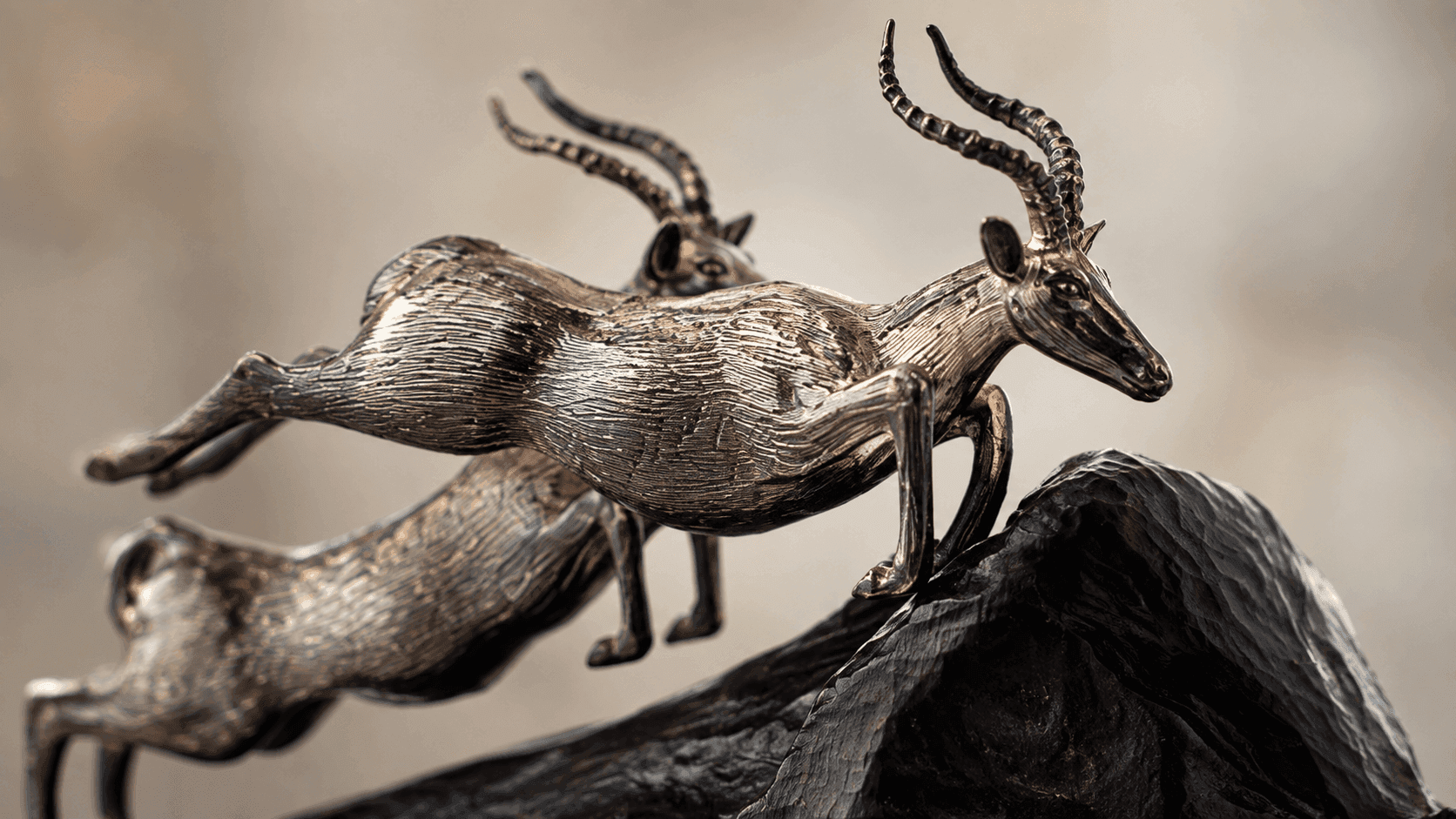
Animals are far more than decorative additions to Patrick Mavros silver. They provide the forms, movement and personalities around which many of the objects are conceived. Elephants, impalas, lions, cheetahs, pangolins and marine life have all appeared across the family's work. The scale can vary enormously. A collector might encounter a small animal incorporated into a piece of jewellery or tableware, while other compositions develop into elaborate sculptural centrepieces.
It is this ability to move between the miniature and the monumental that makes the work particularly distinctive.
Patrick Mavros Tableware
Some of the most engaging Patrick Mavros pieces are also functional. Silver animal sculptures have been incorporated into place card and menu holders, spoons, swizzle sticks, candlesticks and other objects intended for the table. Rather than separating sculpture from function, these pieces bring the two together.
A group of animal place card holders, for example, can turn individual table settings into a miniature gathering of African wildlife. Different animals and poses give each piece its own character, making sets appealing both as functional silver and as collections of small sculpture. The idea of theatre at the dining table has become an important strand of the family's work, extending to increasingly ambitious silver centrepieces and candelabra.
From Sea Urchins to Elephants: Patrick Mavros Jewellery
The same close observation of nature extends into jewellery. Cufflinks, dress studs, earrings, bracelets and other pieces draw upon both terrestrial and marine forms. Sea urchins, for example, have been translated into sculptural cufflinks, sometimes incorporating gemstones into their centres.
Other designs reduce the textures and forms of animals to more abstract details. The distinctive overlapping scales of the pangolin have provided inspiration for jewellery as well as sculpture. This breadth means Patrick Mavros jewellery can range from immediately recognisable animal forms to designs in which the natural reference is considerably more subtle.
The Pangolin and Conservation
The pangolin has become particularly closely associated with Patrick Mavros. The family's connection with the animal stretches back decades, while its formal partnership with the Tikki Hywood Foundation began in 2016. The Patrick Mavros Pangolin Collection supports the organisation's conservation work, with 10% of proceeds from the collection donated to the foundation.
The animal itself has also become an important source of design inspiration. Its distinctive armour-like scales have been interpreted in silver and gold jewellery, while sculptural works capture the animal walking or characteristically curled into a protective ball. The relationship between design and conservation is part of a wider philosophy within the business: the wildlife that provides the subject matter for its silver is also something the family has sought to help protect.
What to Look for in Patrick Mavros Silver
When examining Patrick Mavros at auction, specialists consider the object as both a piece of silver and a work of design.
Subject and model: Certain animals and compositions have become particularly associated with the Mavros family. Identifying the model can help place a piece within the wider body of work.
Marks: Marks and signatures can provide useful information when identifying Patrick Mavros silver. These should be considered alongside the form, construction and provenance of the piece.
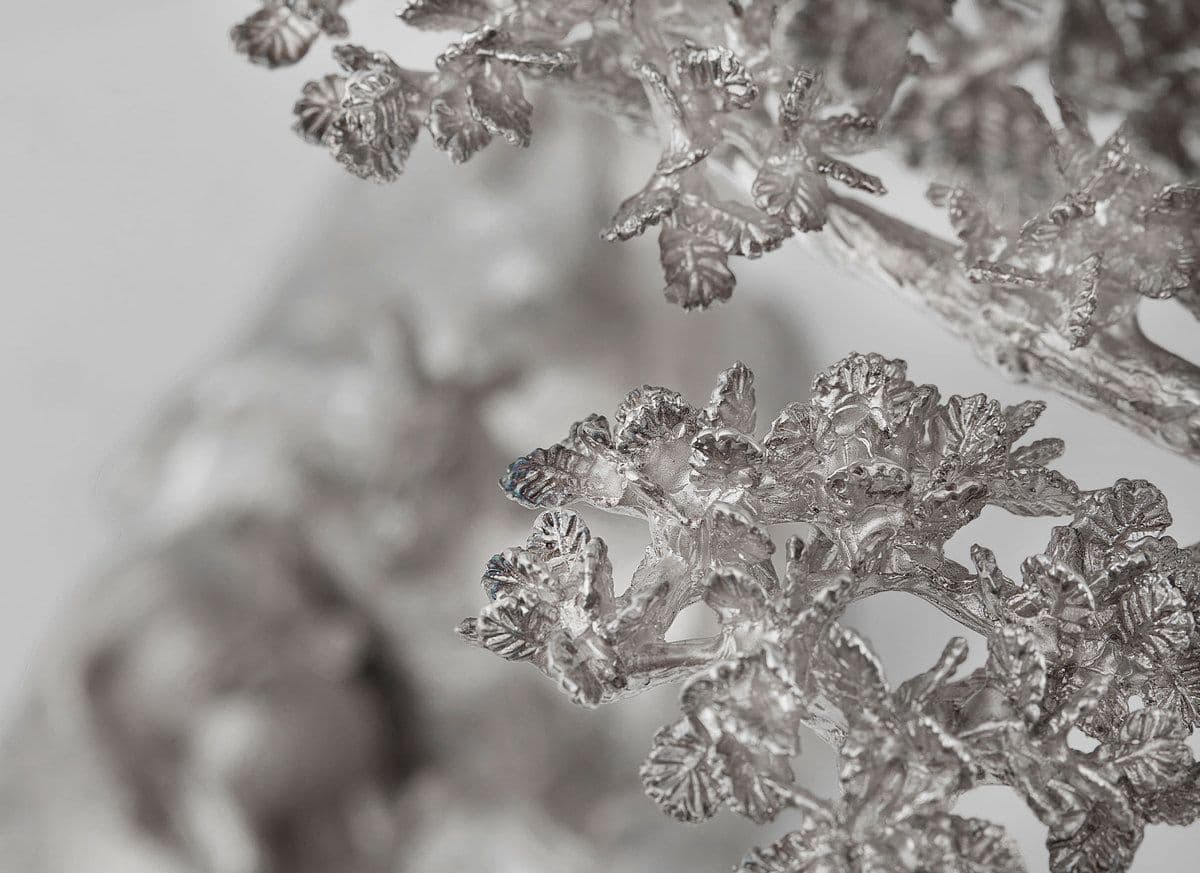
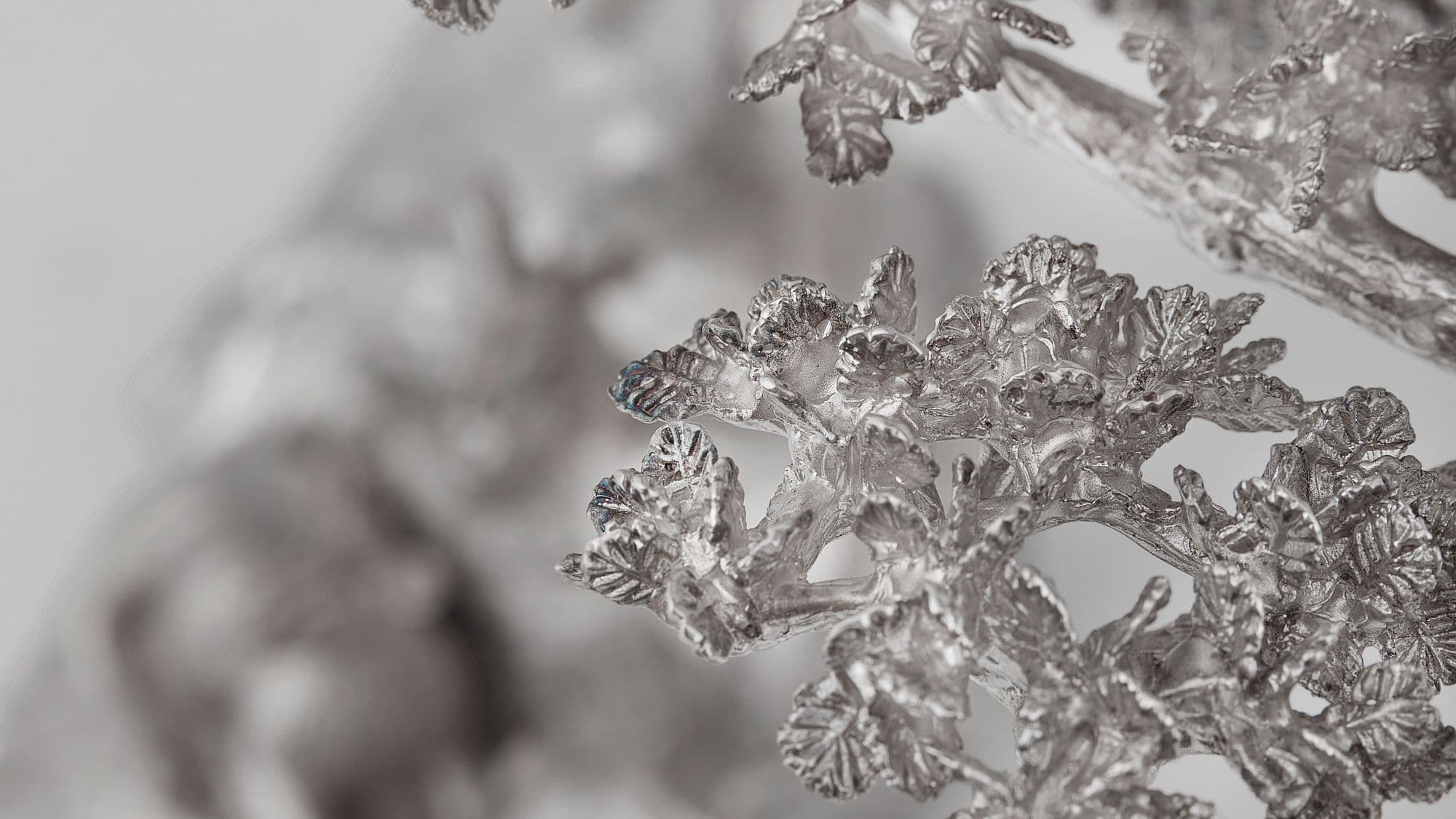
Craftsmanship and detail: Much of the appeal lies in the modelling. Look closely at fur, scales, movement, expression and the interaction between animals within more complex compositions.
Condition: As with other silver, condition matters. Tableware and jewellery may naturally show evidence of use, while collectors should also look for damage, losses, repairs or alterations.
Provenance: Original boxes, documentation and purchase history can add useful context, particularly for unusual or substantial works.