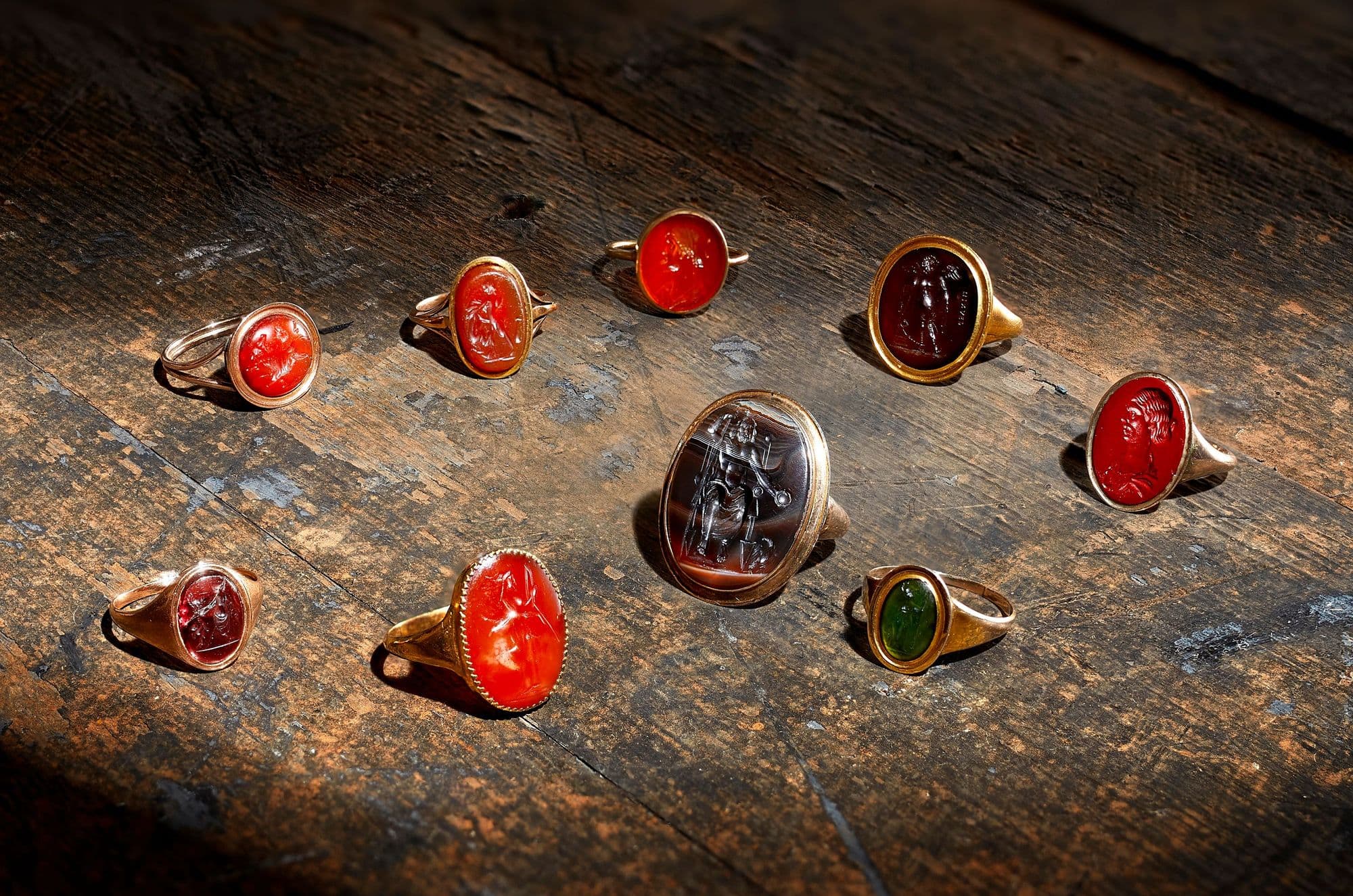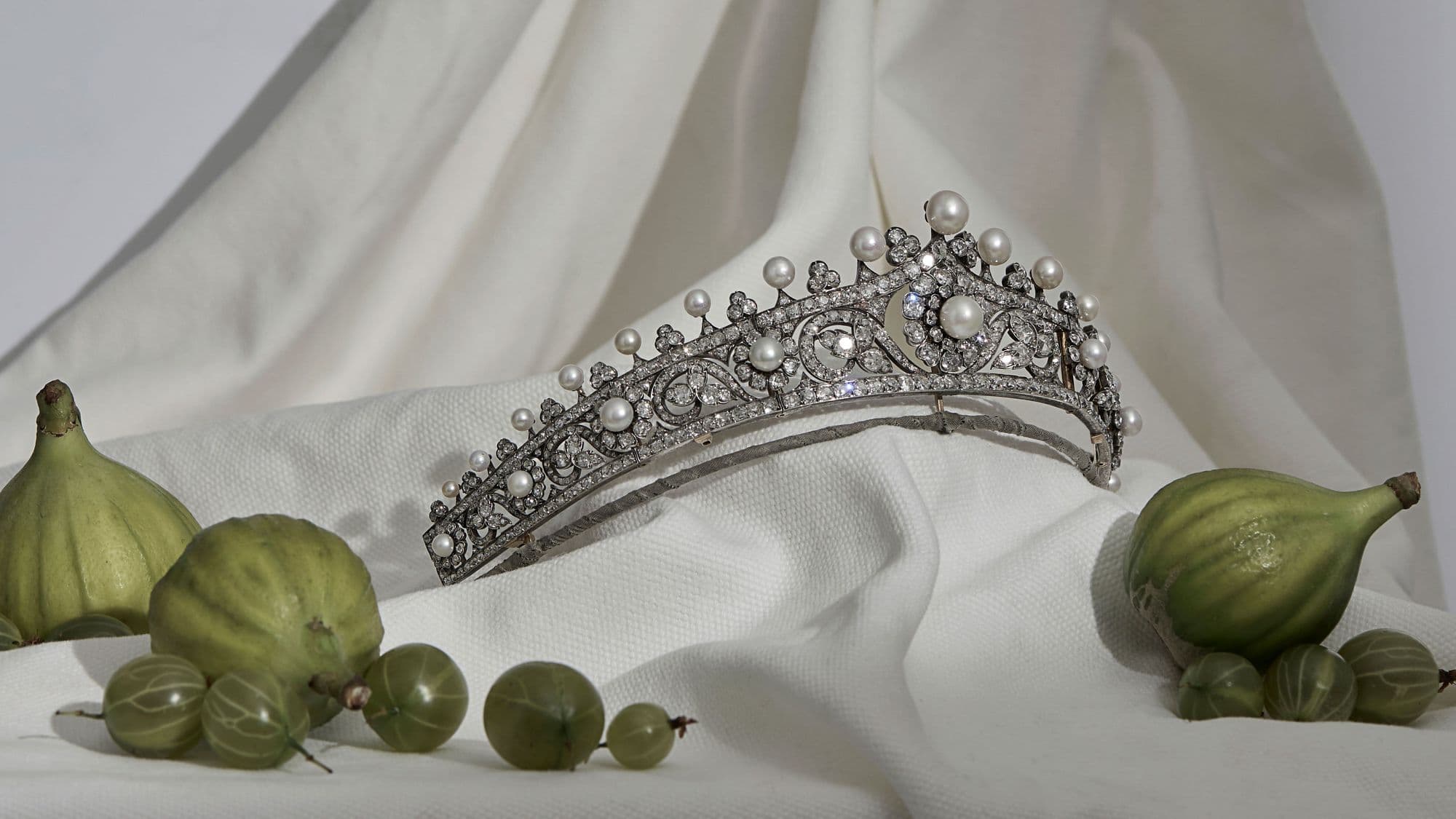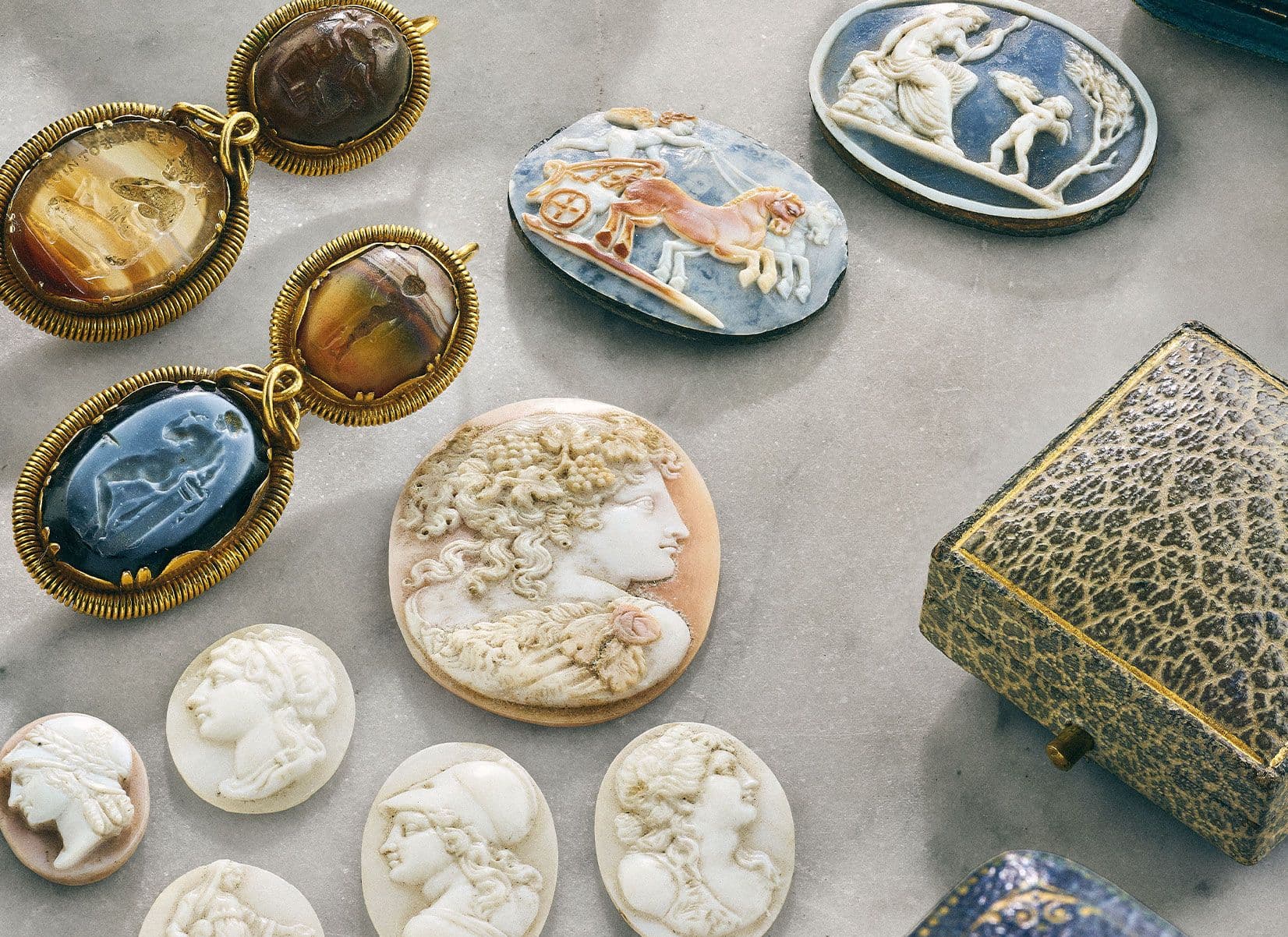
For centuries, cameos and intaglios have captivated collectors, jewellers and historians. Both are forms of gem engraving that transform hardstone, shell and other materials into miniature works of art, yet they achieve their effects in very different ways.
Often studied together, cameos and intaglios can be thought of as visual opposites. While one projects outward, the other is carved inward. Understanding these differences offers fascinating insight into the history of jewellery, craftsmanship and collecting.
What is an Intaglio?
An intaglio is a design carved into the surface of a gemstone or hardstone, creating a recessed image below the surface. When pressed into wax or clay, the engraved design produces a raised impression.
Originally, intaglios served a practical purpose. They were used as personal seals to authenticate documents, correspondence and goods, functioning much like a signature. Over time, however, they came to be appreciated as works of art in their own right.
The earliest examples are believed to have originated in Mesopotamia, where cylinder seals carved with intricate imagery were rolled across wet clay to create impressions. These objects often depicted deities, animals and scenes from daily life, combining practical and symbolic functions.