Scottish Provincial Silver from the Northern Highlands
Wick Silver and John Sellar
The northernmost of Scotland's provincial silver centres, Wick developed around one of Europe's greatest herring fisheries. Its name derives from the Old Norse vík, meaning "bay", reflecting centuries of Scandinavian influence and maritime trade.
Silver from Wick is exceptionally rare. Only a handful of pieces of hollowware survive, making it one of the classic rarities of Scottish provincial collecting.
The principal maker was John Sellar, whose mark appears on many surviving examples. Some pieces are believed to have been manufactured elsewhere before being marked in Wick, while simpler domestic wares are generally accepted as products of Sellar's own workshop.
Principal maker: John Sellar
Local economy: Herring fishing, maritime trade, shipbuilding
Tain Silver and the Ross Family
One of Scotland's oldest Royal Burghs, Tain prospered through agriculture, local trade and later the whisky industry. Situated beside the Dornoch Firth, it occupied an important position within the northern Highlands.
Silver production centred upon the Ross family of hammermen. Hugh Ross II and his nephew Hugh Ross III worked together for almost twenty-five years, making it difficult to distinguish between their hands. Their work is admired for its elegant proportions and careful craftsmanship.
Principal makers: Hugh Ross II, Hugh Ross III
Town mark: TAIN
Local economy: Agriculture, whisky, coastal trade
Inverness Silver and Simon McKenzie
The capital of the Highlands, Inverness has a long tradition of silversmithing dating back to the seventeenth century. Its position at the head of the Great Glen made it the commercial centre of northern Scotland.
Among the earliest recorded makers is Simon McKenzie, working by 1693. His surviving output includes communion cups, quaichs and distinctive thistle cups, all displaying a consistently high standard of workmanship.
Inverness silver is highly regarded for both its rarity and quality, particularly where early examples can be confidently attributed to an individual maker.
Principal maker: Simon McKenzie
Local economy: Highland trade, cattle, administration, military centre
Scottish Provincial Silver from Morayshire
Elgin Silver
A Royal Burgh from the twelfth century, Elgin became the commercial heart of Morayshire. Salt production first brought prosperity before overseas trade and agriculture established the town as one of northern Scotland's wealthiest centres.
Silversmiths such as Thomas Stewart, Charles Fowler and Joseph Pozzi produced refined domestic silver reflecting the confidence of this prosperous burgh.
Principal makers: Thomas Stewart, Charles Fowler, Joseph Pozzi
Local economy: Salt, agriculture, overseas trade
Forres Silver
Another important Morayshire burgh, Forres benefited from agriculture and its position on important Highland trading routes.
Important makers include John Riach, Patrick Riach and Robert Stewart, whose work is increasingly appreciated by collectors of Scottish provincial silver.
Principal makers: John Riach, Patrick Riach, Robert Stewart
Local economy: Agriculture, local trade
Fochabers Silver
Founded in 1776 as a planned village by the 4th Duke of Gordon, Fochabers occupies an important position beside the River Spey.
Scottish provincial silver from Fochabers is scarce, with some surviving pieces formerly attributed to Aberdeen before closer study identified local manufacture.
Local economy: Estate management, agriculture, River Spey trade
Keith Silver
Keith developed around the linen industry after the foundation of New Keith by James Ogilvy, 5th Earl of Findlater.
Examples of Keith silver are extraordinarily rare and seldom appear at auction, making the town one of the most sought-after provincial centres among specialist collectors.
Local economy: Linen, textiles
Scottish Provincial Silver from Aberdeenshire
Aberdeen Silver and James Gordon
Scotland's third city was one of the country's great centres of trade, exporting wool, salmon and granite while maintaining extensive commercial links with the Baltic.
Unlike many smaller provincial towns, Aberdeen supported numerous accomplished silversmiths. James Gordon is particularly admired for his communion cups, tea services, salvers and domestic silver.
The breadth of Aberdeen's surviving silver reflects both the prosperity of the city and the established demand for finely made domestic and ceremonial objects.
Principal maker: James Gordon
Local economy: Overseas trade, fishing, granite, textiles
Peterhead Silver
Peterhead's prosperity was built upon its harbour. By the nineteenth century, it had become Britain's leading whaling port.
The principal maker of Peterhead silver was William Simpson, whose mark appears on most surviving examples.
Principal maker: William Simpson
Local economy: Whaling, fishing, shipping
Ellon Silver and John Mackie
Although agriculture sustained the local economy, silver from Ellon is among the rarest of all Scottish provincial wares.
The most celebrated maker is John Mackie, whose distinctive punches, including the individual letters of ELLON, are greatly prized by collectors.
Principal maker: John Mackie
Local economy: Agriculture
Ballater Silver and William Robb
Ballater owes its reputation to Queen Victoria's frequent visits to nearby Balmoral, becoming the gateway to Royal Deeside.
Its principal maker, William Robb, specialised in finely crafted souvenir silver inspired by Highland culture. Larger domestic pieces are particularly uncommon and demonstrate his considerable technical skill.
Principal maker: William Robb
Local economy: Tourism, Royal Deeside
Scottish Provincial Silver from Angus
Montrose Silver
Montrose flourished through textiles, agriculture and one of Scotland's busiest east coast ports.
Its provincial silver reflects the prosperity generated by maritime commerce and the town's importance as a regional trading centre.
Local economy: Textiles, fishing, shipping
Arbroath Silver
The growth of flax spinning and linen manufacture transformed Arbroath during the nineteenth century.
Provincial silver from Arbroath survives in comparatively small numbers and reflects the town's industrial prosperity.
Local economy: Flax, linen, fishing
Dundee Silver
Known for "Jute, Jam and Journalism", Dundee's prosperity was built first upon shipping and whaling before expanding into textile manufacture.
The town mark depicting a pot of lilies, taken from the city's arms, is one of the most recognisable in Scottish provincial silver.
Local economy: Shipping, whaling, jute, marmalade
Scottish Provincial Silver from Perthshire and Fife
Perth Silver and Robert Keay
An ancient Royal Burgh and former capital of Scotland, Perth occupied an important position at the crossing of the River Tay.
The city's wealth derived from linen manufacture, leatherworking and Highland trade. Among its recognised silversmiths was Robert Keay, whose work forms part of Perth's provincial silver tradition.
Principal maker: Robert Keay
Local economy: Linen and leather
Cupar Silver
As the county town of Fife, Cupar prospered through agriculture and regional commerce.
Although comparatively little Cupar silver survives, it reflects the prosperity of eighteenth-century Fife and the demand for locally made domestic wares.
Local economy: Agriculture
Canongate Silver
Before its incorporation into Edinburgh, the Canongate was an independent Royal Burgh serving Holyrood Palace and Scotland's aristocracy.
Its silversmiths catered for an affluent clientele long before the New Town expanded eastwards.
Local economy: Royal court, legal profession, aristocratic patronage
Scottish Provincial Silver from Scotland's West Coast
Greenock Silver
Greenock emerged as one of Scotland's great Atlantic ports through tobacco imports, sugar refining and shipbuilding.
Its silver reflects the remarkable commercial expansion of the Clyde during the eighteenth century.
Local economy: Tobacco, sugar, shipbuilding
Paisley Silver
Internationally famous for its shawls and thread manufacture, Paisley became one of Scotland's wealthiest industrial towns.
Its silversmiths supplied a prosperous mercantile community, producing silver for a town whose commercial influence extended well beyond Scotland.
Local economy: Weaving, thread manufacture, textiles
Iona Silver and Alexander Ritchie
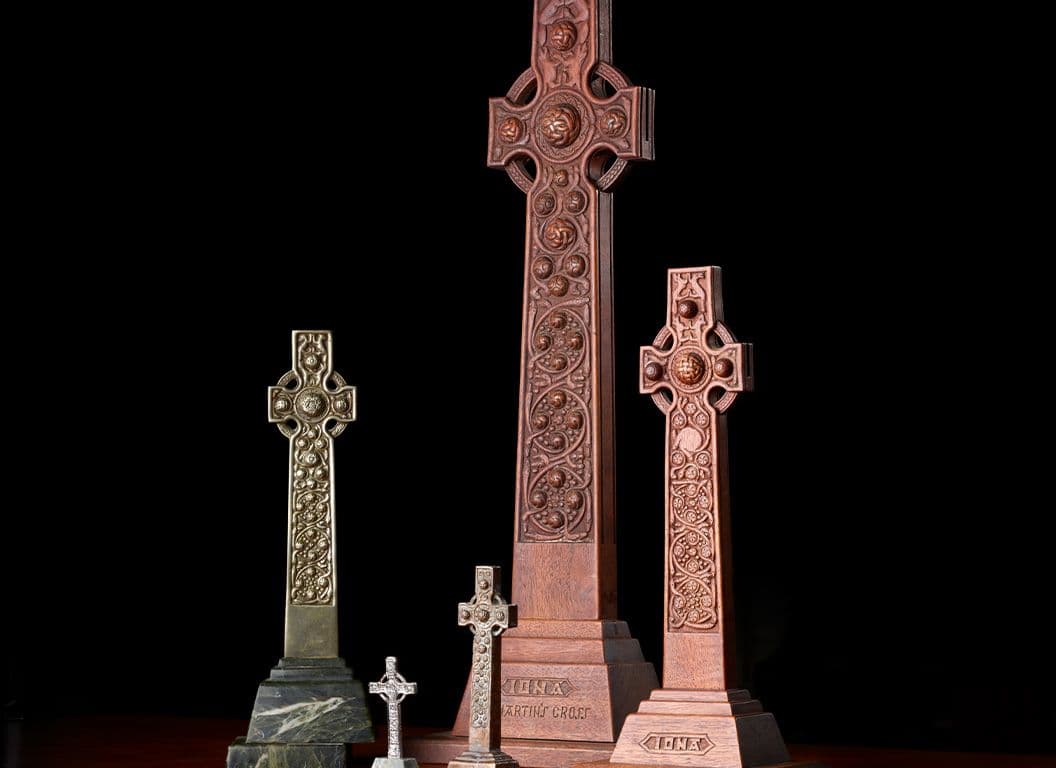
Iona stands apart from Scotland's earlier provincial silver centres. Rather than an eighteenth-century provincial workshop, its silver belongs to the Arts and Crafts Movement.
From the late nineteenth century, Alexander and Euphemia Ritchie produced jewellery and domestic silver inspired by early Celtic art. Their work helped define the Scottish Celtic Revival and remains among the most distinctive silver produced in Scotland.
The Ritchies' designs are particularly associated with Iona's cultural and artistic identity, making their work an important collecting field within Scottish silver.
Principal makers: Alexander and Euphemia Ritchie
Local economy: Pilgrimage, tourism, Arts and Crafts
Scottish Provincial Silver from South-West Scotland
Dumfries Silver
Situated close to the English border, Dumfries prospered through cattle droving, tobacco merchants and trade across the Solway Firth.
Its provincial silver reflects the importance of the town as the commercial centre of south-west Scotland.
Local economy: Agriculture, cattle, tobacco, maritime trade