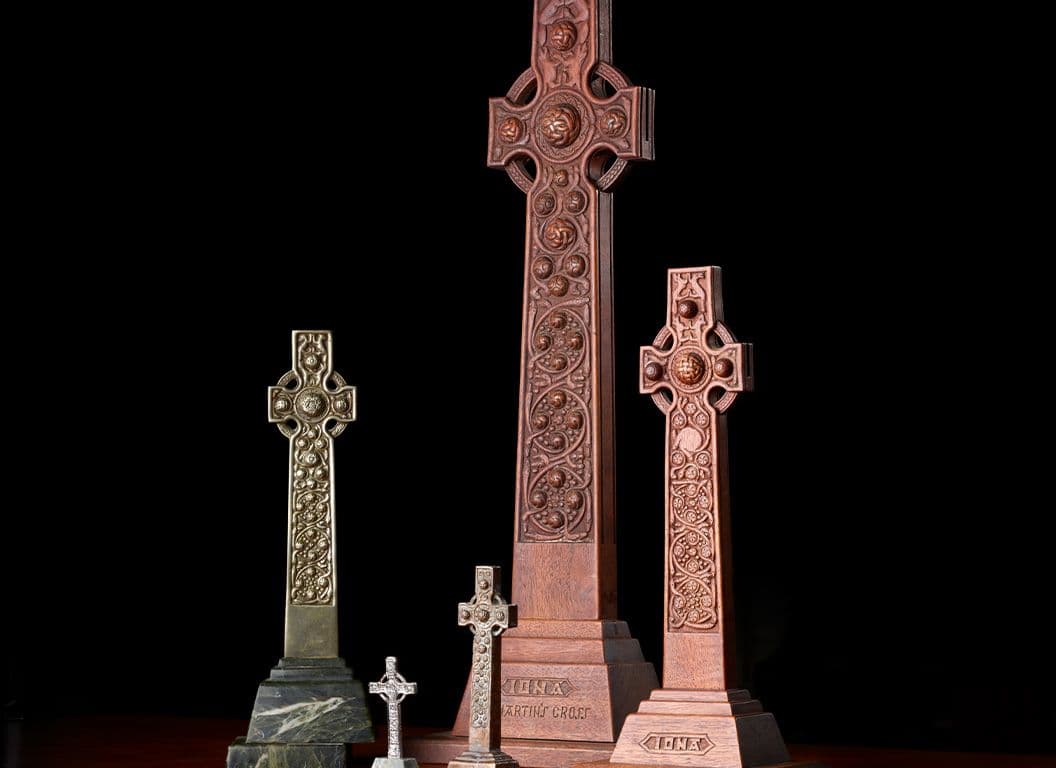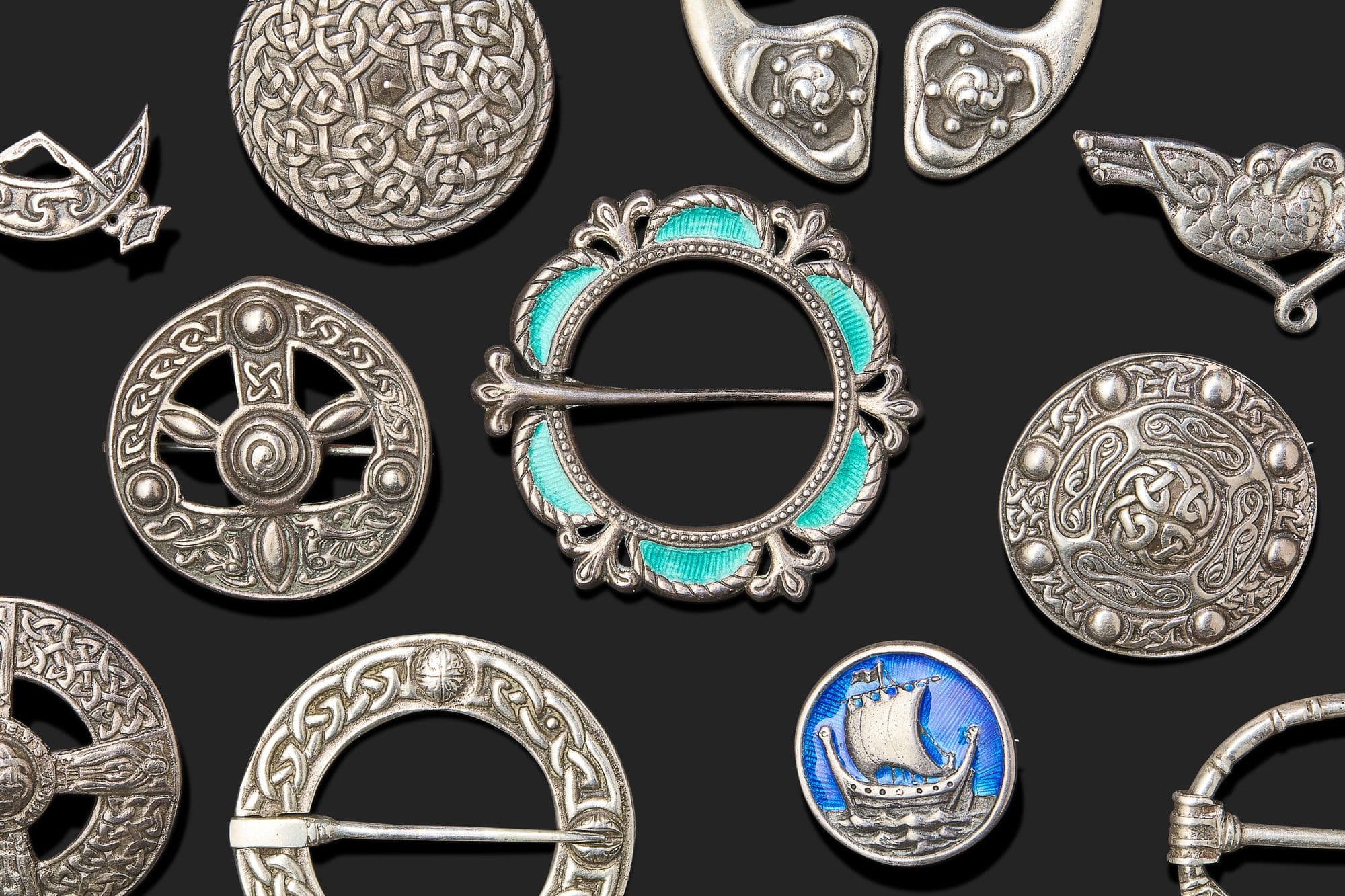
Alexander Ritchie is one of the best-known names associated with Iona Celtic Art. Working alongside his wife, Euphemia Catherine Ritchie, he developed a distinctive range of jewellery, silverwork and decorative objects inspired by Iona’s early Christian monuments, Celtic ornament and island landscape.
Today, collectors are drawn not only to the beauty of these pieces, but to the story behind them. Ritchie’s work sits at the meeting point of the Scottish Arts and Crafts movement, the Celtic Revival and the cultural life of Iona at the turn of the twentieth century.
What Makes Alexander Ritchie’s Work Distinctive?
It would be easy to see the Celtic wares produced on Iona simply as objects made for the growing tourist trade. Their appeal, however, extends far beyond that of souvenirs.
Alexander and Euphemia Ritchie were deeply involved in Scotland’s Arts and Crafts movement and helped define a distinctly Scottish interpretation of the Celtic Revival. Their work combined close study of early medieval design with practical craftsmanship in silver, wood, leather, embroidery, engraving and enamelling.
The result was a body of work rooted in place. Even when produced for visitors, the designs were closely connected to Iona’s history, religious traditions and surviving carved stones.
Quick Answer: Alexander Ritchie’s work is collected for its distinctive blend of Celtic Revival design, Arts and Crafts craftsmanship and strong connection to Iona. His jewellery, silver, woodwork and decorative objects draw directly on early Celtic art, while variations in materials, hallmarks, makers and design make individual pieces especially rewarding to study.