Why Are Islamic Ceramics Collectable?
Islamic ceramics are valued for their artistic quality, technical sophistication and historical importance. Potters working across the Islamic world developed innovative glazing and decorative techniques, producing objects that were both functional and highly accomplished works of art.
Many Islamic ceramics also reveal the movement of artistic ideas across cultures. Chinese porcelain influenced pottery production in Persia and the Ottoman Empire, while Islamic lustre techniques contributed to the development of ceramics in Europe.
For today's collectors, this diversity offers an opportunity to acquire objects with distinctive regional identities, from calligraphic bowls and architectural tiles to richly decorated dishes and vessels.
Key Facts About Islamic Ceramics
- Historical period: From the seventh century onwards, with major developments between the eighth and seventeenth centuries.
- Important regions: Persia (Iran), Iraq, Syria, Egypt, Ottoman Turkey and Central Asia.
- Principal ceramic types: Lustreware, Iznik pottery, Mina'i ware, Kashan ceramics, epigraphic pottery and architectural tiles.
- Decorative techniques: Tin glazing, lustre painting, underglaze decoration, overglaze enamelling and moulded relief.
- Common objects: Bowls, dishes, jars, tiles, bottles and architectural fittings.
- Collector appeal: Historical significance, rarity, craftsmanship, provenance and distinctive decorative traditions.
Understanding the Main Periods of Islamic Ceramics
The history of Islamic ceramics encompasses numerous regional traditions, each shaped by local materials, artistic influences and developments in ceramic technology.
Understanding these periods helps collectors recognise the differences between ceramic types and appreciate their place within the wider history of Islamic art.
Early Islamic and Abbasid Ceramics (8th–10th Centuries)
Some of the earliest major innovations in Islamic ceramics emerged during the Abbasid period, particularly in production centres associated with Iraq, including Basra and the region around Samarra.
Collectors particularly prize early Abbasid wares for their historical importance and technical innovation.
Important types include:
- Tin-glazed white wares: Pottery with an opaque white surface, often decorated in cobalt blue.
- Splash-decorated ceramics: Vessels featuring freely applied coloured glazes.
- Early lustreware: Ceramics decorated with metallic pigments that produce an iridescent surface.
- Epigraphic bowls: Vessels decorated with inscriptions, frequently in stylised Kufic script.
These early ceramics are comparatively rare, and important examples are represented in major museum collections. Authentic works of exceptional quality can command substantial prices because of their scarcity and historical significance.
Persian Ceramics (10th–17th Centuries)
Persia produced some of the most sophisticated ceramics in the Islamic world. For many collectors, Persian pottery represents one of the great achievements of Islamic ceramic art, combining technical innovation with remarkable decorative refinement.
Production developed across several important centres, with distinct traditions emerging over successive centuries.
Epigraphic Ware (10th–11th Centuries)
Produced primarily in Central Asia and eastern Iran, epigraphic ceramics are particularly admired for their elegant simplicity. These bowls frequently feature bold Kufic inscriptions arranged around the interior, often conveying blessings, moral sayings or expressions of generosity.
Their appeal lies in the relationship between calligraphy and abstract design, demonstrating how the written word became an important decorative element in Islamic art.
Mina'i Ware (12th–13th Centuries)
Mina'i ceramics are among the most distinctive products of medieval Persian pottery. Painted with multiple colours over the glaze, often with additional gilding, these works frequently depict courtly scenes, musicians, horsemen and literary subjects.
The complexity of their decoration required considerable technical skill, with successive firings used to achieve the finished appearance. Fine examples are rare and highly desirable, particularly when their original decoration survives in good condition.
Kashan Lustreware (12th–14th Centuries)
The city of Kashan became an important centre for the production of lustre-decorated ceramics. Its potters developed sophisticated techniques for applying metallic pigments to glazed surfaces, creating shimmering decorative effects that changed with the light.
Kashan lustreware includes bowls, dishes, tiles and architectural elements, often decorated with calligraphy, geometric patterns, vegetal motifs and figures. Fine examples demonstrate the extraordinary technical and artistic achievements of medieval Islamic pottery and are represented in major collections worldwide.
Ottoman Ceramics (15th–17th Centuries)
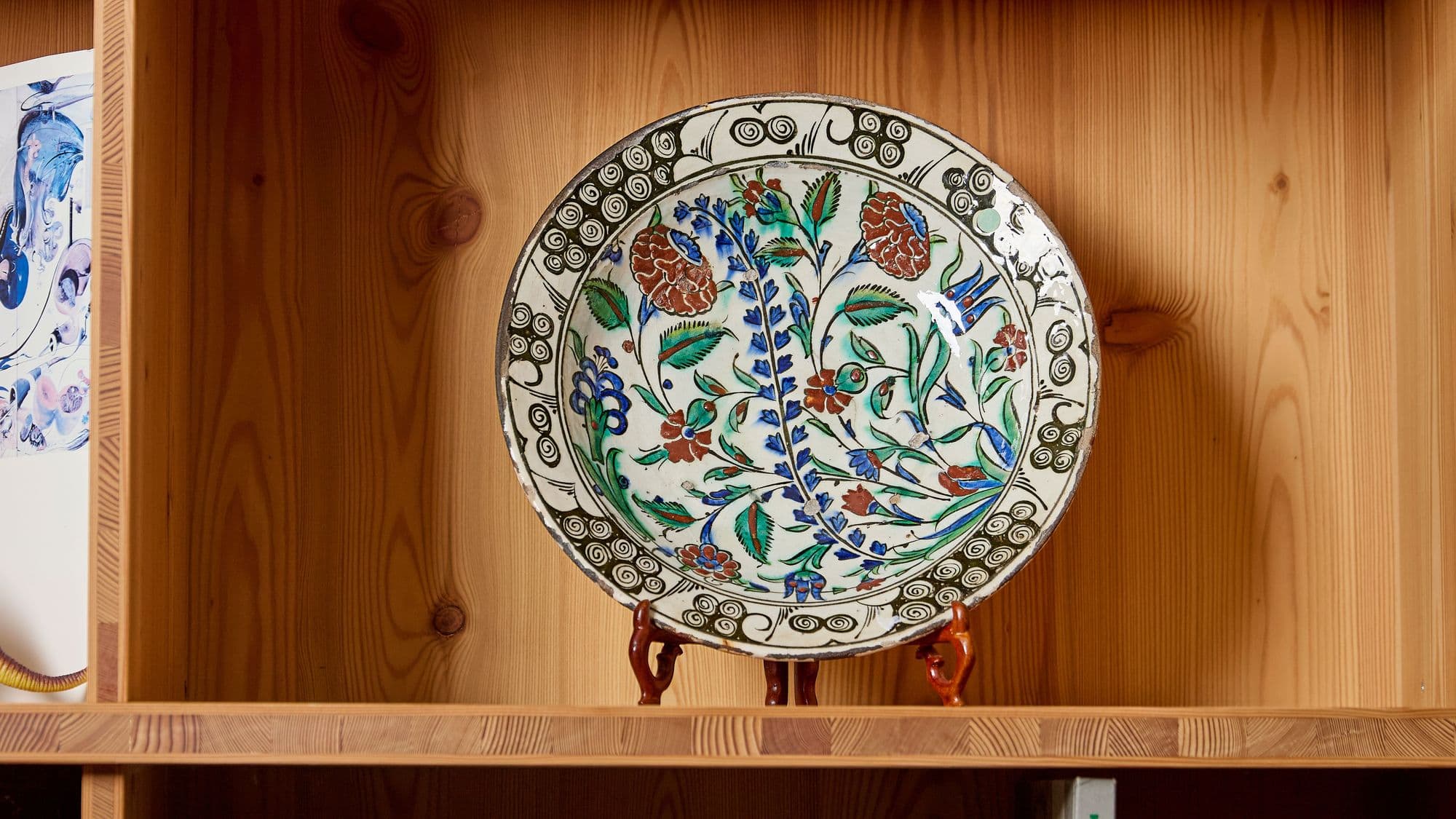
Ottoman ceramics, particularly those produced at Iznik in northwestern Turkey, are among the most recognisable forms of Islamic pottery. The development of Iznik ceramics reflects both the influence of Chinese porcelain and the distinctive artistic preferences of the Ottoman court.
Collectors are often drawn to:
- Cobalt-blue wares: Early ceramics decorated with intricate blue designs against a white ground.
- Blue-and-white pottery: Works influenced by Chinese porcelain, often incorporating floral and geometric motifs.
- Polychrome Iznik dishes: Ceramics featuring vibrant combinations of blue, turquoise, green and distinctive raised red.
- Architectural tiles: Decorative panels produced for mosques, palaces and other important buildings.
The finest sixteenth-century Iznik ceramics are particularly sought after for their exceptional workmanship, vibrant colours and sophisticated compositions. Floral designs incorporating tulips, carnations, roses and saz leaves became defining features of Ottoman ceramic decoration.
Syrian and Egyptian Ceramics
Syria and Egypt were important centres of Islamic ceramic production, with workshops operating in cities including Raqqa, Fustat and Cairo. Raqqa ceramics, particularly those produced during the twelfth and thirteenth centuries, are admired for their distinctive glazes and decorative techniques.
Egyptian potters also developed important traditions of lustreware and glazed pottery, contributing to the wider exchange of ceramic technologies across the Islamic world. Later Syrian ceramics, including Damascus tiles, offer another area of collecting interest. Some examples are more accessible than the finest early Persian or Ottoman wares, making them an appealing starting point for collectors interested in Islamic architectural decoration.
Indo-Islamic Ceramics
Ceramic production in the Indian subcontinent developed through a combination of local traditions and influences from Persia, Central Asia and the wider Islamic world. Mughal and Deccani ceramics are less commonly encountered in the international auction market than some Persian and Ottoman wares, but represent a fascinating area for collectors interested in South Asian Islamic art.
Glazed architectural tiles, vessels and decorative objects demonstrate the movement of artistic ideas across the region and the adaptation of established techniques to local tastes.
The Most Important Islamic Ceramic Techniques
Understanding ceramic techniques is essential when evaluating Islamic pottery. The materials and methods used by potters can provide important clues about an object's date, place of production and artistic significance.
Tin-Glazed Pottery
Tin glazing involves adding tin oxide to a glaze to create an opaque white surface suitable for painted decoration.
This technique became particularly important in early Islamic pottery production, allowing potters to achieve a pale ground that could evoke the appearance of imported Chinese white wares.
Lustreware
Lustre decoration involves applying metallic compounds over an already glazed surface, followed by a further firing in a reducing atmosphere.
The process creates shimmering copper, gold or iridescent effects that appear to change according to the angle of light.
Fine lustre decoration is among the most admired achievements of Islamic ceramic technology, particularly in Abbasid and medieval Persian pottery.
Underglaze Painting
Underglaze decoration involves painting designs onto a ceramic surface before the final glaze firing.
This technique became particularly important in Persian and Ottoman ceramics, allowing potters to create intricate patterns beneath a transparent glaze.
Blue-and-white decoration, often using cobalt pigments, became especially prominent.
Overglaze Enamelling
Overglaze decoration involves applying coloured pigments or enamels to an already glazed and fired surface, followed by additional firing at a lower temperature.
The technique allowed potters to introduce colours that could not withstand the higher temperatures required for the initial glaze firing.
It was particularly important in the production of Persian Mina'i ware.
Relief and Moulded Decoration
Some Islamic ceramics were decorated with carved, incised or moulded surface designs, adding texture and visual depth.
These techniques were frequently combined with glazing and painted decoration to create richly ornamented vessels and architectural elements.