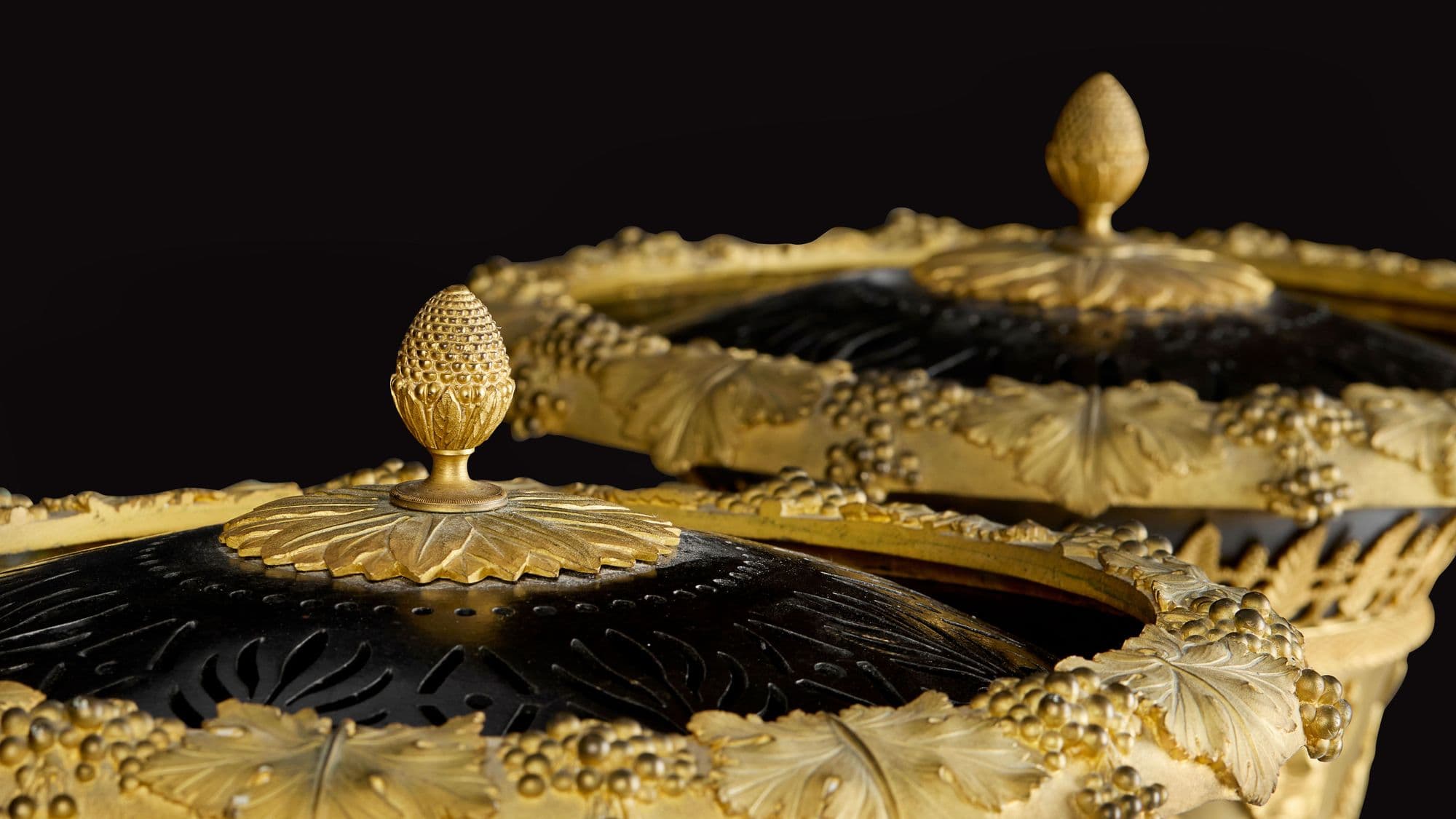
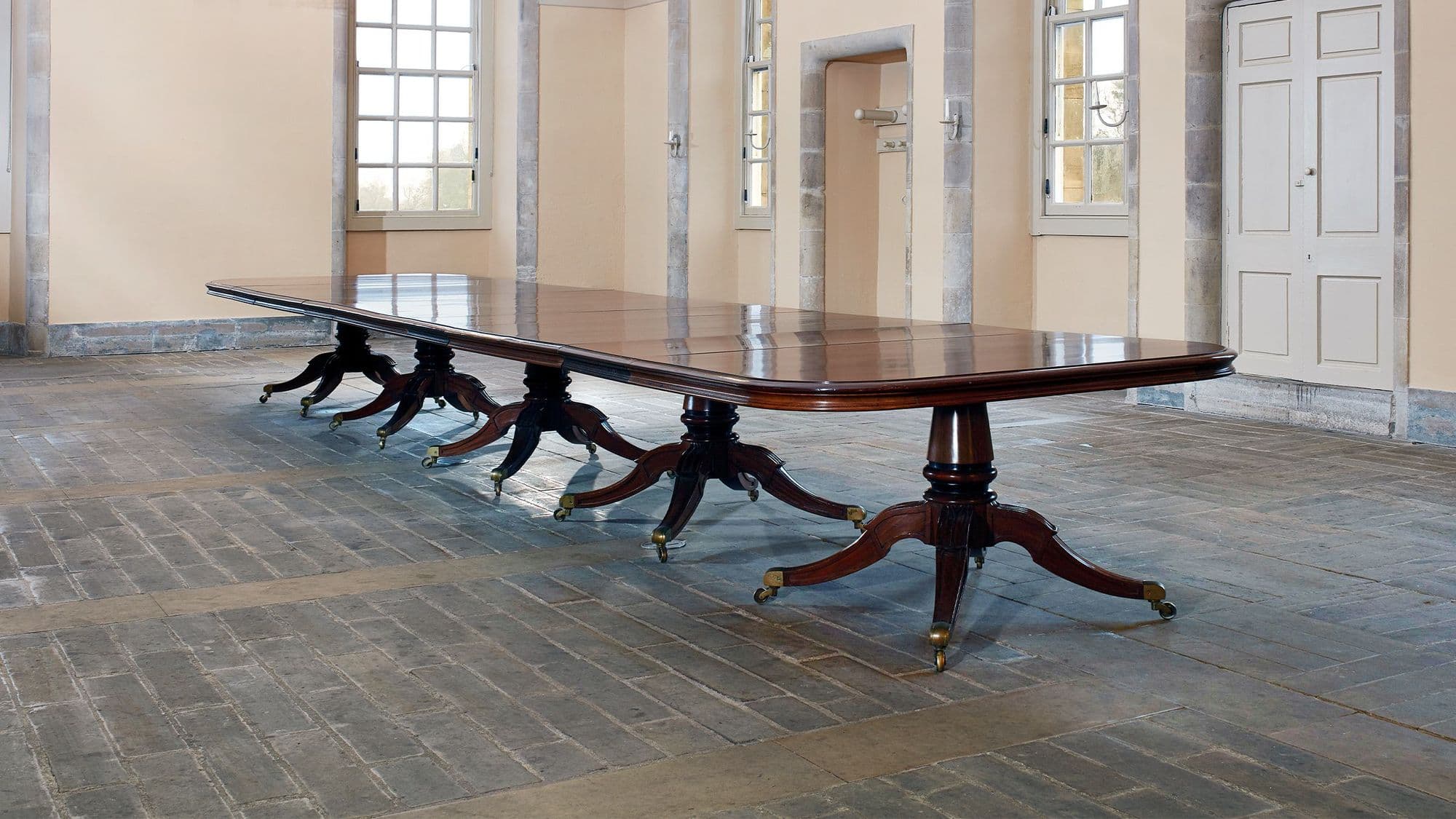
These classical influences are immediately recognisable in Empire furniture and works of art. Cabinetmakers and bronze founders embraced strong architectural forms, symmetrical compositions and richly ornamented surfaces. Decorative motifs such as laurel wreaths, eagles, sphinxes, winged victories, lions, swans and classical figures appeared across furniture, clocks, candelabra and ornamental bronzes, each carrying symbolic associations with victory, strength and imperial authority.
Materials played an equally important role. Richly figured mahogany became the timber of choice, often paired with finely chased and gilded bronze mounts. The contrast between the deep colour of the wood and the brilliance of gilt bronze became a defining feature of the style, while luxurious marbles, porphyry and hardstones added further richness to clocks, urns and decorative objects.
Among the most celebrated craftsmen of the period was Pierre-Philippe Thomire (1751-1843), widely regarded as the leading bronzier of the French Empire. Having trained under the sculptor Pierre Gouthière, Thomire supplied gilt-bronze mounts and ornamental works for many of the foremost cabinetmakers of his day, including Georges Jacob and Adam Weisweiler, before establishing his own workshop. His work is distinguished by exceptional casting, crisp chasing and refined gilding, and today remains among the most sought-after examples of French decorative art.
How the French Empire Style Spread Across Europe
Although the Empire style flourished for little more than two decades, its influence was far-reaching. It spread throughout Europe, inspiring furniture makers and designers from Russia to Britain, and continued to shape interior decoration long after Napoleon's reign had ended. The style's combination of classical restraint and lavish ornament proved remarkably enduring, influencing later nineteenth-century revival styles and remaining a benchmark for formal interior design.
Collecting French Empire Furniture & Decorative Arts
For collectors today, French Empire furniture and decorative arts offer a compelling combination of history, craftsmanship and design. Whether a finely cast pair of candelabra, an ormolu-mounted cabinet, a marble clock or a monumental bronze sculpture, these works represent the highest standards of craftsmanship achieved during one of the most influential periods in European design history. More than two centuries after they were made, they continue to command admiration for their quality, their symbolism and the remarkable skill of the artisans who created them.