How Was Islamic Calligraphy Made?
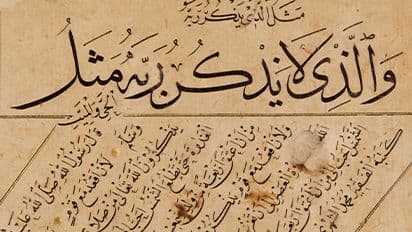
The production of Islamic calligraphy required years of disciplined training and a sophisticated understanding of materials. The traditional calligrapher's principal instrument was the qalam, a pen commonly cut from a reed and shaped to produce strokes of varying thickness. The angle of the nib, pressure of the hand and movement of the pen all influenced the finished letterforms.
Ink was carefully prepared, while paper could be sized, polished and burnished to create a smooth writing surface. Earlier manuscripts were frequently produced on parchment. Calligraphers learned to construct letters according to established systems of proportion, often using the rhomboid dot created by the pen nib as a unit of measurement. Mastery involved more than reproducing individual characters. The spacing between letters, balance of a composition and relationship between written and empty space were equally important.
In many traditions, students trained under established masters and received an ijazah, or certificate of authorisation, recognising their ability to practise and transmit a particular calligraphic style.
Islamic Calligraphy in Manuscripts and Architecture
Although Qur'an manuscripts remain among the most significant expressions of Islamic calligraphy, the art form developed across an extraordinary range of materials. In manuscript production, calligraphy was frequently combined with illumination, decorative borders and intricate geometric designs. Gold and coloured pigments distinguished chapter headings, verse divisions and other important elements of the text.
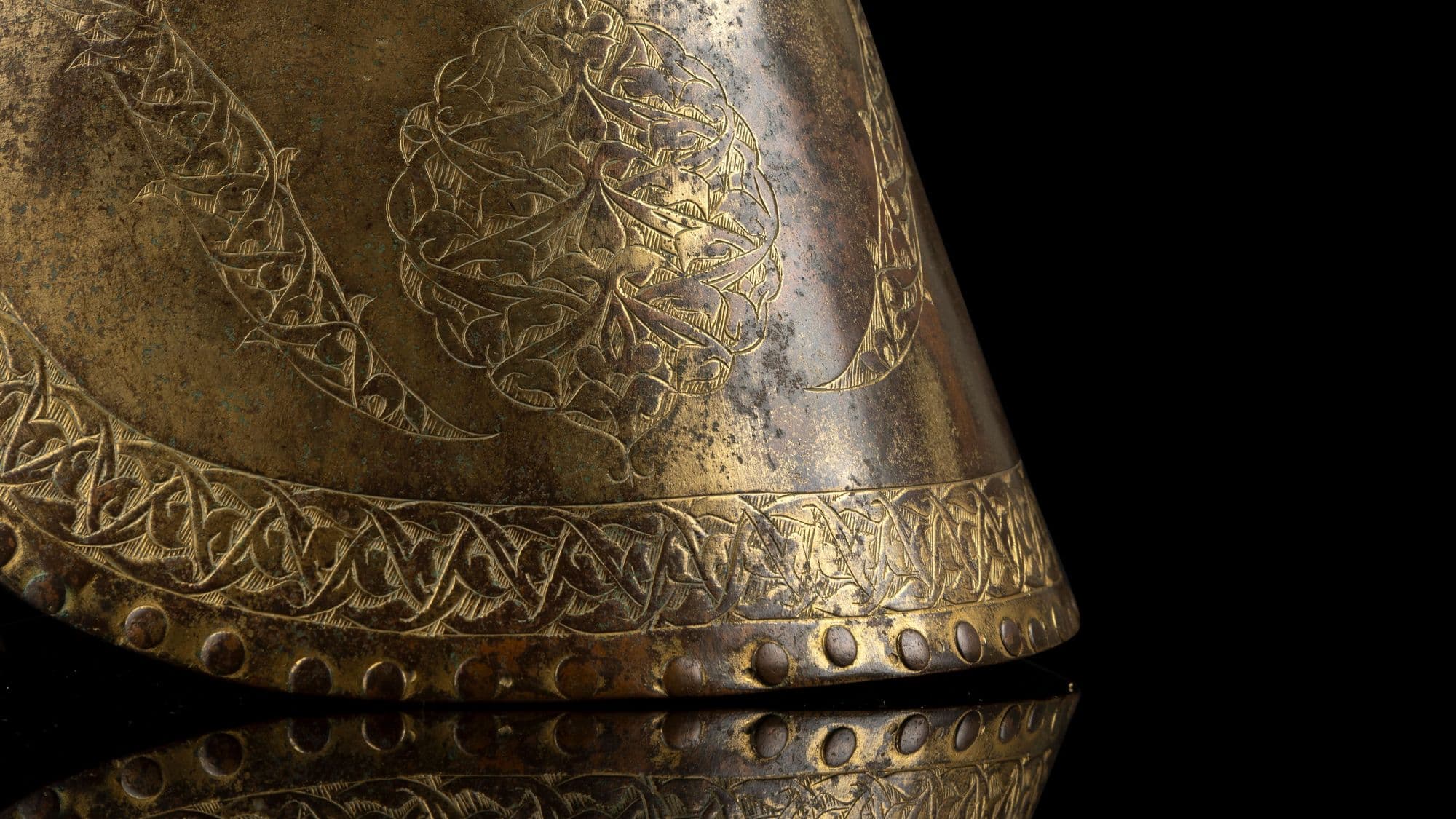
In architecture, inscriptions were incorporated into carved stone, stucco, woodwork, glazed tiles and mosaic decoration. Calligraphy could also transform everyday objects into works of artistic expression. Ceramics, metal vessels, textiles and carved wooden objects were frequently decorated with inscriptions conveying blessings, poetry, religious sentiments or the names of patrons and makers.
The relationship between text and ornament is particularly important. In some compositions, letters were elongated or intertwined to create patterns that approached abstraction, while remaining rooted in the conventions of Arabic script.
Calligraphy Across the Islamic World
One of the defining characteristics of Islamic calligraphy is its geographical and cultural reach. From North Africa and the Middle East to Central Asia, Iran, Ottoman Turkey and the Indian subcontinent, calligraphers developed distinctive regional approaches while drawing upon shared artistic principles. Arabic remained central to religious calligraphy, but the script was adapted to other languages, notably Persian, Ottoman Turkish and Urdu. The movement of artists, manuscripts and artistic ideas between courts and cultural centres encouraged further innovation.
Persian calligraphic traditions, for example, had a profound influence on Mughal manuscript production in India, where finely executed Nasta'liq frequently appeared alongside miniature paintings and elaborate album decoration. These connections demonstrate how calligraphy served as both a unifying artistic tradition and a means of expressing regional cultural identity.
How to Identify Islamic Calligraphy
Identifying the style, date and origins of Islamic calligraphy requires careful consideration of several characteristics. The form of the letters is often the starting point. Angular Kufic inscriptions differ considerably from the rounded proportions of Naskh or the sweeping diagonal movement of Nasta'liq. However, script alone rarely provides a definitive date or attribution. Calligraphic styles continued to be practised and revived long after their initial development. Specialists also examine the materials, including the paper or parchment, ink, pigments and decorative techniques.
Inscriptions, colophons, signatures, dates and collectors' seals can provide valuable evidence about a work's production and subsequent ownership. The quality of execution is equally revealing. Confident penmanship, consistent proportions and balanced compositions may indicate the work of an accomplished calligrapher, while historical alterations and later mounting require careful assessment.
A Specialist's Eye: What Collectors Should Look For
When examining Islamic calligraphy, several details can help establish a work's artistic and historical significance.
- Quality of the script: The precision of the letterforms, consistency of the pen strokes and overall balance of the composition are important indicators of craftsmanship.
- Materials and decoration: Early parchment, finely prepared paper, gold illumination and carefully applied pigments can contribute to a manuscript's historical and artistic interest.
- Inscriptions and signatures: Colophons, dates and named calligraphers may provide valuable information, although these details require careful verification.
- Provenance: Historic collections, ownership inscriptions and documented acquisition histories can help establish a work's journey through successive generations.
- Condition and completeness: The survival of original margins, illumination and binding elements may be particularly important, especially where individual folios have been removed from larger manuscripts.
What Makes Islamic Calligraphy Valuable?
The value of Islamic calligraphy depends on several factors, including age, rarity, artistic quality, historical significance, condition and provenance. Early Qur'an manuscripts can attract considerable scholarly and collector interest, particularly when they preserve important examples of early Arabic scripts or manuscript illumination. Works associated with recognised calligraphers, important artistic centres or distinguished collections may also command significant attention.
Ottoman calligraphic panels, Persian Nasta'liq album pages and illuminated manuscripts each occupy distinct areas of the collecting market, with demand influenced by attribution, quality and historical context. At Lyon & Turnbull, Islamic manuscripts and calligraphy form an important part of the wider Islamic & Indian Art market. Among previous auction highlights, a finely illuminated ninth-century Abbasid Qur'an finispiece achieved £13,970, while three folios from a tenth-century North African Qur'an on vellum sold for £5,080. These examples demonstrate the continued interest in early Islamic manuscript production and the importance of specialist assessment when establishing value.
Islamic calligraphy continues to inspire artists working across painting, sculpture, installation, graphic design and digital media. Contemporary practitioners frequently reinterpret traditional letterforms, exploring the relationship between language, abstraction and cultural identity.
Some retain the established conventions of classical scripts, while others experiment with scale, materials and compositions that challenge the boundaries between writing and image. The continued reinvention of calligraphy reflects the vitality of a tradition that has evolved over more than fourteen centuries without losing its connection to the written word.