Setting the Scene: An Introduction to the Stuarts
The historic Stewart clan has a long history with the Scottish monarchy, with the first Stewart King, Robert II, crowned in 1371. Almost two centuries later, French influence upon the young Stewart queen, Mary, led the royal family to adopt the altered ‘Stuart’ name.
Mary, Queen of Scots and her husband Henry, himself a Stewart, welcomed just one child, a boy named James. James would become King of Scotland in July 1567 aged only 1 year old, and upon the death of Queen Elizabeth in 1603, would be the first monarch to unite Scotland and England under one crown.
The reign of the first Stuart King of Great Britain was not without challenge, though these pale in comparison to those faced by his second son and successor to the throne, Charles. For King Charles I, his inherited belief in the Divine Right of Kings led to a tumultuous reign and, ultimately - following political and religious conflicts, civil war and a trial for treason - his death at the hands of the executioner.
Whilst some hailed the death of King Charles I in 1649 as the end of a tyranny, those in favour of the monarchy remained. The aftermath of the dramatic execution of the ruling monarch saw a period of uncertainty, none more so than for supporters of the late King, who sought to carefully honoured Charles I as a martyr and to subtly signal their support for the Stuarts, and the future King Charles II.
Commemorating King Charles I: The Emergence of Stuart Crystals
The execution of King Charles I thus inspired the emergence of what would come to be known as ‘Stuart Crystal’ jewellery. These pieces were created in the latter half of the 17th century to mourn the late King and to signal support for the Stuarts, with emphasis on the latter such that its been argued these mourning jewels are better described as ‘wearable propaganda’. Typically fashioned in simple settings, these items featured fashioned rock crystal stones encasing hairwork designs overlaid with intricate wire ciphers. Whilst rings were most common, cufflinks, earrings, pendants and other accessories were also seen.
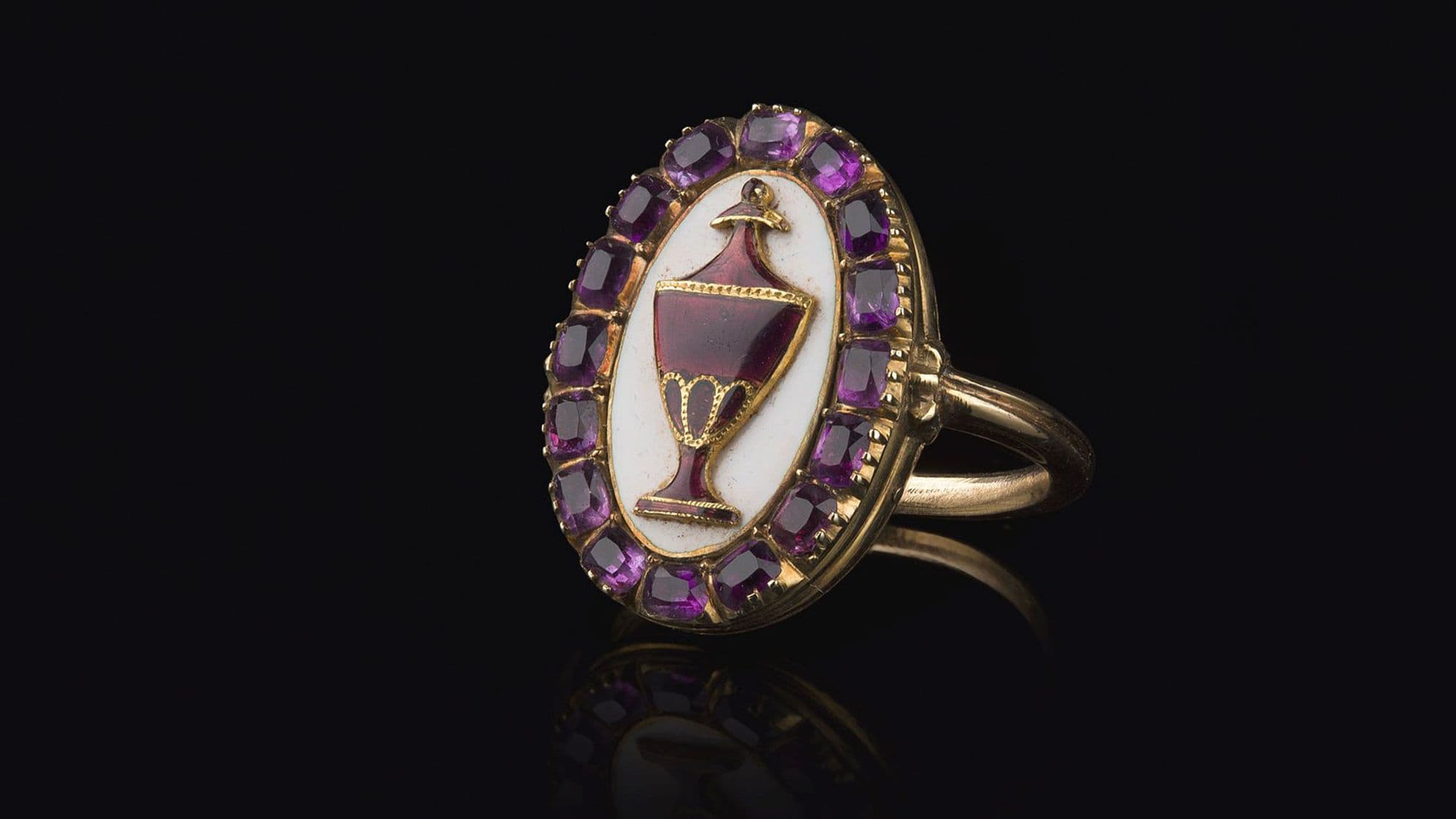
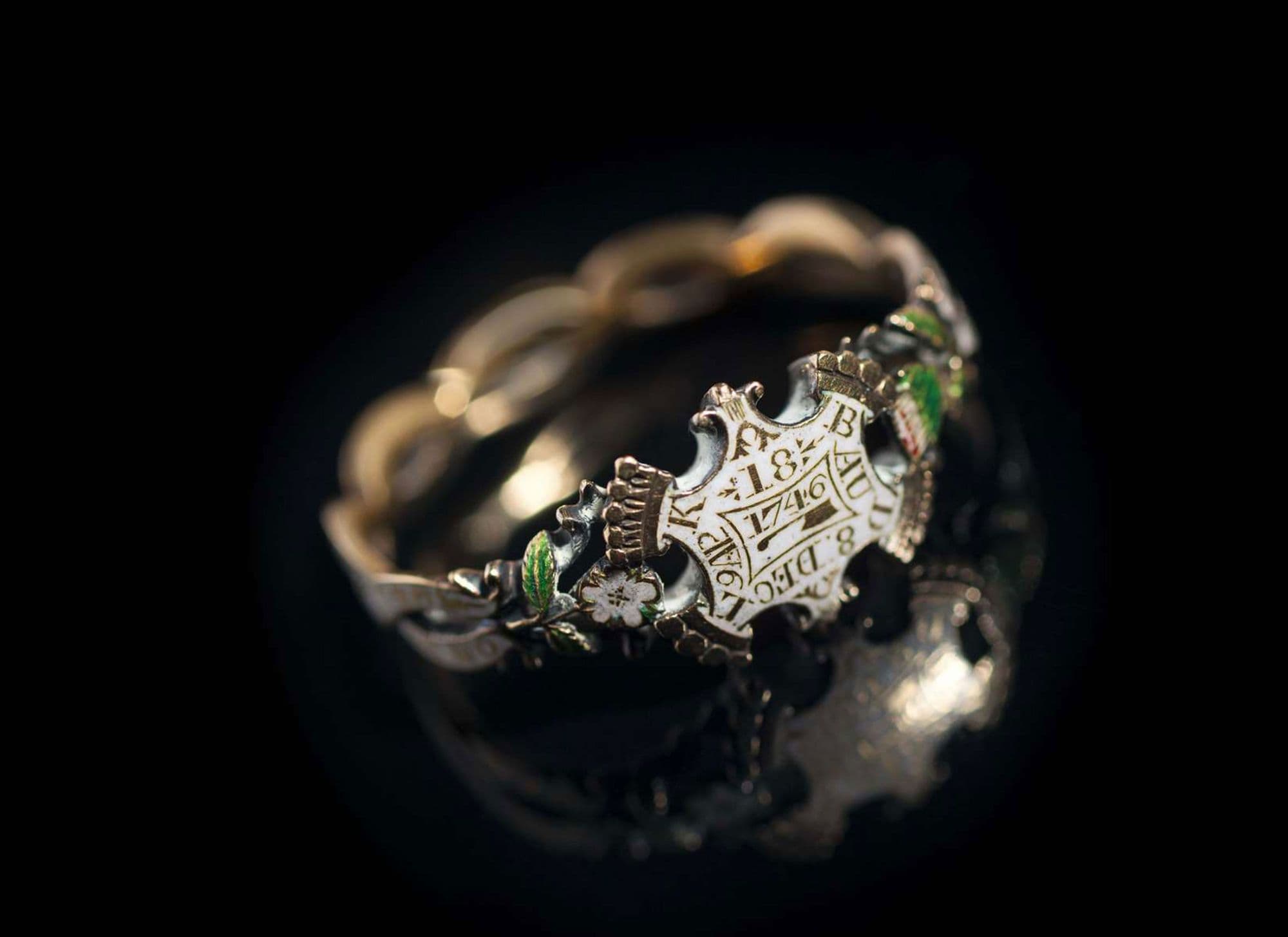
Stylistically there appears little doubt of the influence of these 17th century jewels on the mourning jewellery of the period that followed. The design of ‘Stuart Crystal’ pieces is of one commonly adapted for mourning jewellery of the Georgian period, where designs often feature hair fragments encased below rock crystals. Such pieces may benefit from additional detail, often in enamel, recalling details of the deceased.
An understanding of early British mourning jewellery is incomplete without the crystal pieces which appeared to commemorate King Charles I, though the influence of the Stuart dynasty on memorial customs goes beyond the 17th century.