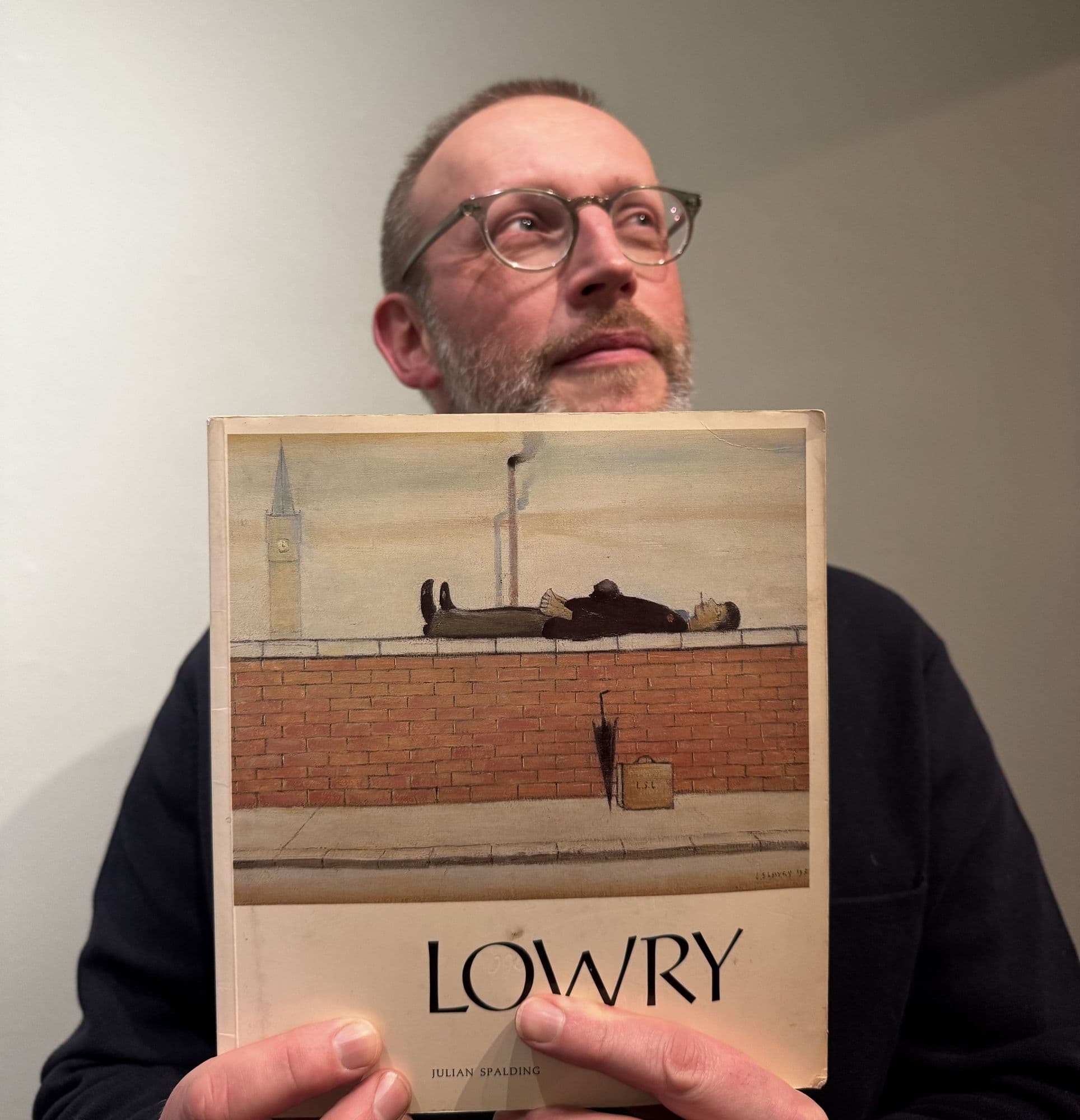
Coventry in the 1970s and ’80s was a world Lowry would have recognised – a post-industrial city stuttering to its end, but where the rhythm of life still rolled along Victorian lines – ‘factory fortnight’ holidays were still a thing (Coventry one week, Birmingham the next, all off to Weston-Super-Mare, as Lowry and Manchester had gone to Lytham-St-Annes), the car factories were still the main employer, red-brick terraces were everywhere, apart from that temple to 50s modernism and optimism, The Precinct, where we’d go shopping on a Saturday.
Lowry was always painting a world that was disappearing – in fact the disappearing is his real subject. Nostalgia, but not the soft-focussed kind, more like ‘the pain from an old wound’ as Don Draper famously monologued in Mad Men when describing the Kodak slide carousel as a time machine. And it’s that disappearing world that I grew up in that so obsesses me, and which makes British art of the 20th century the thing I keep coming back to, as it is the lens through which I understand place, culture, history, but also a way of being in the world. It’s home, I guess.
Looking back through that Lowry catalogue, I can’t quite believe that I ended up selling some of the works that were in that show, including Father and Two Sons from 1950, one of the great Expressionist works of the 20th Century. If you had told the fifteen-year-old me that this is what I’d end up doing, I wouldn’t have believed you, as I had no idea what I’d be, or that I’d spend every day looking at art and holding paintings in my hands. So in a way, I owe the Herbert Art Gallery, and Mr Lowry, everything.