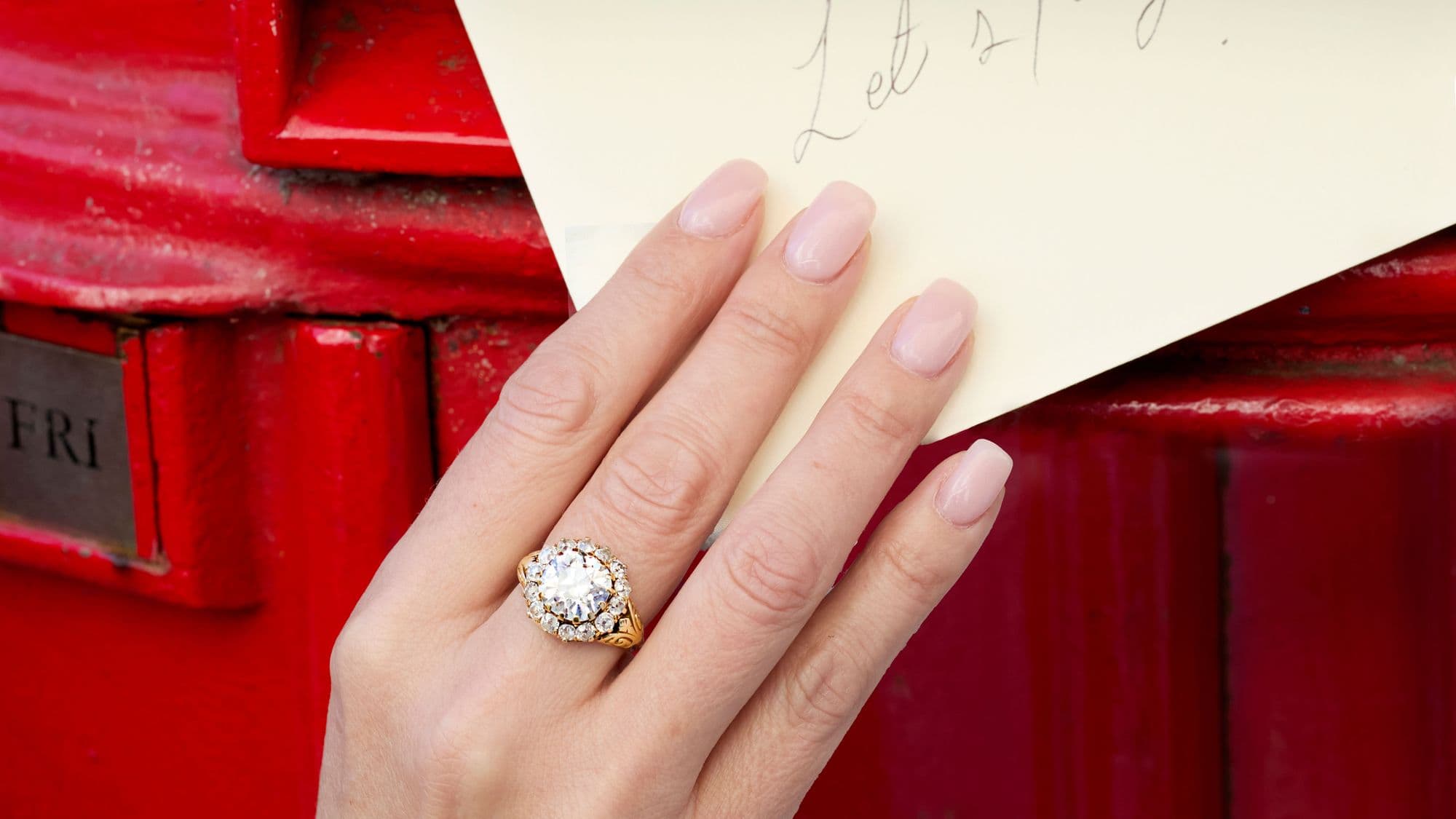
What is a Round Brilliant Cut?
The round brilliant cut was devised in 1919 by Marcel Tolkowsky, a mathematician and gemmologist who sought to discover the exact proportions needed to maximise a gemstone's beauty. His discoveries continue to influence gemstone cutting today.
There are four stages to gemstone cutting: designing, dividing, shaping, and faceting and polishing. Only diamond can cut diamond and it can take skilled cutters months to determine how best to cut a particular stone, balancing maximum yield with optimum beauty.
When creating a round brilliant cut, the stone is divided and shaped into two sections: the upper crown and the lower pavilion. The crown is faceted to maximise the dispersion of light through the stone, while the pavilion is cut to enhance brilliance. If these proportions are incorrect, the crown and pavilion facets do not work together effectively and some of the stone's potential beauty can be lost.
The angle of the pavilion facets dictates brilliance, the reflection of white light, and was found to be most effective at around 41°. The crown angle should ideally be between 30° and 35°. A classic round brilliant cut has 57 facets, with 33 on the crown and 24 on the pavilion. The pavilion terminates in a point called the culet, which may be polished flat to create a 58th facet.
A well-cut stone is always a balance between brilliance, fire and scintillation, and the round brilliant cut remains the finest compromise between these three qualities. This perhaps explains why around 75 to 80% of diamonds used in jewellery today are cut in this style.