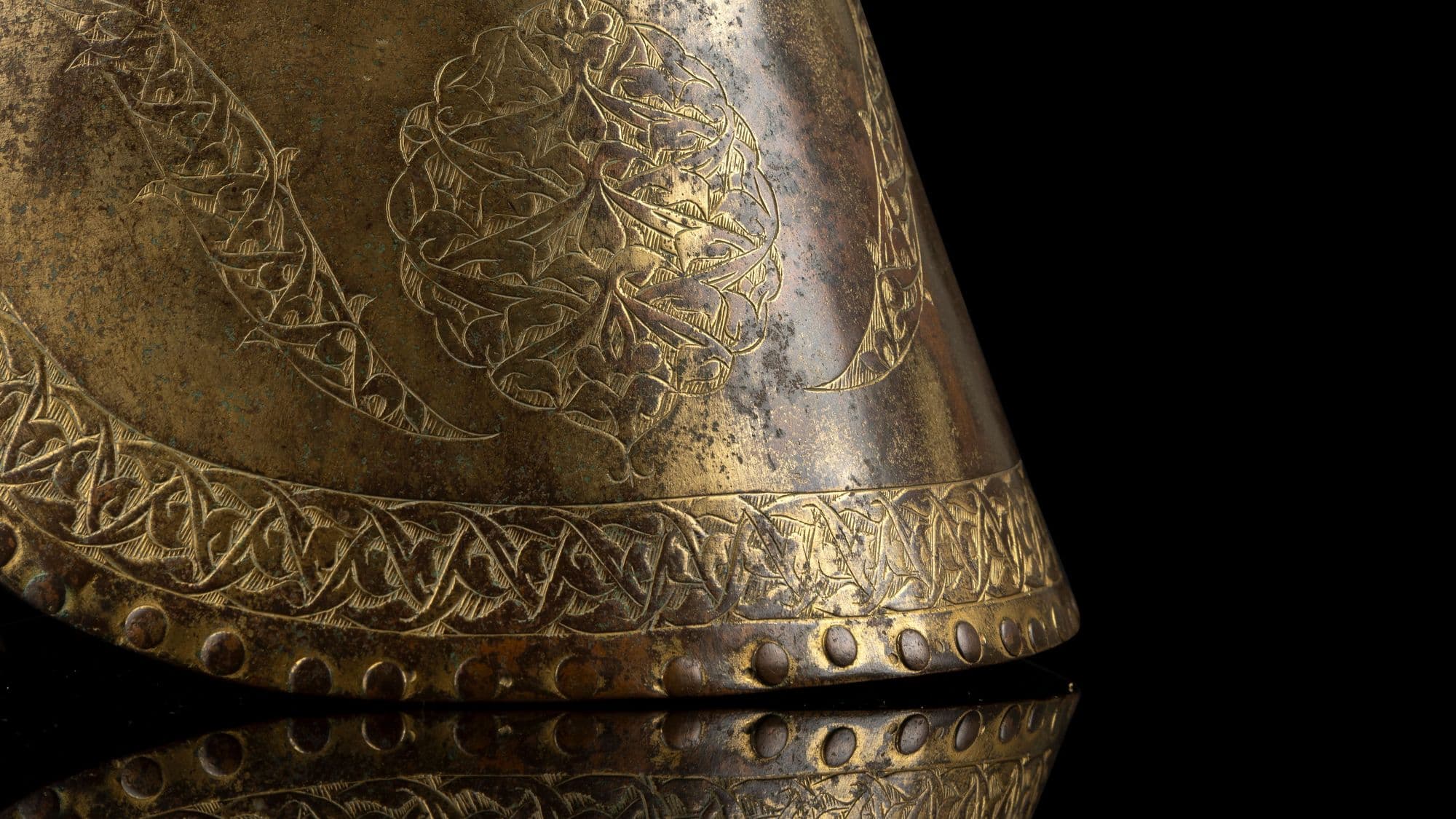
What makes a piece of Islamic art valuable? From Persian ceramics and Ottoman metalwork to illuminated manuscripts, calligraphy and historic textiles, determining an object's potential auction value involves considerably more than establishing its age.
Provenance, rarity, artistic quality, condition and historical significance all influence how Islamic art is valued. Equally important is understanding the international market and what today's collectors are looking for.
At Lyon & Turnbull, our Islamic & Indian Art specialists combine historical research, technical examination and auction market knowledge to assess works from across the Islamic world. Here, we explain the key factors that influence an Islamic art valuation.
What Determines the Value of Islamic Art?
The value of Islamic art is generally influenced by six principal factors:
- Provenance: The object's documented ownership history and any connection to important collections.
- Rarity: How frequently comparable examples appear on the market.
- Craftsmanship: The quality of its materials, decoration and artistic execution.
- Condition: Its state of preservation, including repairs, restoration and later alterations.
- Authenticity and attribution: Evidence supporting its age, origin, maker or workshop.
- Market demand: Recent auction results and collector interest in comparable works.
Each object is assessed individually, with these factors considered together rather than in isolation.