Why Did Duncan Shanks Keep Returning to the Falls of Clyde?
Why do artists feel drawn to a particular place? What makes an artist return to the same view time and time again? Just as Paul Cézanne repeatedly returned to views of Mont Sainte-Victoire, producing more than eighty paintings of the mountain, Duncan Shanks felt a similar pull towards the Clyde Valley, particularly the Falls of Clyde.
One might assume that painting the same view repeatedly would become dull. For Shanks, however, this was far from the case. He treated the Falls as his muse, and just as a lifelong muse changes and ages, the Falls appeared differently to Shanks on every occasion. The changing light, weather, and seasons continually transformed the landscape, ensuring there was always something new to observe and portray.
What Is Cora Linn?
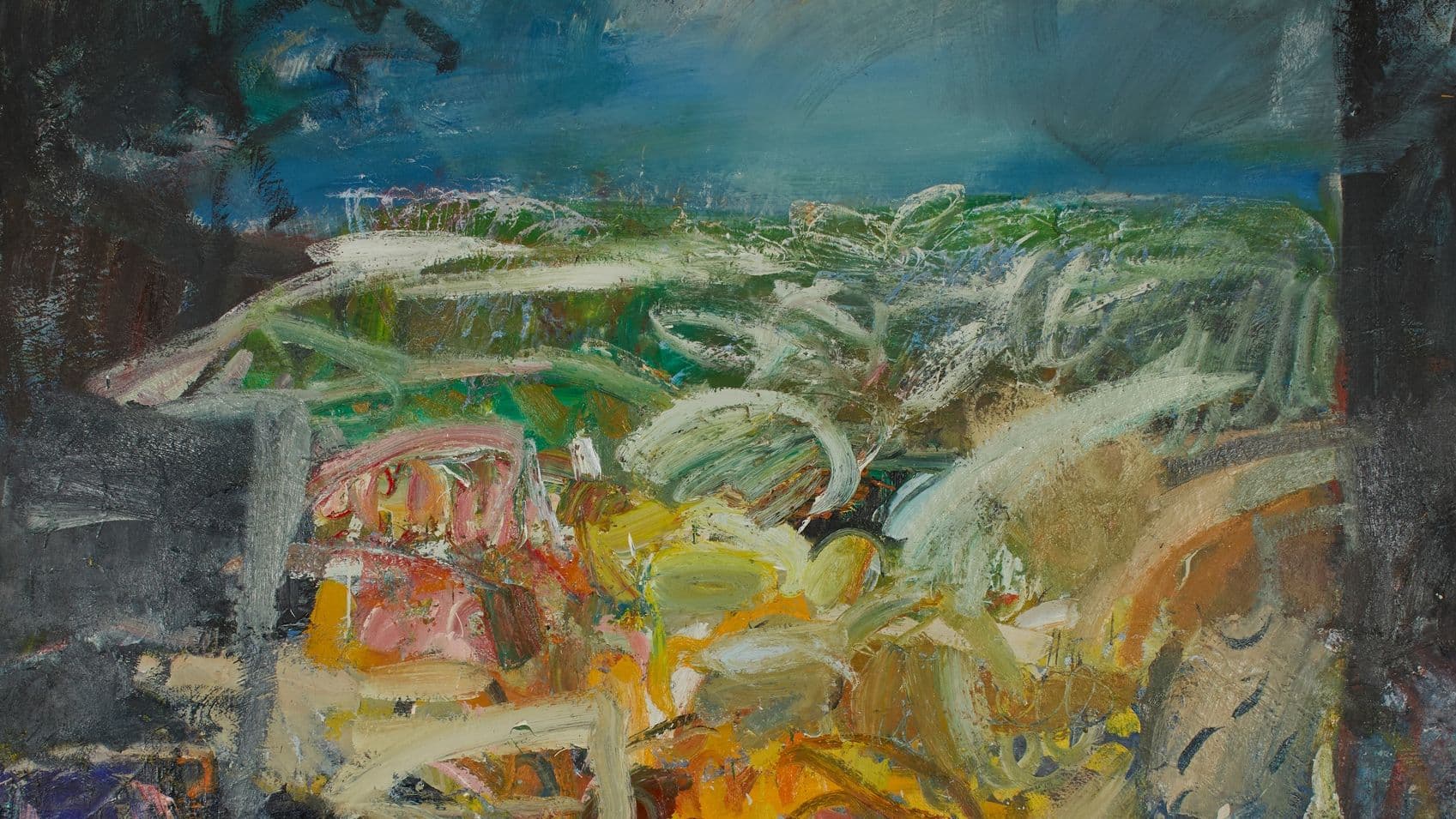
Cora Linn is one of the four spectacular Falls of Clyde, situated near New Lanark in South Lanarkshire. Named after the Gaelic coire, meaning “cauldron” and linn meaning "waterfall", it is the largest of the Falls, where the River Clyde plunges through a dramatic wooded gorge.
For Duncan Shanks, Cora Linn became far more than a dramatic beauty spot. Returning throughout his career, he found endless inspiration in its constantly changing light, flowing water and shifting atmosphere, making it one of the defining subjects of his work.
Illustrated: Duncan Shanks R.S.A., R.S.W., R.G.I. (Scottish 1937-) | Cora Linn, 1985