Protection and Belief in Ancient Jewellery
In the ancient world, jewellery was also designed to protect its wearer through designs which invoked supernatural forces to ward off evil or misfortune.
What Is Apotropaic Jewellery?
Symbols intended to protect against misfortune and bad spirits are described as apotropaic. Although the specific apotropaic symbols differed across ancient cultures, they tended to reflect similar fears and wishes of their ancient users and believers.
The Evil Eye and Protective Amulets in Ancient Rome
Roman jewellery utilised ithyphallic symbols to protect against the oculus malus, or the ‘evil eye’ by drawing on the protection of the god Fascinus, who was commonly depicted as an erect phallus. Pliny the Elder, writing in the AD 70s, says that:
“although infants are under the especial guardianship of the god Fascinus, the protector, not of infants only, but of generals as well, and a divinity whose worship is entrusted to the Vestal virgins, and forms part of the Roman rites. It is the image of this divinity that is attached beneath the triumphant car of the victorious general, protecting him, like some attendant physician, against the effects of envy”
Pliny the Elder, Naturalis Historia, XXVIII.7
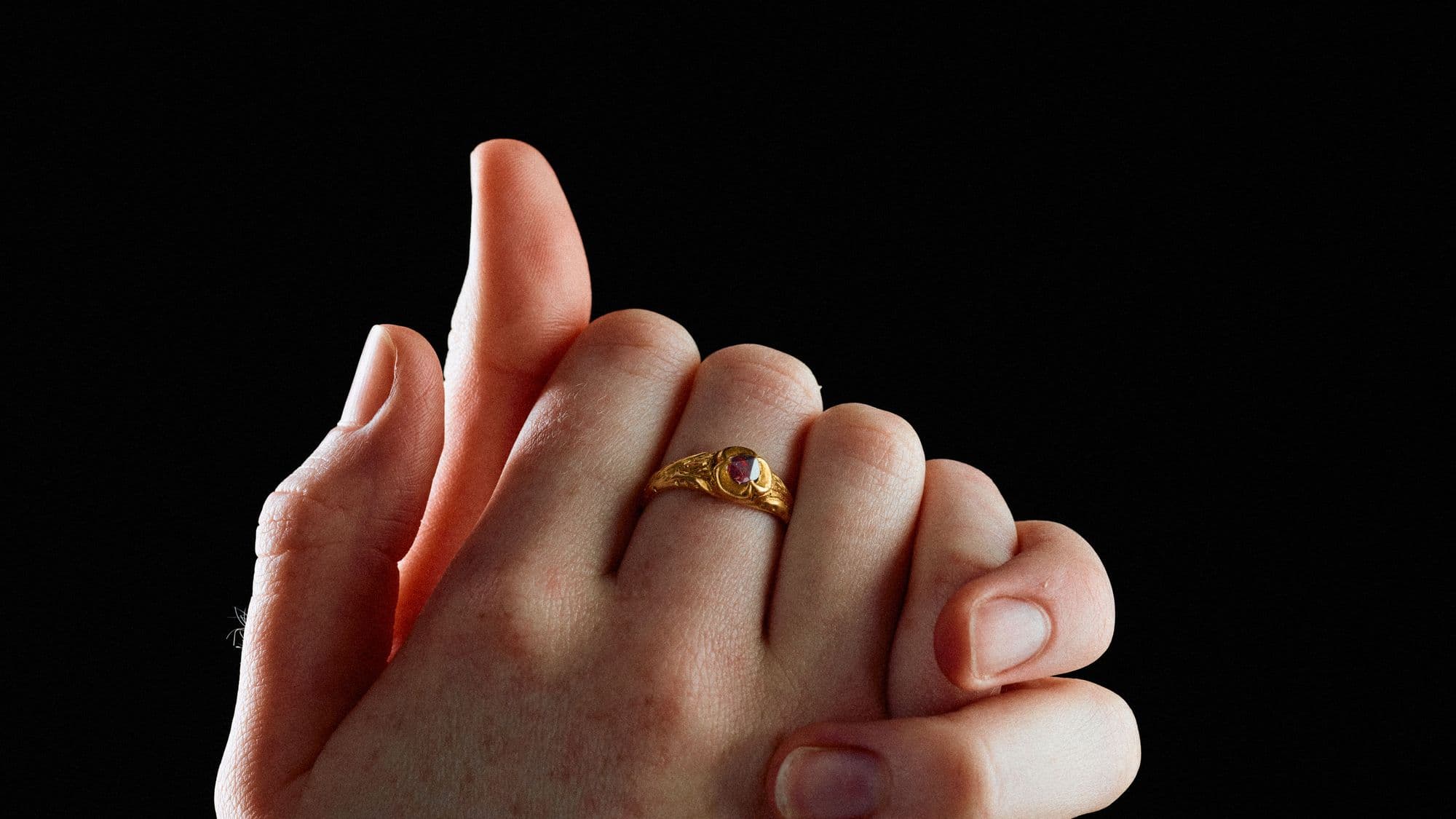
This protective association with Fascinus for infants explains why jewellery was made for children with this apotropaic symbol. Across the Roman world, gold rings of a very small size, which could only be worn by children, have been found with ithyphallic images added on the bezel.
In Archaic and Classical Greece, protection against evil spirits was also of importance and similarly expressed through apotropaic symbols. Lion iconography became a shorthand for protection in Greek art and jewellery due to the animals’ reputation as a fierce guardian. A solid gold pennanular bangle from the Classical Greek period uses lion headed terminals to invoke leonine characteristics, protecting its wearer from misfortune. The lion heads of this particular bangle are carved in an especially snarling manner, with a deeply incised straight and unsmiling mouth, unmistakably serving as a warning for any evil spirits who may try to threaten the wearer.
As in Rome, these apotropaic symbols were not confined to jewellery but were utilised throughout the wider artistic traditions of these cultures. Lions were also depicted in sculpted form to serve as guardians of sacred or important buildings. For example, lions were depicted pulling Dionysos’ chariot on the frieze decorating the Siphnian Treasury at Delos, dated to c.535-525 BC. Similarly, lions guarded the corners of the Archaic east pediment of the Temple of Apollo at Olympia, dated to c.510 BC. These examples illustrate how, in the ancient world, jewellery fitted into a much larger artistic culture, with conventional depictions and meanings persisting across artistic media.