

Lot 78
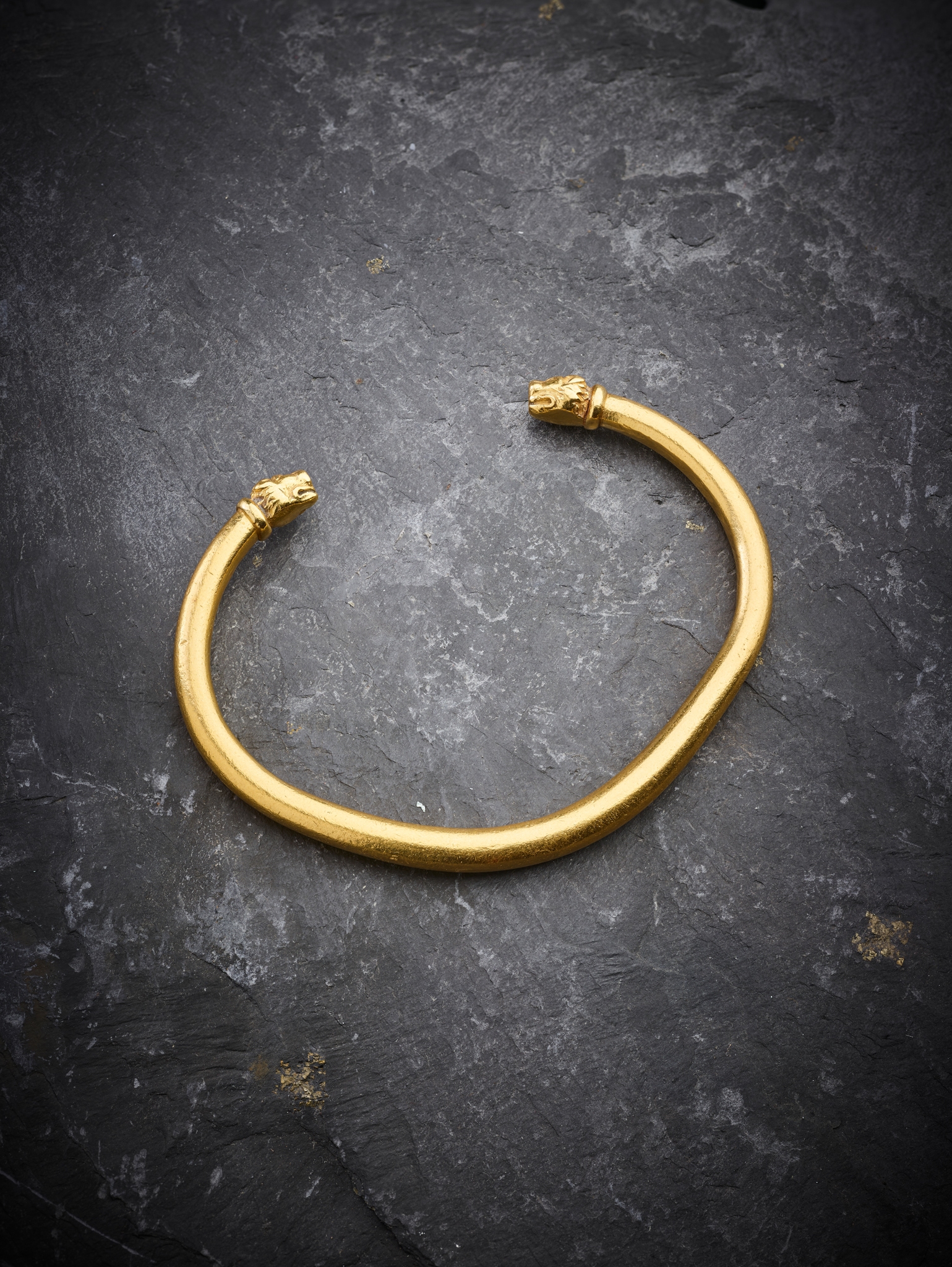
ANCIENT GREEK LION HEADED GOLD BANGLE
EASTERN MEDITERRANEAN, C. 5TH CENTURY B.C.
Auction: 26 November 2026 from 14:00 GMT
Description
penannular gold bangle with lion headed terminals attached by a smooth, gold collar at the junction of their necks, detail of the lions’ faces incised to depict a thick mane, flat ears, whiskers and snarling mouth
Dimensions
7.8cm diameter, 89g
Provenance
Acquired by Stanley J. Seeger (1930–2011) at Christie's;
Thence by descent.
Footnote
Bracelets similar to this once, formed of an open hoop and heads at the terminals, originally developed in the Persian jewellery tradition and the use of the lion as a motif in Greek jewellery is also thought to be an import from the East due to trade which resulted in increased influence from the Achaemenid Empire, where lions were a symbol of strength. However, the lion already existed in the Greek artistic tradition as an apotropaic figure due to their reputation as fierce protectors. For example, on the north side of the continuous frieze decorating the Siphnian Treasury at Delos, dated to c.535-525 BC, Dionysos is depicted in a chariot pulled by lions. Equally, the Archaic East Pediment of the Temple of Apollo at Olympia, dated to c.510 B.C., depicted lions at its corners.
For similar, please see Christie's, New York, 7th December 2006, Ancient Jewellery, lot 227. Sold for $19,200 inc. hammer.