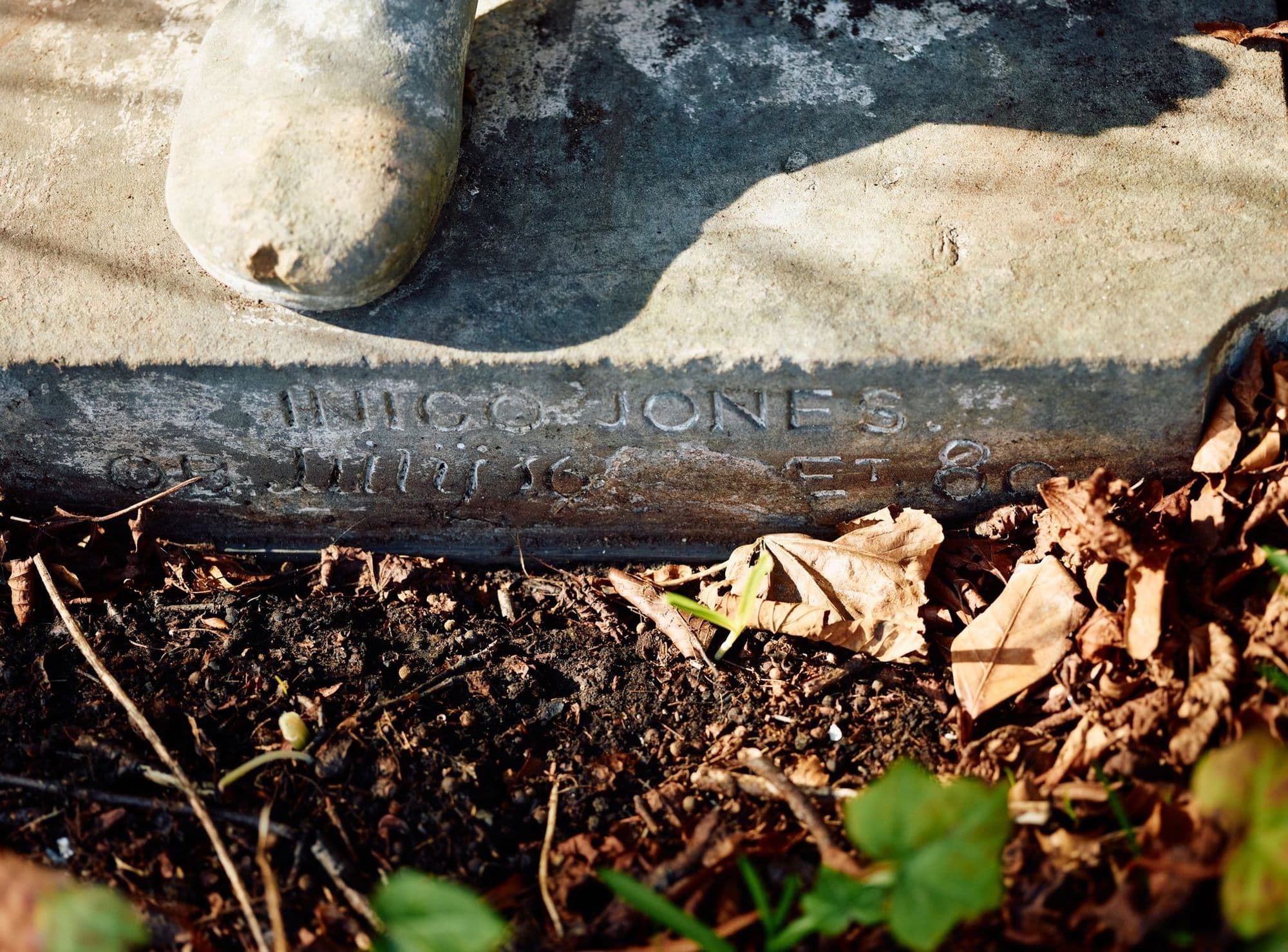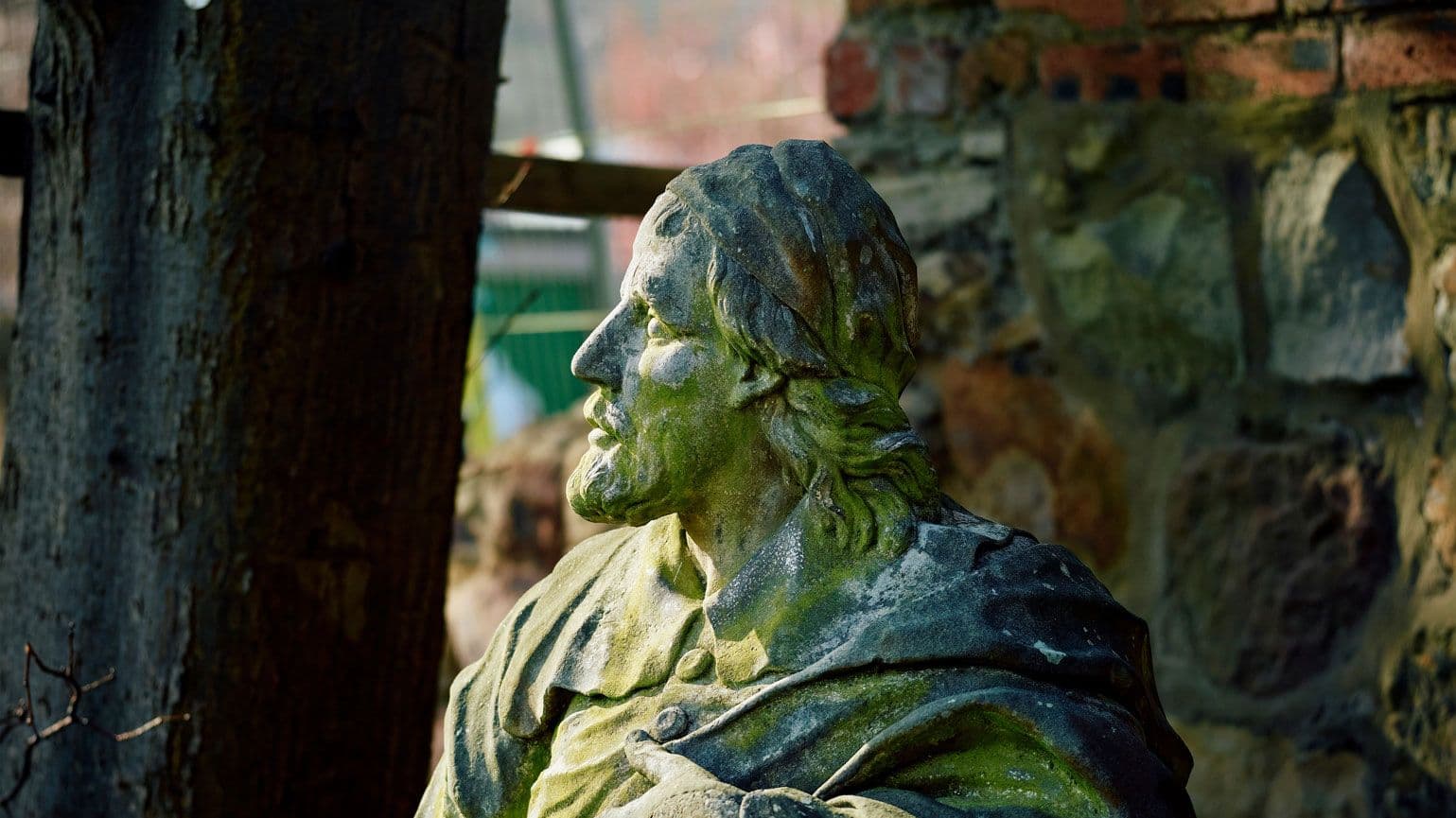
A striking carved stone figure of the architect Inigo Jones (1573–1652), offered in our upcoming Five Centuries sale, takes its inspiration from a model attributed to John Michael Rysbrack (1694–1770), originally created for Chiswick House, London.
That celebrated figure, carved in Portland stone, was commissioned by Richard Boyle, 3rd Earl of Burlington, alongside a companion statue of Andrea Palladio. Together, they flanked the entrance portico, first at Burlington House until 1729, and later at the newly completed villa at Chiswick.
While busts of Inigo Jones based on this model exist in relatively good number, including the original marble example at Chatsworth House, full-length versions are far less common. Another notable example, also derived from the Chiswick model, can be found in the gardens of Holker Hall, Cumbria. It was installed there by William Cavendish, 7th Duke of Devonshire, during extensive improvements to the estate in the 1830s and 1840s.
The attribution of the original model to Rysbrack has been accepted since the early 20th century, though an alternative attribution to Giovanni-Battista Guelfi has occasionally been proposed. Guelfi is known to have produced busts of both Jones and Palladio for Burlington, adding an additional layer of intrigue to the sculpture’s origins.
Illustrated below centre: A portrait of Inigo Jones by William Hogarth, Public domain, via Wikimedia Commons