

Lot 596
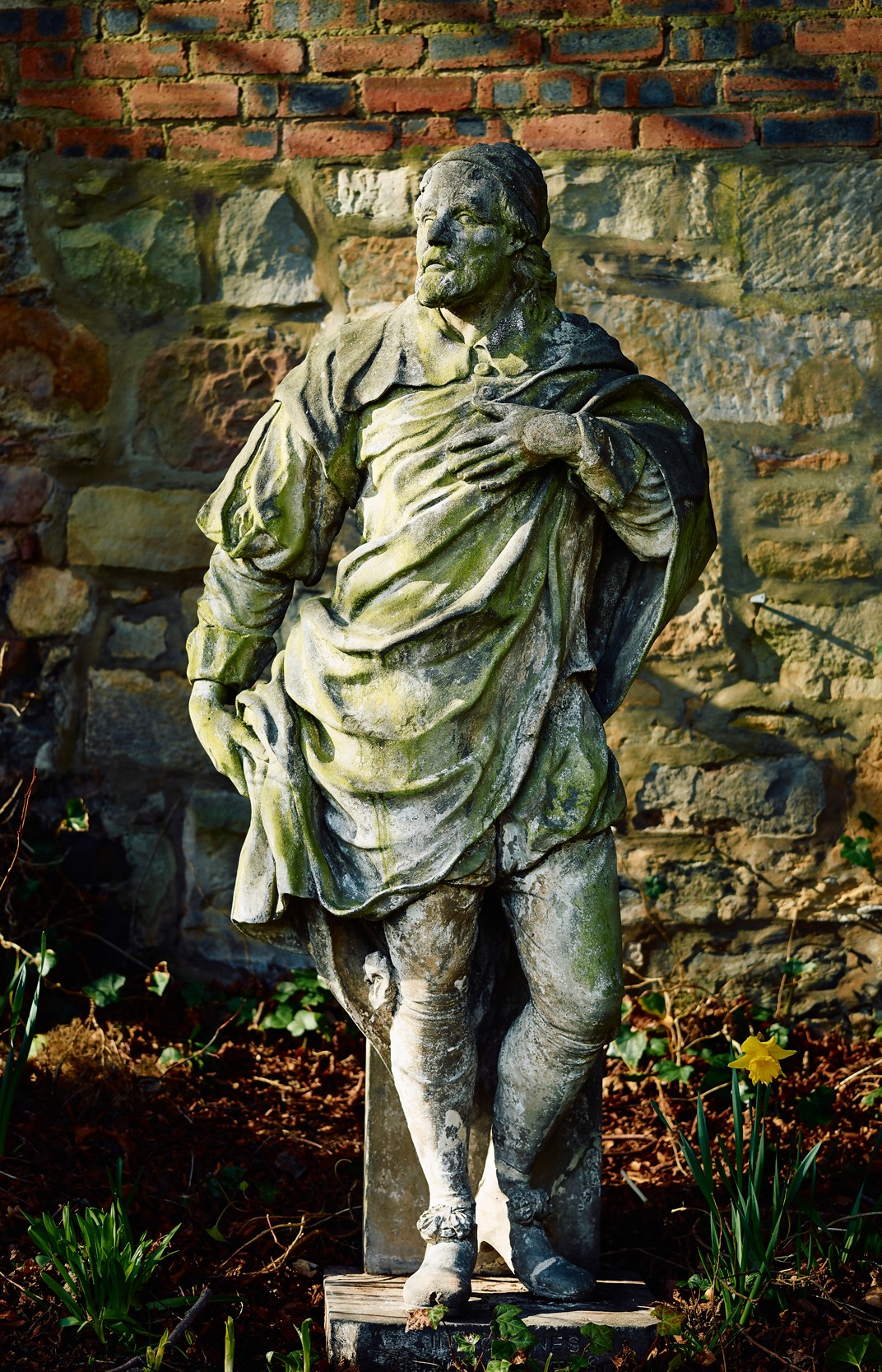
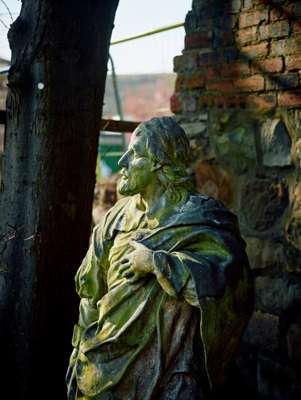
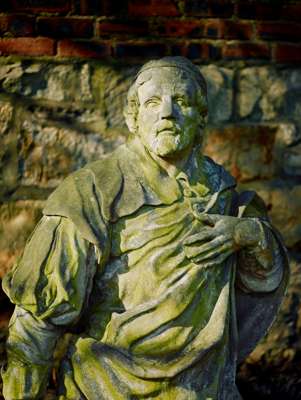
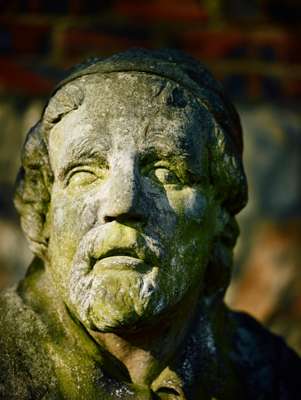
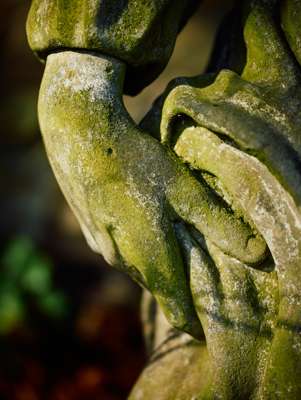
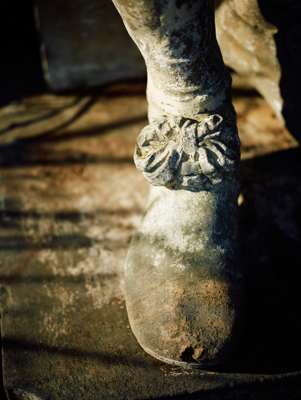
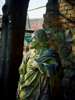
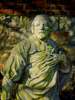
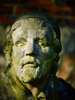
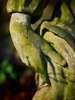
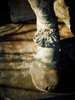
LIFESIZED CARVED STONE FIGURE OF INIGO JONES
EARLY 19TH CENTURY
Auction: Five Centuries Day Two | Thurs 14th May | Lots 298 to 596
Description
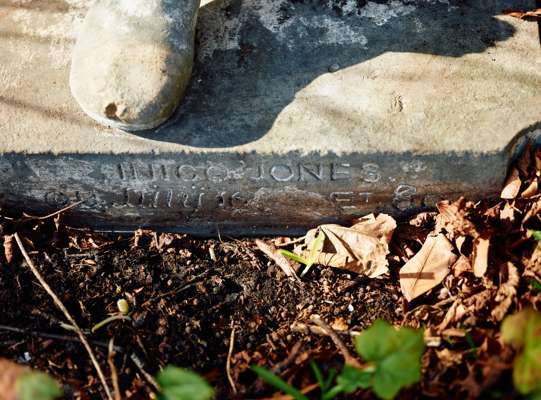
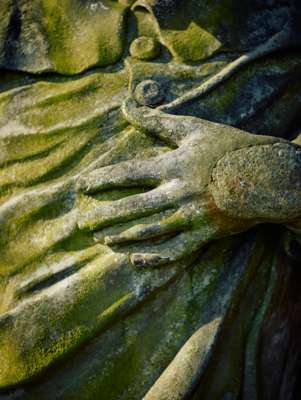
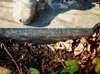
carved with flowing drapery leaning against a tablet, the square canted angle base with inscription 'INIGO JONES, O.B. July 16..(lacking)..Et. 80', signed 'GOWAN Sculp.' to the reverse
IMPORTANT NOTICE FOR THIS LOT: This sculpture will be sold in situ and is not available to view at Lyon & Turnbull. Additional photographs and a condition report are available. Viewing can be arranged by appointment - please contact the department. The lot is currently situated in an Edinburgh suburb. All removal costs will be the responsibility of the purchaser and must be completed by the end of May 2026.
Dimensions
188cm high, 80cm wide, 47cm deep; the base 51cm wide, 47cm deep
Footnote
After the model of the architect Inigo Jones (1573–1652) attributed to John Michael Rysbrack (1694–1770) at Chiswick House, London. That figure, carved in Portland stone, was commissioned by Richard Boyle, 3rd Earl of Burlington along with a companion figure of Andrea Palladio which now flank the entrance portico. They were at Burlington House until 1729 and then moved to the newly completed villa at Chiswick.
While busts of Inigo Jones based on this model are known to exist in good quantity, including the original in marble in the collection of Chatsworth House, full figure renditions are much rarer. Another statue based on the Chiswick Inigo Jones is in the gardens of Holker Hall, Cumbria and installed there by William Cavendish, 7th Duke of Devonshire, during renovations and improvements to the grounds and estate in the 1830s and 40s. The attribution to Rysbrack has been established since the early 20th century, however an alternative attribution to Giovanni-Battista Guelfi, who produced busts of Jones and Palladio for Burlington, has also been proposed.
The identity of Gowan is unclear, but may relate to the family of stone masons active in Edinburgh in the late 18th and 19th centuries. See the entry in ‘A Biographical Dictionary of Sculptors in Britain, 1660-1851’; Gowan, Alexander, of Edinburgh, d. 1803; According to one 19th-century source Alexander Gowan spent some time in the studio of Louis François Roubiliac (Scott 1880, 13, cited by Pearson 1990, 50). He had established himself as a marble cutter at Abbey Hill, Edinburgh by 1780. In 1784 he entered into a partnership with James Gowan and in 1793 his two sons Charles and William Gowan joined the business. In 1856 a speaker at the Royal Association for the Promotion of the Fine Arts in Scotland recalled that around 1800 the ‘marble yard at Abbey Hill ... was then and long after the only studio in Edinburgh where marble was cut’ (RAPFAS 1856, cited by Pearson 1991, 46). Gowan died at Edinburgh on 30 March 1803. An elaborately decorated tablet commemorating John Fullerton, at Inveresk, which is signed ‘Gowan’ is probably by this sculptor. Literary References: Woodward 1977 (vol 1, pt 2), 82; Pearson 1991, 46, 50
As part of works to Gilmerton House, East Lothian, in December 1808, 'a new chimney piece of statutory marble' was supplied by W. and C. Gowan of Abbeyhill, Edinburgh.