Mughal Painting
Among the most celebrated examples of Mughal painting are portrait studies of the emperors themselves. A particularly striking album page offered in our June 2026 Islamic & Indian Art auction depicts the Mughal emperor Aurangzeb in his later years, surrounded by courtiers and attendants. The composition is characterised by its restrained elegance, with delicate turquoise and pale blue tones creating a sense of calm authority. Such works were often preserved within albums assembled by successive generations of collectors, adding further layers of history to the object.
The reverse of many Mughal album pages can be as intriguing as the paintings they contain. Persian verses, inscriptions and collectors' seals frequently provide valuable clues about a work's provenance. Seal impressions from former owners, often dating to the eighteenth century, help trace the journey of these paintings through important collections and demonstrate the enduring appreciation of Mughal art long after its creation.
Rajput Painting
Moving west to Rajasthan, the artistic language becomes altogether more vibrant. Ragamala paintings, inspired by musical modes and poetic themes, are renowned for their brilliant colours and imaginative landscapes. Lush greenery, flowering trees, peacocks and richly dressed figures populate these compositions, creating scenes that are as evocative as they are decorative. The bold palette and expressive storytelling found in Rajasthani painting remain among the most recognisable characteristics of Indian art.
Tanjore Painting
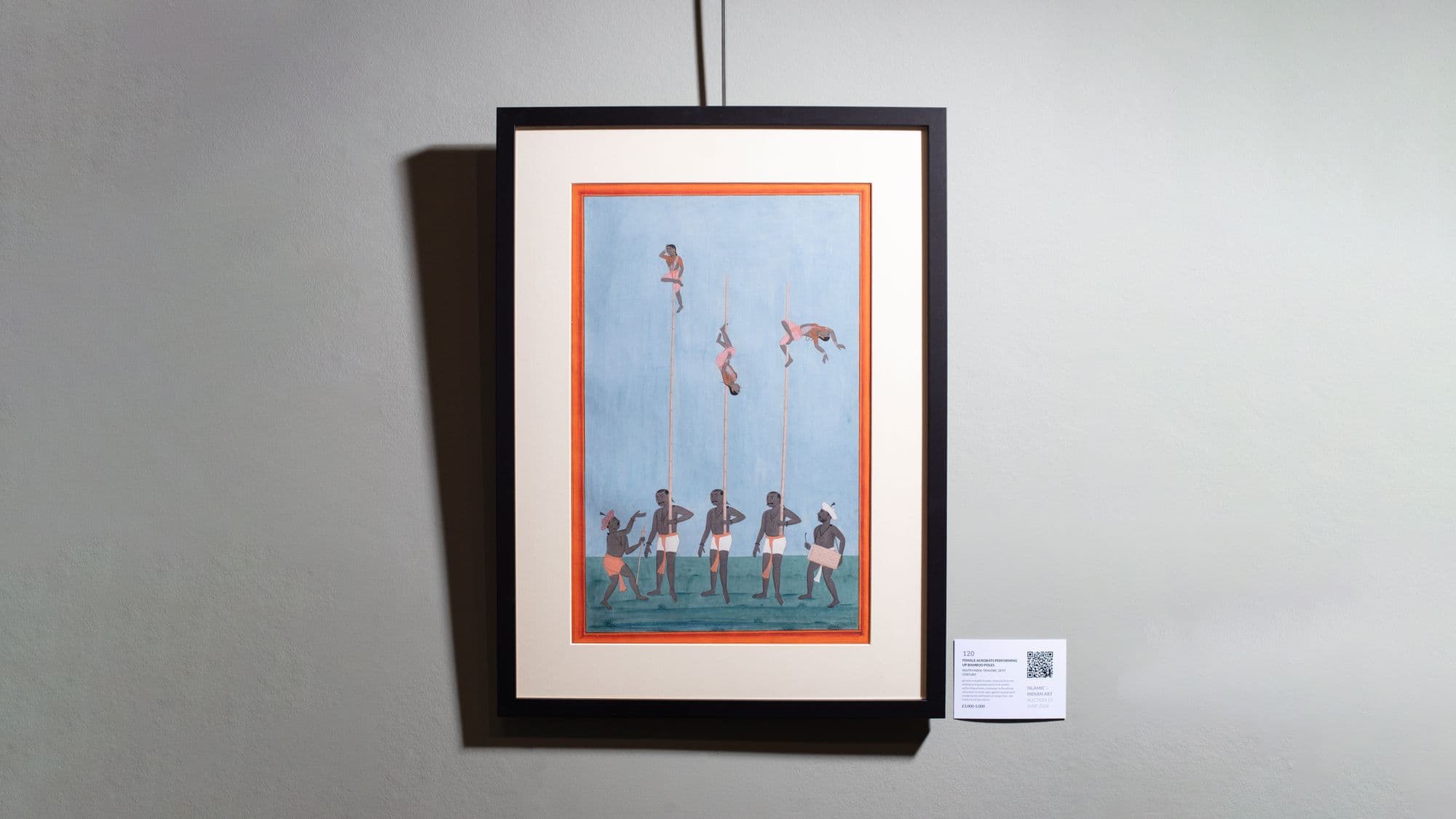
Southern India developed its own distinctive visual traditions, particularly in and around Tanjore during the eighteenth century. Paintings produced for European patrons often combined local artistic practices with imported materials, resulting in works that reflect a fascinating exchange of cultures. Watermarks found within the paper can provide important evidence for dating these paintings, revealing connections to European papermakers and international trade networks.
One particularly charming subject found in Tanjore painting depicts female acrobats balancing atop long bamboo poles supported by men below. The simplicity of the composition, combined with its dramatic use of space and focus on performance, lends these works a remarkably modern quality despite their eighteenth-century origins. Contemporary inscriptions occasionally survive alongside such paintings, offering rare glimpses into how these scenes were understood and described by earlier owners.
Together, Mughal portraiture, Rajasthani Ragamala paintings and Tanjore works demonstrate the extraordinary breadth of Indian painting. Each tradition possesses its own visual language, yet all share a remarkable ability to capture the people, stories and artistic innovations of their time.