Lot 144
SAMUEL JOHN PEPLOE R.S.A. (SCOTTISH 1871-1935)
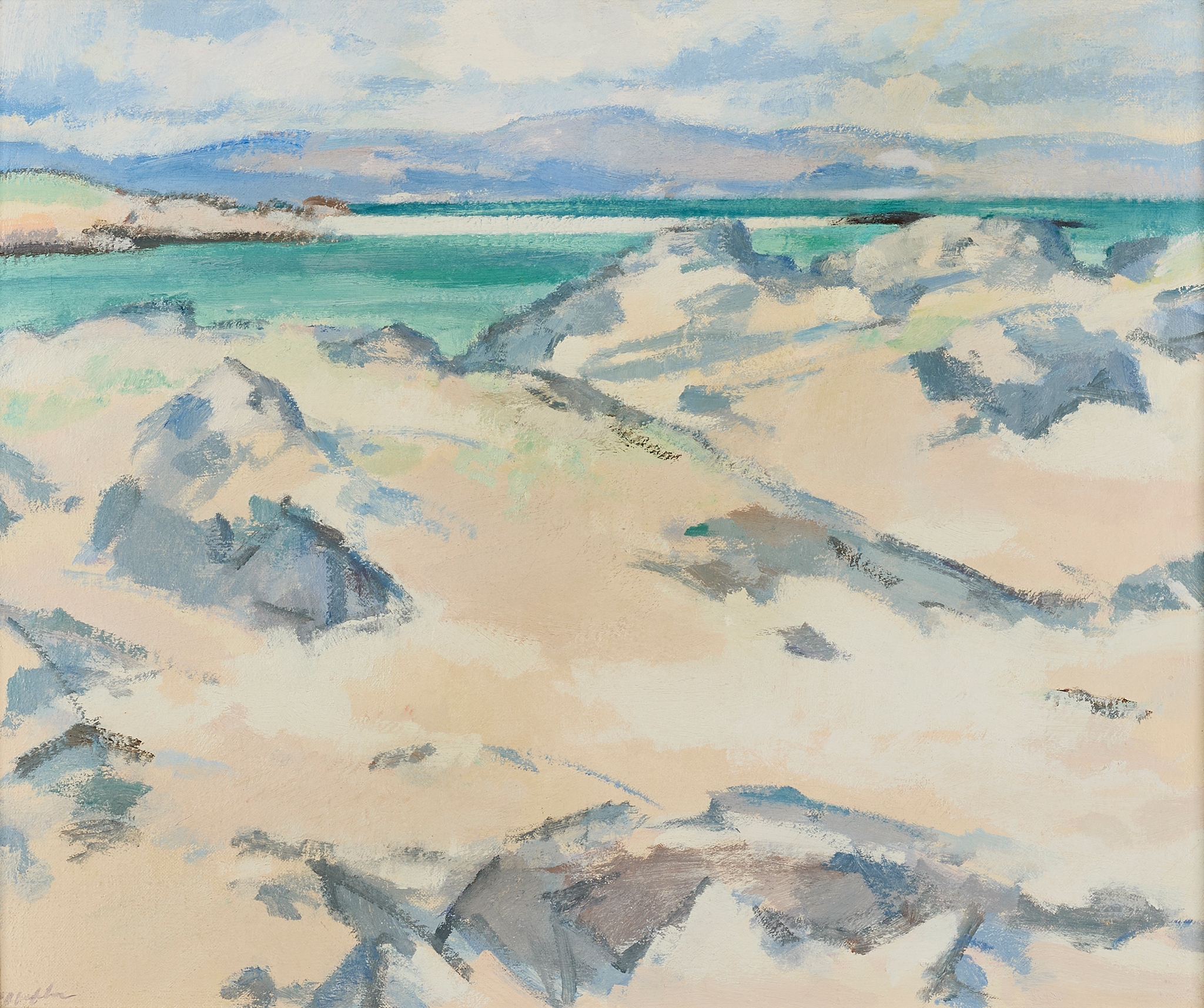
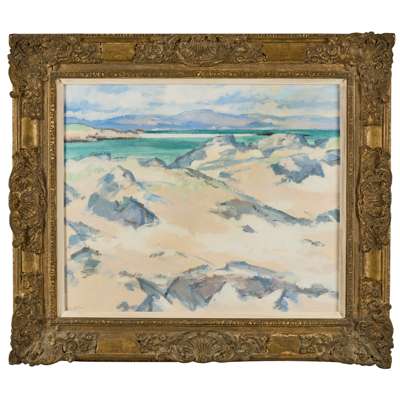
WHITE SANDS, IONA
Scottish Paintings & Sculpture
Auction: Evening Sale ft. A Century of Scottish Colourists Part II | Lots 90 to 169 | Thursday 03 December 2026 from 6pm
Description
Signed, oil on canvas
Dimensions
49 x 59cm (19 1/1 x 23 ¼in)
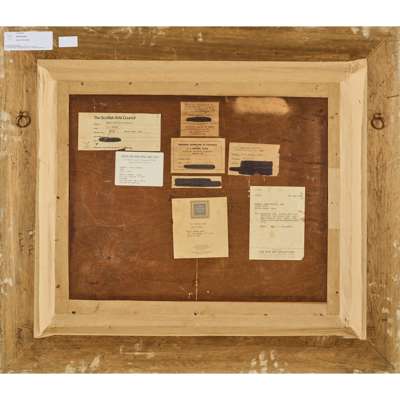
Provenance
Mr and Mrs George Proudfoot, Edinburgh
Aitken Dott & Son / The Scottish Gallery, Edinburgh (stock no.750)
The Fine Art Society Plc, London, Edinburgh and Glasgow (stock no. II217)
Ewan Mundy Fine Art Ltd., Glasgow
Acquired from the above by the present owner’s father
Exhibited:
Aitken Dott & Son, Edinburgh, Memorial Exhibition of Eight-Three Paintings by S. J. Peploe RSA 1871-1935, April and May 1936, no.18 (lent by Mrs George Proudfoot)
McLellan Galleries, Glasgow, Memorial Exhibition of Paintings by S. J. Peploe RSA 1871-1935, February 1937, no.73 (dated to 1923, lent by George Proudfoot)
Royal Scottish Academy, Edinburgh, Festival Exhibition: S. J. Peploe RSA, F. C. B. Cadell RSA and Leslie Hunter, 1949, no.60 (lent by Mrs George Proudfoot)
Scottish Arts Council Gallery, Glasgow, Three Scottish Colourists: Cadell, Hunter, Peploe, 9 May – 6 June 1970 and tour to Kilmarnock, Perth, Milngavie, Aberdeen, Dundee, Kirkcaldy and Edinburgh, no.73 (lent by Mrs George Proudfoot, illustrated in black and white)
Literature:
Philip MacLeod Coupe, Paintings of Iona by F. C. B. Cadell and S. J. Peploe, Malvern, 2014, repr.col. p.105, pl.86 (as ‘Eilean Annraidh from Cows Rock (White Sands, Iona')
Footnote
The White Sands, Iona by Samuel John Peploe epitomises the artist’s response to the beauty of the Hebridean island where he was to find inspiration for over a decade. Moreover, it formerly belonged to his longstanding champions, Mr and Mrs George Proudfoot and was included in several landmark exhibitions of Peploe’s work and that of the Scottish Colourists, of whom he is considered by many to be the leader.
Peploe was introduced to Iona in 1920, by his friend and fellow Colourist F. C. B. Cadell. The latter had visited it on at least two occasions before the First World War. Whilst serving in the trenches, Peploe wrote to him ‘When the war is over I shall go to the Hebrides, recover some virtues I have lost. There is something marvellous about those western seas. Oh, Iona. We must all go together.’ (Letter of 2 August 1918, Correspondence and papers of and concerning F. C. B. Cadell, National Library of Scotland, Acc.11224). After Cadell’s demobilisation in March 1919, the artists fulfilled this wish the following year; they both returned most summers thereafter until at least the early 1930s.
As Alice Strang has explained: ‘In 1920, Peploe was nearly fifty years old, but Iona inspired a new direction in his work … Peploe concentrated on analysing the rocks and sands of the north end and views from it, especially of Ben More on nearby Mull … Peploe initially lodged with the MacInnesse at Cùlbhuirg, the principal farm in the west of Iona. Later, he and his family rented Lovedale in the village street. Despite his reputation for introversion, islanders remember him allowing young boys to carry his palette and to watch him at work.’ (Alice Strang, ‘”I can never see mystery coming to an end”: A Life of S. J. Peploe’, S. J. Peploe, Edinburgh, 2012, p.15)
The White Sands, Iona shows Eilean Annraidh (Island of Storm) from Cows Rock at the north-east tip of the island. As Cows Rock rises above the general level of the shore, it provides an excellent panoramic view favoured by Cadell but more especially by Peploe. The latter reported to his wife, Margaret Mackay, ‘the most beautiful part of the island is the North end; white sands and beautiful rocks, looking across to Mull.’ (quoted in Alice Strang, The Scottish Colourists: Art and Life, Edinburgh, 2026, p.29), which can be taken as a description of the present work.
Painted on a gesso ground, whose absorbent qualities allowed Peploe to work quickly under Iona’s fast-changing weather conditions, he relished the interplay of titular sand and the geological features of Iona’s famed beaches, as well as the translucent tones of the sea by which is it surrounded. Gentle Hebridean light is captured playing softly over shore, water and distant hill in deft, matt brushstrokes, inviting the viewer to join the artist in the idyllic setting.
The work formerly belonged to George Proudfoot (1873-1943) and his wife from 1933, Annette Richard (c.1904-96). Proudfoot was appointed a Junior Partner of Aitken Dott & Son in 1908 and rose to become its Director in about 1915. Under his leadership Peploe received five solo exhibitions at the company’s Scottish Gallery in Edinburgh between 1922 and 1934 and, following his death in 1935, a major memorial exhibition a year later. Richard was to take over the running of the gallery in 1950, before her death in 1996.
White Sands, Iona was included in the 1936 memorial exhibition, as well as the one mounted the following year at the McLellan Galleries in Glasgow. It was also selected for the first exhibition of work by Peploe, Cadell and their fellow Colourist G. L. Hunter to be mounted in a UK public gallery, namely at the Royal Scottish Academy in 1949. The work of that trio was once again celebrated in a touring Scottish Arts Council exhibition which began in 1970 and in which White Sands, Iona was one of 29 works by Peploe to be shown.
Iona paintings by Peploe are held in numerous UK public collections, including those of the National Galleries of Scotland, Edinburgh Museums and Galleries, Aberdeen Art Gallery, Kirkcaldy Galleries, The Hunterian, University of Glasgow, The Fleming Collection and Manchester Art Gallery.