Lot 143
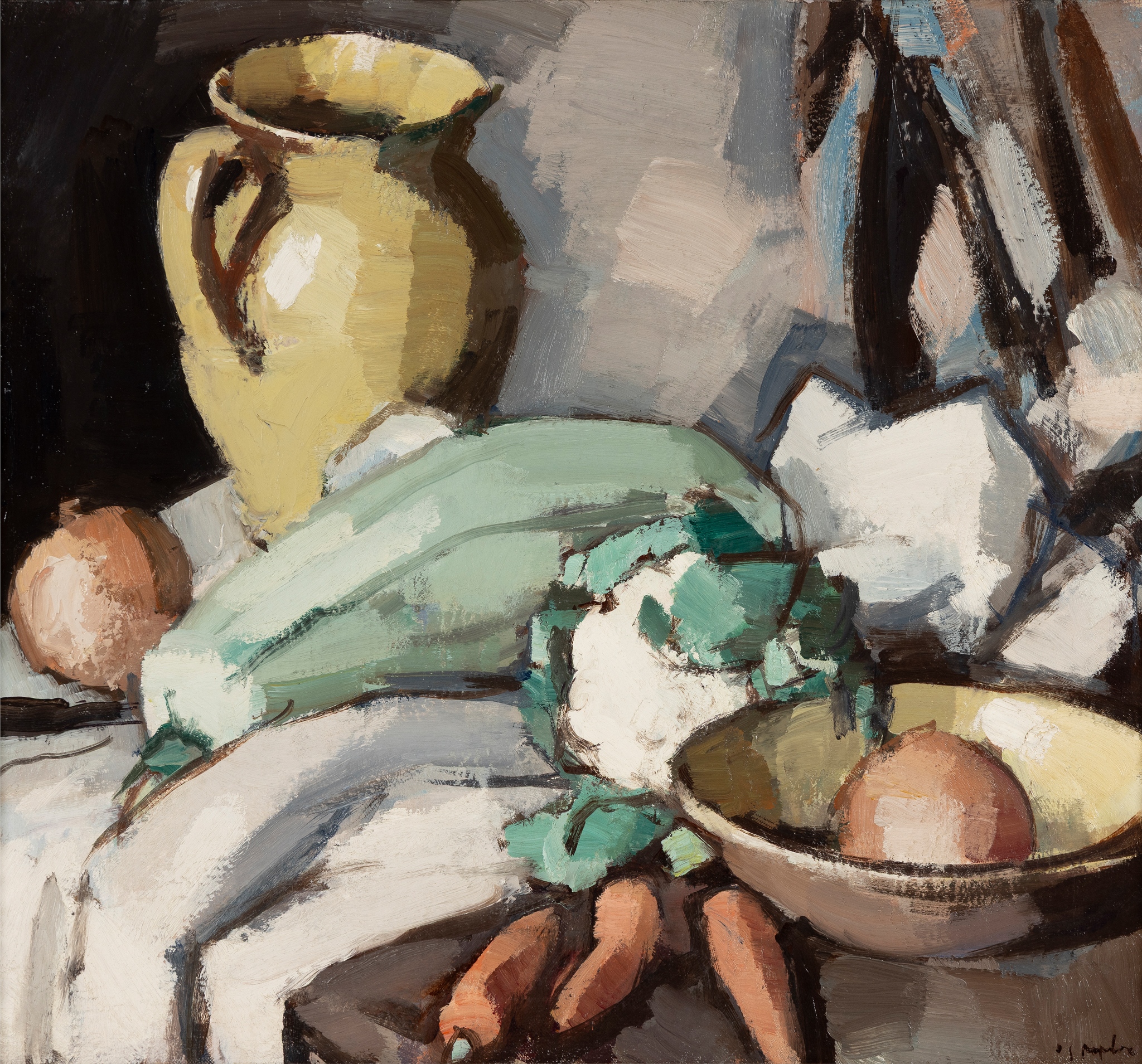
SAMUEL JOHN PEPLOE R.S.A. (SCOTTISH 1871-1935)
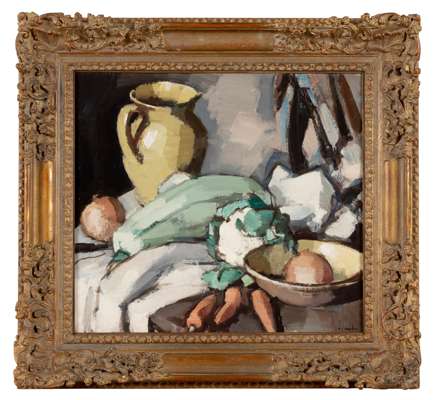
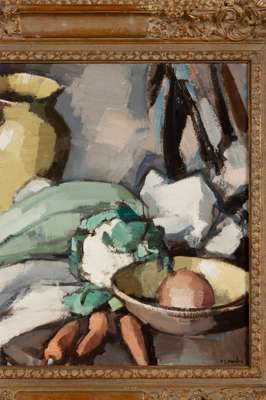
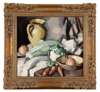
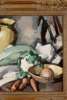
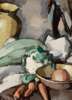
STILL LIFE WITH YELLOW JUG AND VEGETABLES
Scottish Paintings & Sculpture
Auction: Evening Sale ft. A Century of Scottish Colourists Part II | Lots 90 to 169 | Thursday 03 December 2026 from 6pm
Description
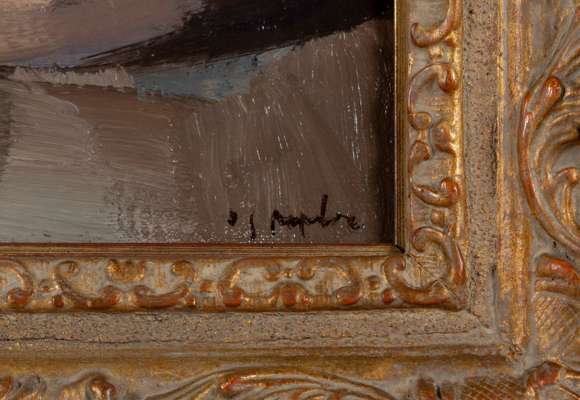
Signed, oil on canvas
Dimensions
51cm x 56cm (20in x 22in)
Provenance
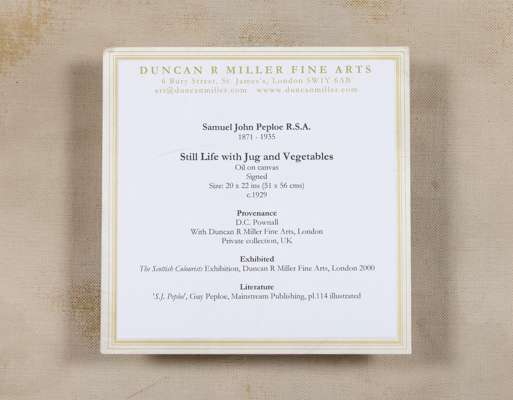
D. C. Pownall
Bearnes, Hampton & Littlewood, Exeter, Summer Sale: Pictures, 25 June 1997, lot 717 (as ‘Still Life with Marrow and Carrots’)
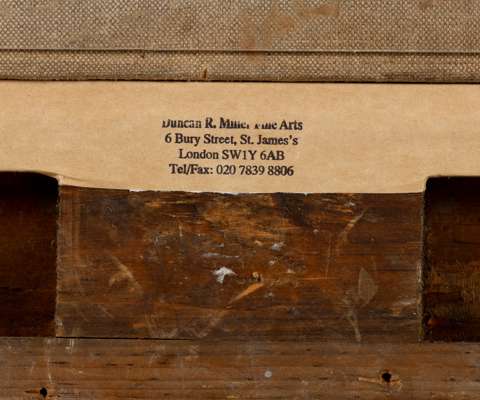
Duncan R. Miller Fine Arts, London from where acquired by the present owner
Exhibited:
Possibly New Paintings by S. J. Peploe, Alex Reid & Lefevre Ltd., London, December 1929-January 1930, no.27 (‘Marrow and Carrots’)
The Scottish Colourists, Duncan R. Miller Fine arts, London, 2000
Literature:
Guy Peploe, S. J. Peploe, Lund Humphries, Farnham, 2012, p.162, pl.171
Footnote
Still Life with Yellow Jug and Vegetables is a sophisticated and mature example of the genre in which Peploe excelled. He was to become the most successful, critically and commercially of the four artists known as the Scottish Colourists, along with F. C. B. Cadell, J. D. Fergusson and G. l. Hunter. An international reputation was gained with a practice based on waves of development as a landscape and figure painter, but above all as a master of the still life.
The present painting represents over thirty years of mastering the medium of oil and subtleties of colour combination in order to realise effects of light, reflection, form and shadow within a finely balanced, asymmetrical composition. In 1929, around the time that he painted it, Peploe declared: ‘There is so much in mere objects, flowers, leaves, jugs, what not – colours, forms, relation – I can never see mystery coming to an end.’
Peploe made his name with solo exhibitions in Edinburgh in the 1900s which featured accomplished still lifes often set before a black background. Two years spent in Paris between 1910 and 1912 encouraged him along more experimental, design-based lines in the genre, whilst highly disciplined still lifes, often featuring tulips then roses, of the early and mid-1920s are amongst Peploe’s best known works. A tulip still life was acquired for the British national collection in 1927, the year that Peploe achieved full Academician status at the Royal Scottish Academy.
Still Life with Yellow Jug and Vegetables is believed to have been painted in Peploe’s studio at 54 Shandwick Place in Edinburgh’s West End, to where he moved in 1917. It was his studio of longest-standing and he remained his professional base until 1934. His niece Margery Porter recalled her visits to him there, which transport us to the place and creative method behind the present painting:
How well I recollect my Mother and myself climbing those steep stairs and arriving panting at the top to ring his bell in fear and trembling lest our climb had been in vain. But usually he would usher us in wearing a white painting coat and a crownless hat … The studio was a large one, round which I would prowl entranced, after strict warnings not to disturb the still-life group which would almost inevitably be covering the table. My uncle would arrange and re-arrange these groups for perhaps three days before he was satisfied that the balance and construction were perfect, then he would paint them quite rapidly. (quoted in Alice Strang, “’I can never see mystery coming to end”: A Life of S. J. Peploe’, S. J. Peploe, Edinburgh, 2012, p.23).
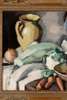
Indeed, Still Life with Yellow Jug and Vegetables comes from a series of paintings begun in the late 1920s in which, partly dictated by the seasons, flowers were replaced by other props. In this case the focus is on a majestic marrow accompanied by a cauliflower, carrots and onions. The art historian Duncan Macmillan has made a compelling case for the inspiration Peploe found in the work of the Glasgow Boy William York Macgregor and indeed, Still Life with Yellow Jug and Vegetables can be read as an homage to his masterpiece The Vegetable Stall of 1884, in the collection of the National Galleries of Scotland. Both paintings elevate commonplace foodstuffs to the heights of beauty, respectfully reveling in their natural variation of shape, texture and tone.
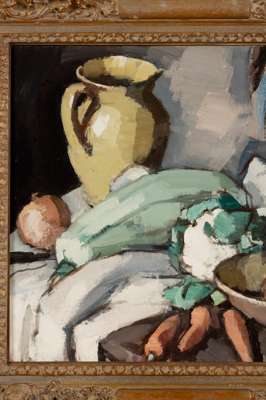
In Peploe’s case, the inclusion of the yellow jug, draped material and indoor setting adds a layer of rustic sophistry. This is combined with expressive brushwork, the use of black to outline and define form and a guiding perspective which leads the eye from the lower right of the canvas across the composition to a glimpse inside the jug. This was a particularly cherished prop, which appears in contemporary paintings such as the eponymous work in Brighton & Hove Museums (acc.no.FA000441). The related Still Life in The Fleming Collection (acc.no.FWAF/RF28) shows how a different kind of squash caught Peploe’s painterly eye in an image containing various common characteristics with Still Life with Yellow Jug and Vegetables.
The latter is likely to be the work titled ‘Marrow and Carrots’ in Peploe’s solo exhibition at Alex Reid & Lefèvre Ltd in London, held between December 1929 and January 1930. A review of it in the Weekly Dispatch praised ‘this very clever Scottish painter’ whose ‘delightful craftsmanship … allows his gift for colour full play’, concluding ‘his paint is light and refreshing and his design masterly. He is one of the moderns one can comfortably live with.’ (15 December 1929); this remains the case almost a century later.