Lot 142
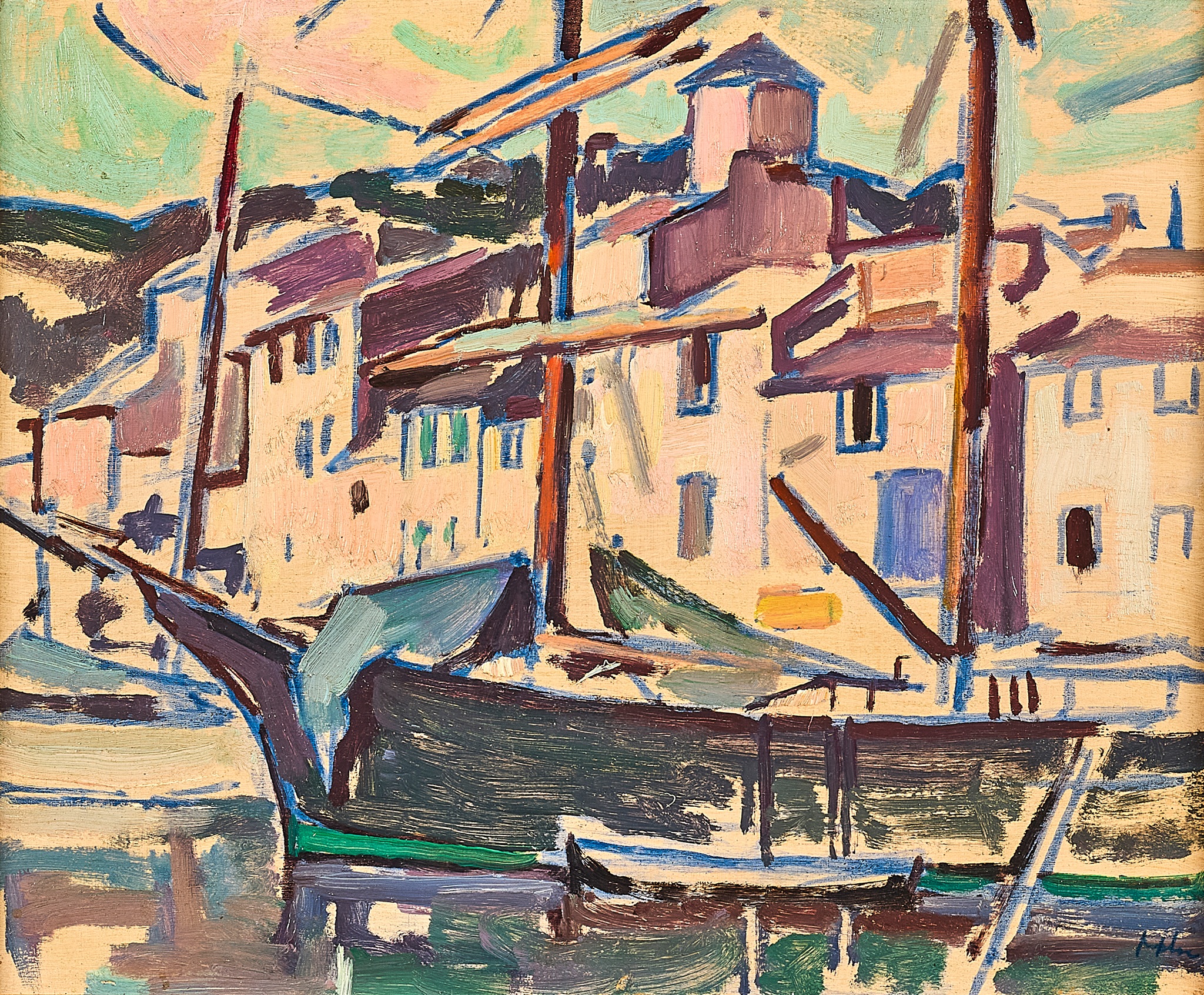
SAMUEL JOHN PEPLOE R.S.A. (SCOTTISH 1871-1935)
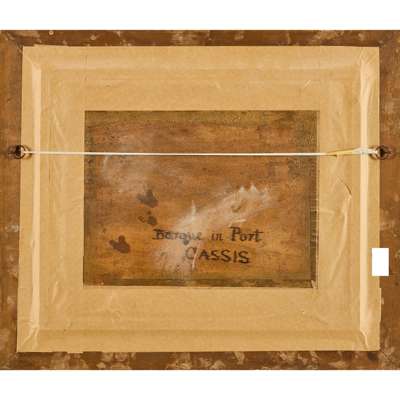
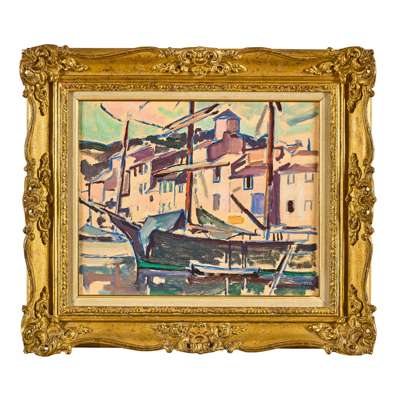
BARQUE IN PORT, CASSIS
Scottish Paintings & Sculpture
Auction: Evening Sale ft. A Century of Scottish Colourists Part II | Lots 90 to 169 | Thursday 03 December 2026 from 6pm
Description
Signed, oil on panel
Dimensions
33cm x 41cm (13in x 16in)
Footnote
The picturesque fishing resort of Cassis on the French Riviera played an important role in Samuel John Peploe’s practice and friendships for almost twenty years. Barque in Port, Cassis is believed to date from his first painting trip there, in 1913, in the company of his fellow Scottish Colourist John Duncan Fergusson. Peploe returned with F. C. B. Cadell in 1924, painted there with G. L. Hunter in 1928 and is believed to have visited for a final time in 1930.
In 1910, Peploe moved from Edinburgh to Paris, joining Fergusson who had lived in the city for the past three years. Together, they embraced the very latest developments in progressive French art, exhibited in the anti-establishment Salon d’Automne and contributed to the progressive Rhythm journal. Peploe admitted that they ‘had a very lively time’ during the birth of modern European art in Paris in the pre-First World War years. (S. J. Peploe, ‘Autobiography’, Exhibition of Paintings by S. J. Peploe, New York, 1928, non-paginated).
After two years, Peploe returned to Edinburgh but he joined Fergusson on a painting trip to Cassis in the summer of 1913. It was Peploe’s first visit to the Côte d’Azur and they followed in the footsteps of the ‘Fauves’ or ‘Wild Beast’ artists Charles Camoin, André Derain, Georges Braque and Othon Friesz, who had all worked there or nearby.
As Frances Fowle has explained: ‘Lodged at the Hôtel Panorama, Peploe spent the summer working on a group of panels and canvases that show the continuing influence of the Rhythmist group … Some of Peploe’s views of the harbour … are dramatically cropped … highly abstracted, almost architectonic in … conception. Peploe evokes the heat of the day through ... blanched colours … [and] … dark outlines.’ (Frances Fowle, ‘Peploe in France: “A Suitable Milieu”’, Alice Strang et al, S. J. Peploe, Edinburgh, 2021,p.52).
Barque in Port, Cassis reveals how Peploe was drawn to the forms of the local fishing boats, their masts and sails, as set against the distinctive harbourside buildings of the location. Form is simplified, shadow is minimised and Peploe’s technique is bold and confident. Outline plays a structural role , whilst brushstrokes imply but do not fill colour fields. Subtle colours are combined with a confident use of black as well as touches of brilliant green, yellow and blue. Vertical and horizontal elements create a rhythm across the surface of the work, in which windows march across the mid-ground.
Such was the impact of the 1913 trip that more than half of the thirty-nine paintings and nineteen drawings included in Peploe’s solo exhibition at The Baillie Gallery in London in March 1914 were of Cassis. (see Fowle, op.cit, p.52). Peploe was hailed as a ‘Post-Impressionist’, with the critic of The Studio describing him as ‘an artist whose head is stronger than the theories he has embraced … he gets the best out of them, gaining from what licence for freedom of line and abandonment to colour he may require, but preserving always evidence of contact with life as well … [as] … with theory, retaining vitality and the power to convince where so many under the same influence have entirely lost these.’ (‘Studio-talk’. The Studio, vol.61, 1914, p.232). This exhibition and the Cassis works shown in it, helped to cement Peploe’s reputation as one of Britain’s most important living artists by the time of the outbreak of the First World War. (see Fowle, op.cit, p.51).