

Lot 493
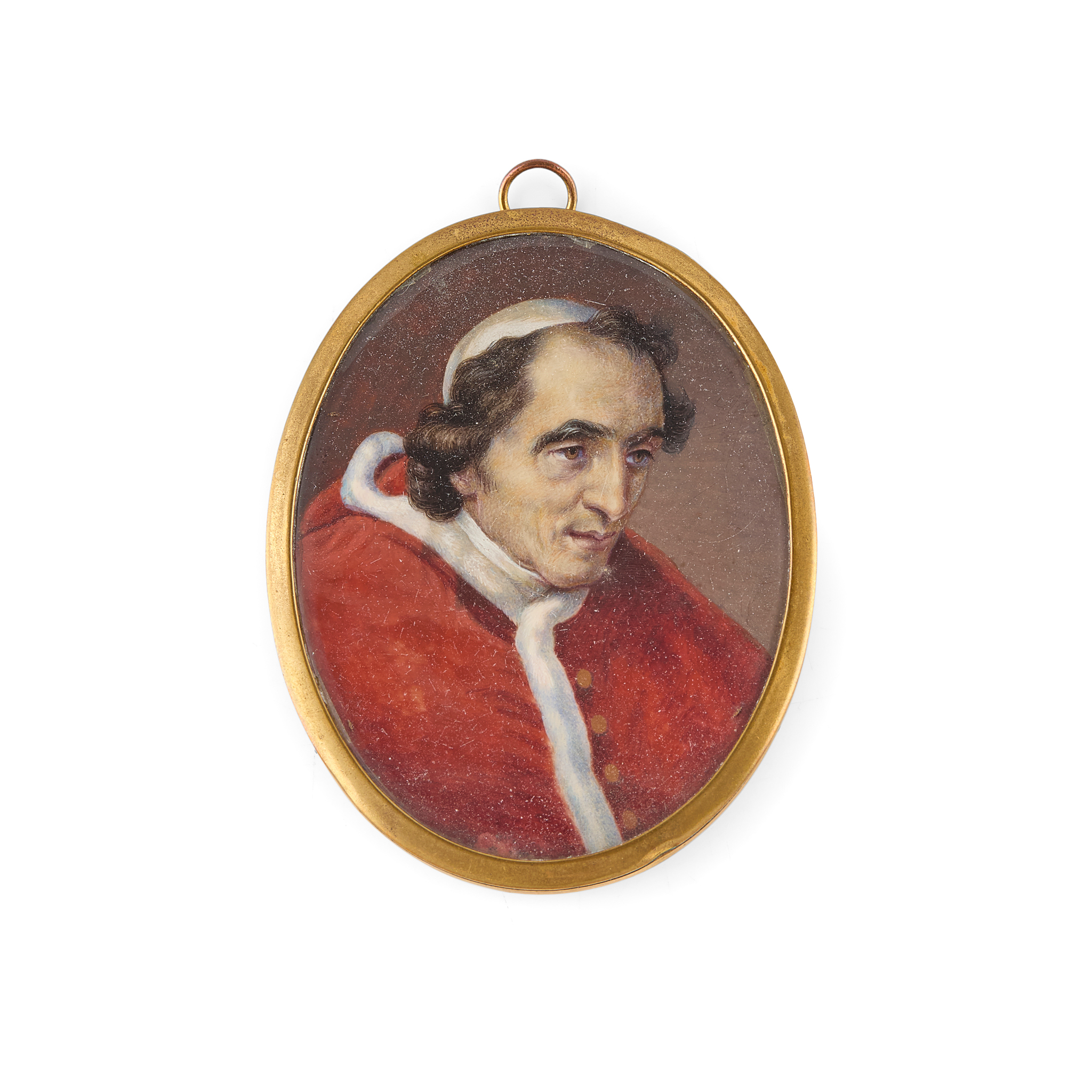
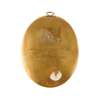
A PORTRAIT MINIATURE POPE PIUS VII Y
AFTER VINCENZO CARNUCCI, EARLY 19TH CENTURY
Auction: Day Two | Thursday 20 August from 10am | Lots 199 - 555
Description
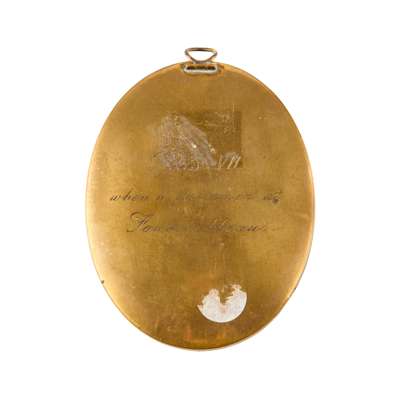
The half-length portrait derived from a full-length portrait, verso on reverse of frame engraved ‘Pius VII when a prisoner at Fontainbleau’, watercolour on ivory
Dimensions
7cm x 5.5cm
Provenance
From the Estate of Barry Lock 1934-2021- Cheffins
Private Collection of a Gentleman
Footnote
Pope Pius VII (1742–1823)
Born Barnaba Chiaramonti in Cesena, Italy, was head of the Roman Catholic Church from 1800 until his death in 1823. A Benedictine monk and Cardinal before his election, he became pope during a period of great political upheaval caused by the French Revolution and the rise of Napoleon Bonaparte.
One of the most important events of his pontificate was his relationship with Napoleon. In 1801, Pius VII negotiated the Concordat with France, which restored the Catholic Church after the disruptions of the Revolution. At first, the pope and Napoleon cooperated, but tensions grew as Napoleon attempted to control Church affairs and annexed the Papal States.
In 1809, after Pius VII refused to accept Napoleon's interference in the Church and condemned the seizure of papal territory, French troops arrested him. He was held prisoner for nearly five years, first in Savona and later in Fontainebleau, France. Despite pressure from Napoleon, he remained committed to the independence of the papacy. Following Napoleon's defeat in 1814, Pius VII returned to Rome and was welcomed as a symbol of resistance and faith.
Some writers have suggested that Pius VII was a Jacobite. The papacy had long-standing ties with the exiled Stuart family, who lived in Rome, and Pius VII honoured Cardinal Henry Benedict Stuart after his death in 1807. However, there is no clear evidence that Pius VII actively supported the Jacobite cause. By the early nineteenth century, Jacobitism was largely a historical movement, and the pope's main concern was the survival and independence of the Church during the Napoleonic era.
Pius VII is remembered chiefly for his courage during his imprisonment, his defence of papal independence, and his generosity towards Napoleon after the emperor's downfall. His reign remains one of the most significant in modern papal history.
With non-transferable CITES self-certification number: 8QVVN538
Note: Please be aware that this lot contains material which may be subject to import/export restrictions, especially outside the EU, due to CITES regulations. Please note it is the buyer's sole responsibility to obtain any relevant export or import licence. For more information visit http://www.defra.gov.uk/ahvla-en/imports-exports/cites/