

Lot 163
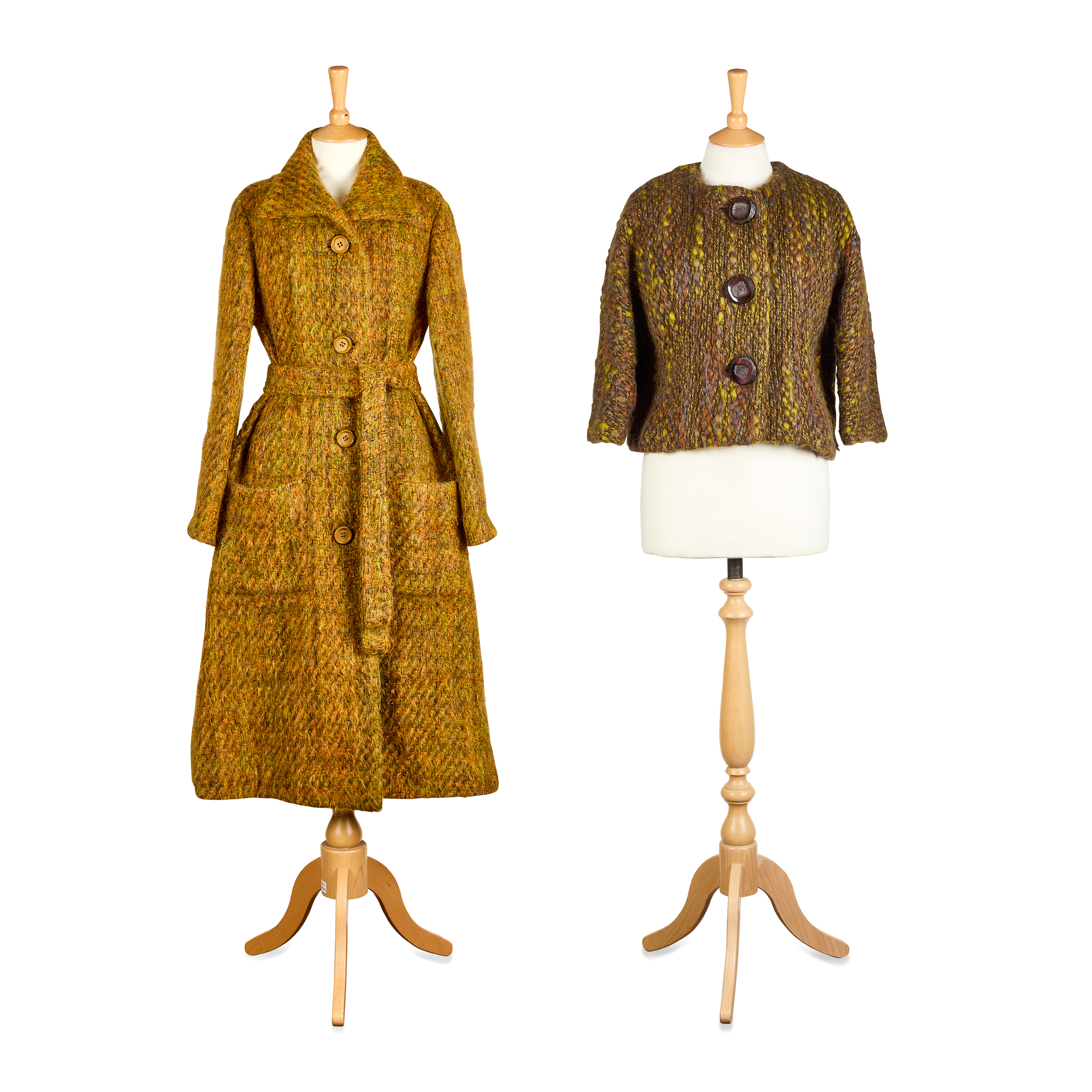
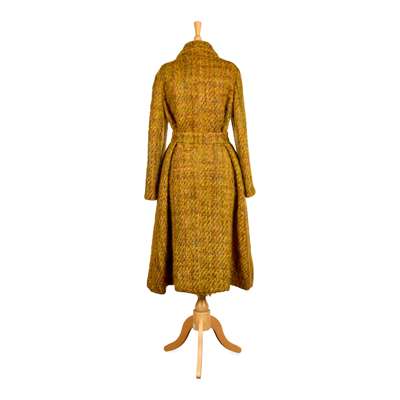
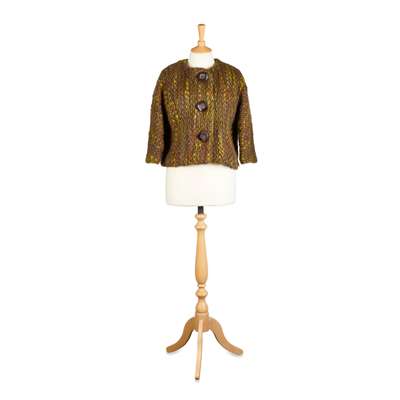
TWO SCOTTISH MOHAIR OUTERWEAR GARMENTS, BERNAT KLEIN (1922-2014)
CIRCA 1960s-1970s

Auction: Day One | Wednesday 19 August from 10am | Lots 1 - 198
Description
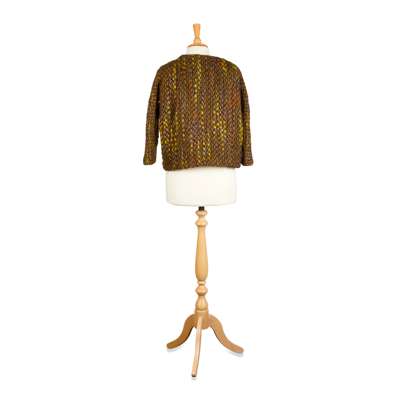
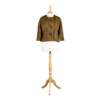
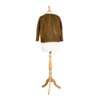
including a short lady's jacket in tones of green, brown and blue, with three large textured resin buttons, and a lady's three quarter length belted coat in tones of orange, yellow and green, each with Bernat Klein labels to the interior
Dimensions
the jacket 52cm high; the coat 117cm long
Footnote
Serbian born textile designer Bernat Klein settled in the Scottish Borders, basing his business in Galashiels. Then the Borders area was a thriving hub of textile design and production. Principally a modernist, Klein was eclectic in his work interests which included architecture and painting but he is probably best known for his textile designs supplying couture fabrics to fashion houses such as Dior and Chanel. He collaborated with local dyers and explored new colour making techniques including random dyeing which allowed for the development of new colours which came about during the process and which could not be predicted and space dyeing which allowed explosions of colour and combinations close to those found in nature. His legacy was celebrated by the National Museum of Scotland in a major retrospective of his work titled ‘Bernat Klein: Design in Colour’ (5 November 2022 – 23 April 2023). His house near Selkirk, High Sutherland, was designed in 1957 for Klein by the modernist architect Peter Womersley, followed in 1972 by a studio set below the house. Lyon & Turnbull offered selected pieces from High Sutherland on behalf of the Estate of Bernat Klein in the ‘Design Since 1860’ sale (11 April 2018), including the original architect's model of the Klein studio. The Klein studio was recently purchased at auction in the summer of 2025 by the Bernat Klein Studio Restoration Project, led by the Scottish Historic Buildings Trust (SHBT) in coalition with the Bernat Klein Foundation and the National Trust for Scotland, who are working to secure, restore and reimagine Peter Womersley’s 1972 masterpiece for future generations.