Lot 3
SIR EDWARD JOHN POYNTER BT., P.R.A., R.W.S. (BRITISH 1836-1919)
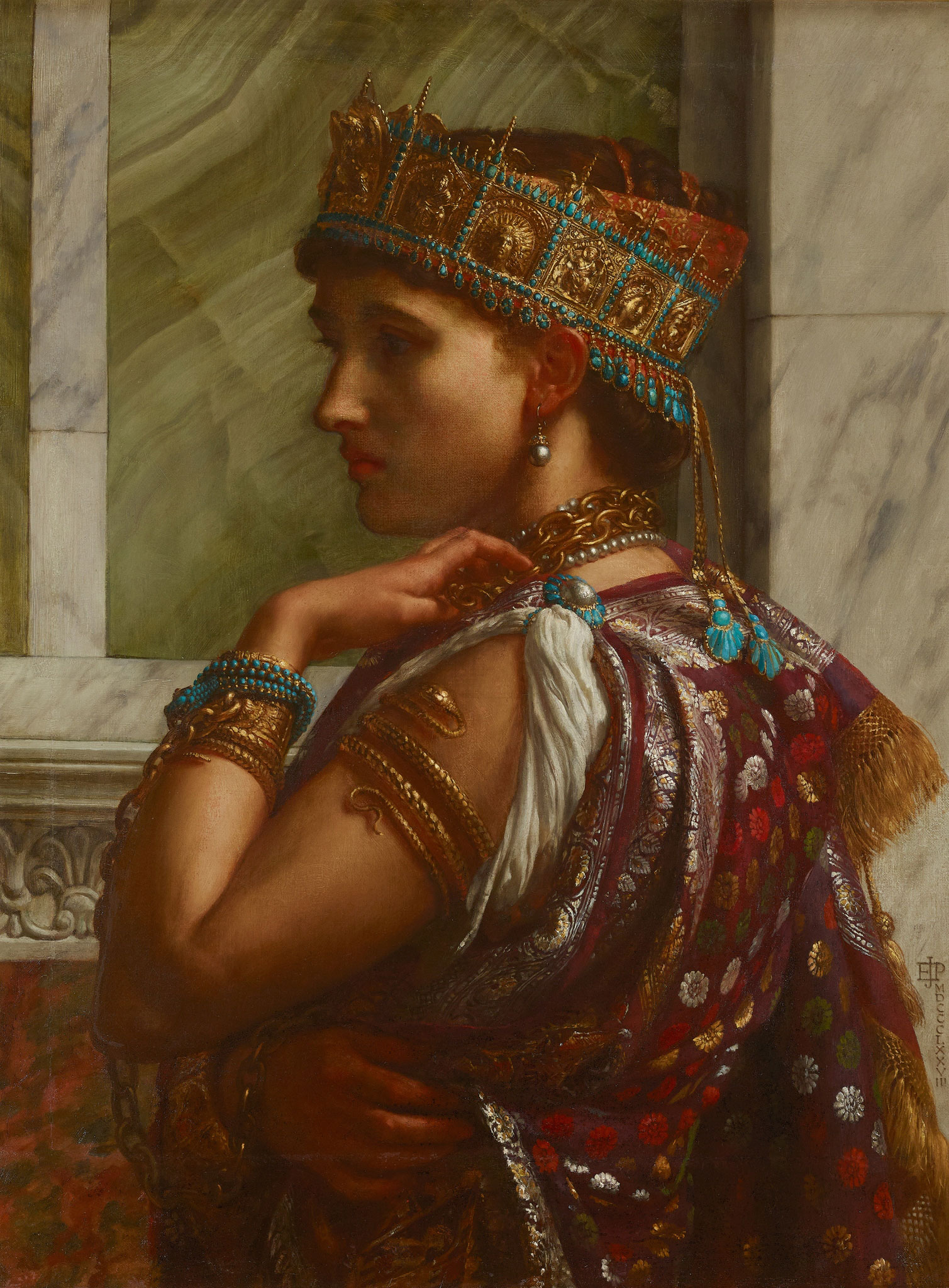
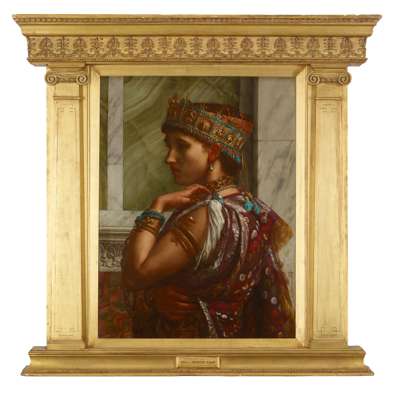
ZENOBIA CAPTIVE
Poetry & Myth: Romantic Art in the Victorian Age
Auction: 02 July 2026 from 14:00 BST
Description
Signed with monogram and dated 'EJP/M/D/C/C/C/L/X/X/V/I/I/I [1878]', oil on canvas
Dimensions
72cm x 54.5cm (28.5in x 21.5in)
Provenance
Christie's, London, 20 November 1970;
Sotheby's, London, 8 June 1993;
Christie’s, London, 16 December 2015
Footnote
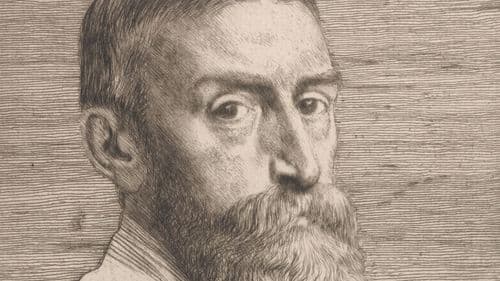
One of the leading figures of late Victorian art, Sir Edward John Poynter occupied a unique position at the centre of Britain's artistic establishment. Trained in Paris under Charles Gleyre alongside artists such as James McNeill Whistler and George du Maurier, Poynter became one of the foremost exponents of the classical and historical tradition in British painting. His distinguished career encompassed not only artistic success but also significant institutional influence: he served as Principal of the National Art Training School at South Kensington, Director of the National Gallery (1894–1904), and President of the Royal Academy (1896–1918). Elevated to a baronetcy in 1902, he was widely regarded as the intellectual heir to Frederic Leighton and a principal architect of the Victorian classical revival.
Zenobia Captive belongs to a celebrated group of historical and Orientalist subjects that established Poynter's reputation during the latter half of the nineteenth century. Following the success of Israel in Egypt (1867, Guildhall Art Gallery, London), Poynter developed a distinctive approach to antiquity, combining meticulous draughtsmanship, archaeological awareness, and a richly decorative sense of colour and costume. While later monumental canvases such as The Queen of Sheba's Visit to King Solomon (1890, Art Gallery of New South Wales) demonstrate the full scale of his historical imagination, works such as the present picture reveal the artist's ability to distil the grandeur of the ancient world into a more intimate and psychologically engaging composition.
The subject is Zenobia, the celebrated third-century Queen of Palmyra, whose empire briefly extended across much of the eastern Roman world, from Egypt to Anatolia. After challenging Roman supremacy by proclaiming her son emperor and herself empress, she was defeated by the Emperor Aurelian and taken captive to Rome. According to ancient accounts, Zenobia was paraded through the city during Aurelian's triumph, adorned with jewels yet bound in chains. Renowned not only for her beauty but also for her intelligence, courage and political acumen, she became a powerful symbol of noble resistance and tragic dignity, themes that resonated strongly with Victorian audiences.
Rather than pursuing strict archaeological reconstruction, Poynter sought to evoke the splendour and romance of the ancient East. Elements of Zenobia's costume were likely derived from the artist's collection of studio props, including textiles of Indian origin possibly obtained through his brother-in-law, John Lockwood Kipling, principal of the Mayo School of Arts in Lahore. The elaborate headdress and jewellery similarly reflect the eclectic historicism characteristic of Victorian classical painting, recalling contemporary theatrical productions and the carefully researched accessories employed by artists such as Lawrence Alma-Tadema. Such details demonstrate Poynter's fascination with the decorative arts and his commitment to creating historically evocative, if not strictly authentic, visions of antiquity.
The painting was enthusiastically received when exhibited. The Athenaeum praised its sumptuous qualities and expressed the hope that Poynter would continue to produce works of a similar character, while The Art Journal described it as "very grand and very beautiful", singling out the artist's exquisite handling of detail. The present work exemplifies the qualities for which Poynter was most admired: technical refinement, intellectual ambition, and a compelling fusion of classical scholarship with Victorian imagination.