Lot 1
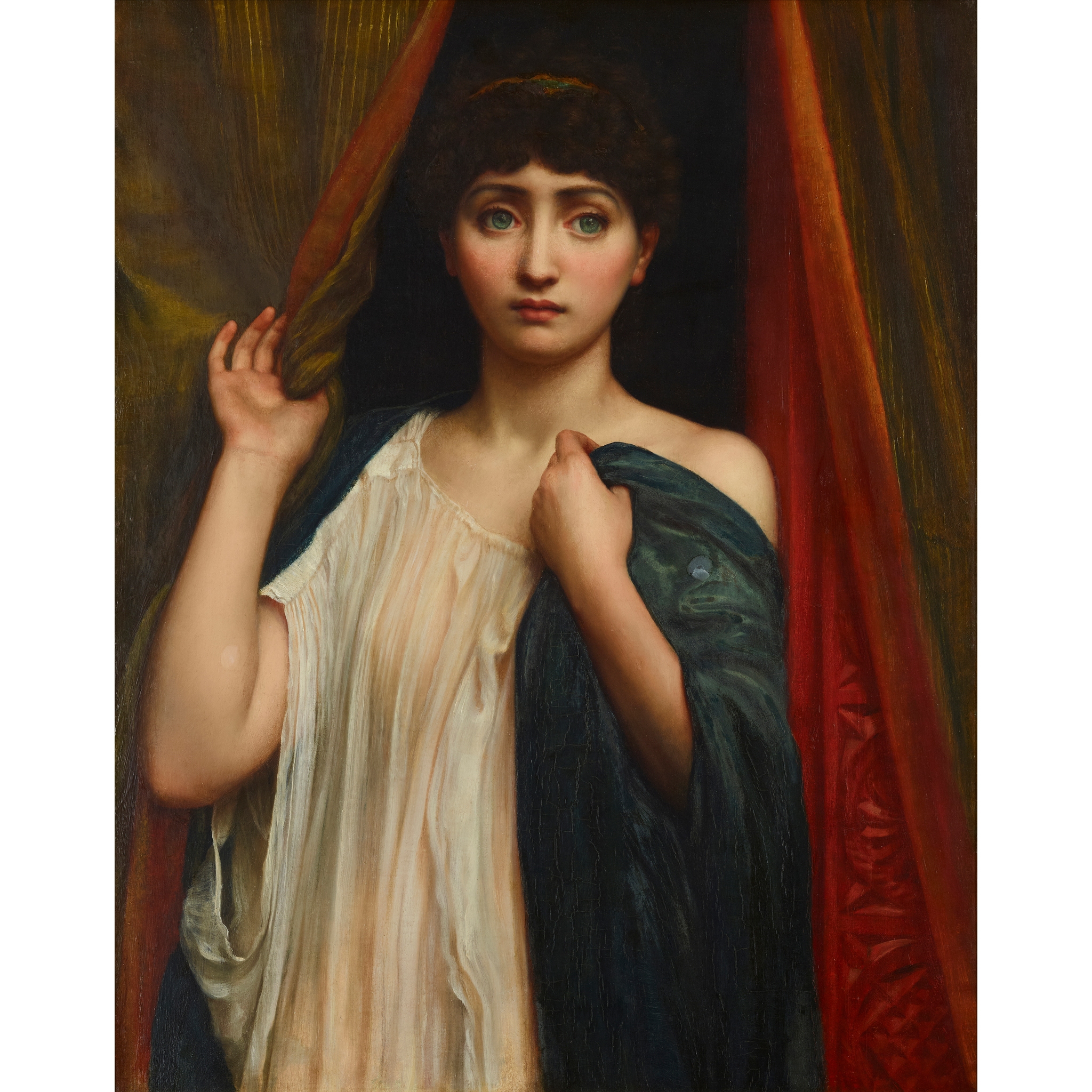
SIR EDWARD JOHN POYNTER BT., P.R.A., R.W.S. (BRITISH 1836-1919)
CRESSIDA
Poetry & Myth: Romantic Art in the Victorian Age
Auction: 02 July 2026 from 14:00 BST
Description
Oil on canvas
Dimensions
71cm x 56cm (28in x 22in)
Provenance
Commissioned in 1887 by William Luson Thomas, founder of the Graphic for inclusion in 'The Graphic Gallery of Shakespeare's Heroines', his sale Christie's, London, 9 March 1889;
Christie's, New York, 1 March 1990;
Sotheby’s, London, 15 December 2016
Exhibited: London, The Graphic Gallery, Bond Street, February 1889
Literature: The Graphic, Christmas Supplement, 1890, illustrated in colours
Footnote
Painted in 1888, Cressida was commissioned by The Graphic as part of the celebrated series Shakespeare's Heroines, published to mark Queen Victoria's Golden Jubilee. Bringing together twenty-one of Shakespeare's most memorable female characters, the project enlisted many of the leading artists of the day, including Frederic Leighton, Frank Dicksee and John William Waterhouse. The commission was particularly suited to Sir Edward Poynter, whose reputation rested upon his ability to combine literary scholarship with refined draughtsmanship and psychological insight.
"How now! what's the matter? who was here?"
-Troilus and Cressida, Act IV, Scene II
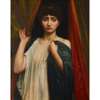
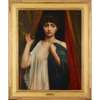
Poynter depicts Cressida, daughter of the Trojan priest Calchas, anxiously looking from a window in anticipation of her lover Troilus. Drawn from Shakespeare's Troilus and Cressida, one of the playwright's most complex and morally ambiguous dramas, the heroine is portrayed at a moment of uncertainty and emotional tension. Rather than illustrating a climactic event, Poynter focuses on an intimate psychological moment, capturing the apprehension and vulnerability that lie at the heart of Shakespeare's characterisation.
The work exemplifies the Victorian fascination with Shakespeare as a source of artistic inspiration and demonstrates Poynter's gift for translating literary narrative into compelling visual form. The carefully observed costume and richly detailed setting evoke the legendary world of ancient Troy, while the heroine's expressive pose lends the picture a distinctly human immediacy. As with many of Poynter's finest literary subjects, historical atmosphere is balanced by an acute sensitivity to character and mood.