

Lot 76
Third Anglo-Mysore War
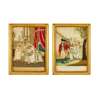
Pair of embroideries depicting Tipu Sultan's sons taken hostage, c.1792
Auction: Books & Manuscripts | 01 October 2026 from 10am | Lots 1 to 78
Description
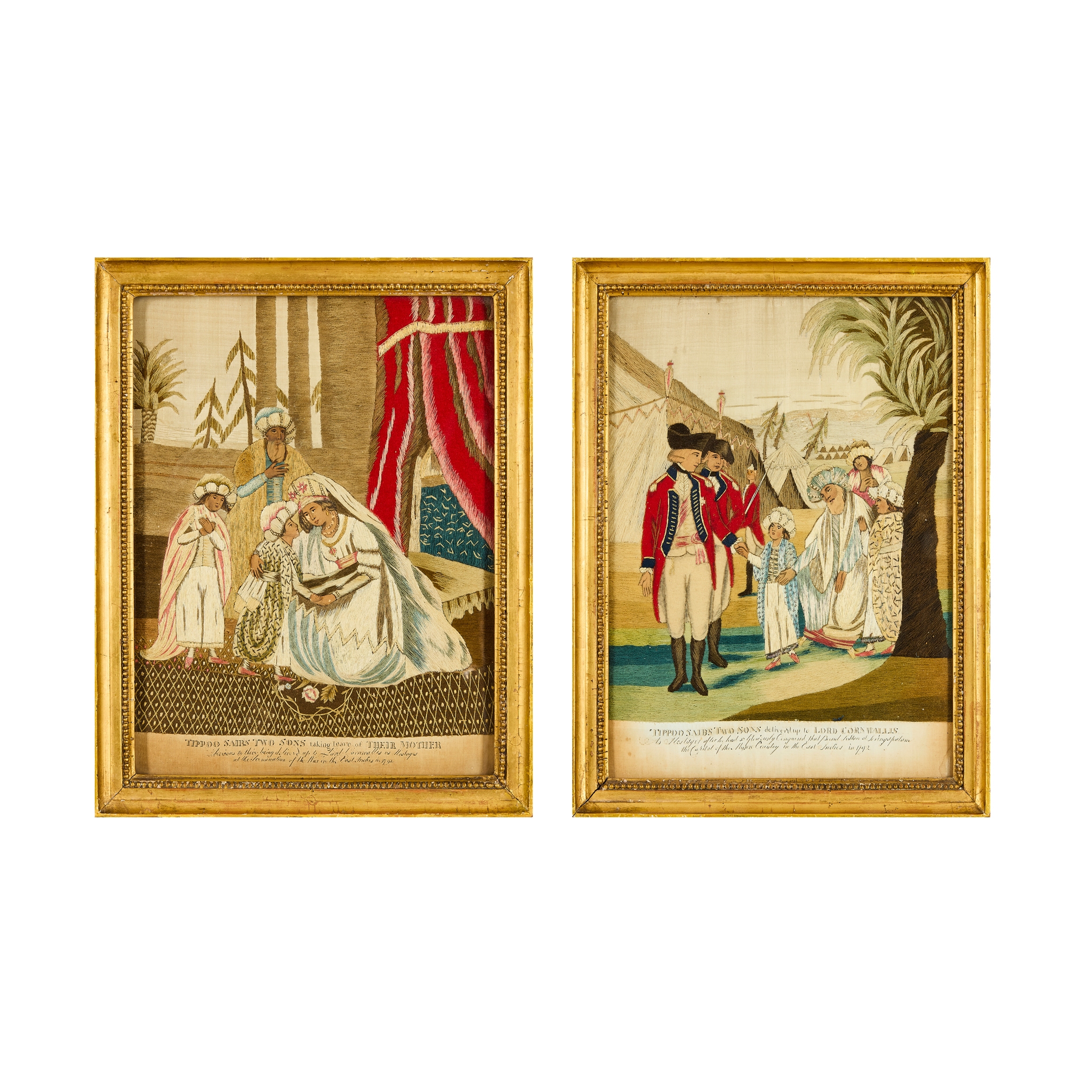
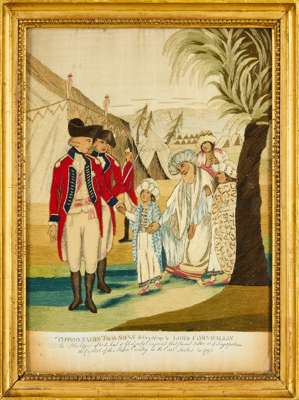
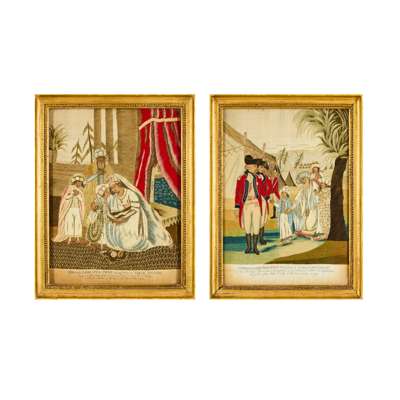
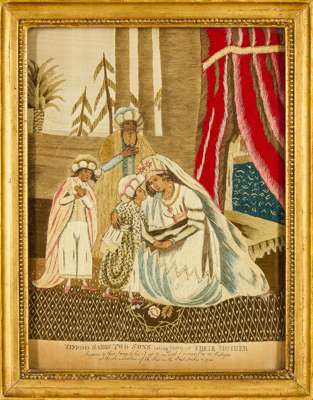
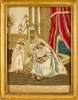
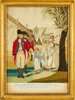
‘Tippoo Saibs Two Sons taking Leave of their Mother Previous to their being delivered up to Lord Cornwallis as Hostages at the Termination of the War in the East Indies in 1792’. [And:] ‘Tippoo Saibs Two Sons delivered up to Lord Cornwallis as Hostages after he had gloriously conquered that Proud Sultan at Seringapatam the Capital of the Mysore Country in the East Indies in 1792’. Embroideries after the pair of mezzotints originally published by Robert Sayer in 1792, each worked in silk, cotton, felted wool and metallic thread on linen, the figures' hands and faces hand-painted on card, and title embroidered to foot. Separately framed and glazed (37 x 27.5cm) (2)
Footnote
A striking visual artefact of the jubilant popular response to the British victory over Tipu Sultan in the Third Anglo-Mysore War, depicting a moment which assumed emblematic significance for an empire rapidly expanding by force of arms in an age of sensibility.
‘In the spring of 1792, word reached England that Lord Charles Cornwallis, Governor-General of India, had at long last defeated Tipu Sultan, the so-called ‘Tiger of Mysore.’ Tipu … Britain’s greatest foe in India, had agreed to Cornwallis's terms of surrender, which included the handing over of two of his sons as hostages. This event quickly became the most celebrated aspect in contemporary visual accounts of the victory over Tipu in the Third Mysore War, providing artists with material both propagandistic and sentimental. Cornwallis, assuming the role of the boys' father, demonstrated magnanimity toward the sons of his enemy, thereby inverting captivity narratives such as those of British subjects held prisoner by Tipu … The story of Cornwallis's reception of the hostage princes was rapidly disseminated through periodicals and books, and illustrated by several artists in oil paintings and engravings' (Anderson, 'Tipu Sultan’s Sons and Images of Paternalism in Late Eighteenth-Century Romantic British Art', in Weber, ed., Romanticism and Parenting: Image, Instruction and Ideology, 2007, pp. 7-8).