

Lot 52
Alexander, Sir James Edward (1803-1885)
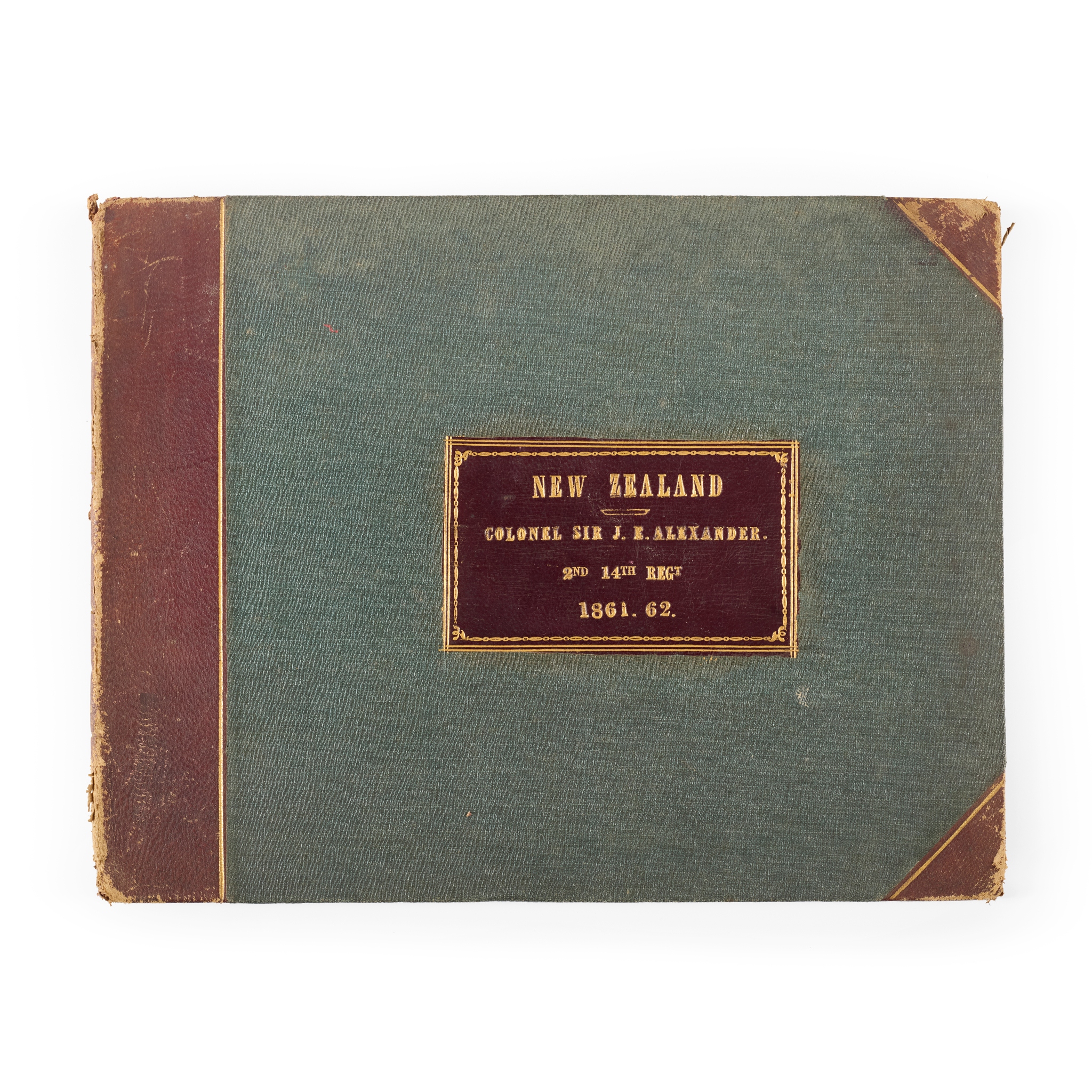
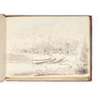
Sketchbook of New Zealand during the First Taranaki War, 1860-2
Auction: The Library of General Sir James Alexander | Wed 25 February from 10am | Lots 31 to 62
Description
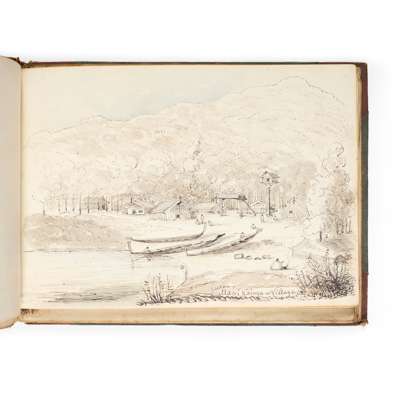
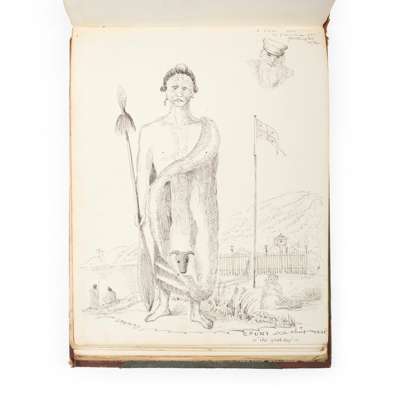
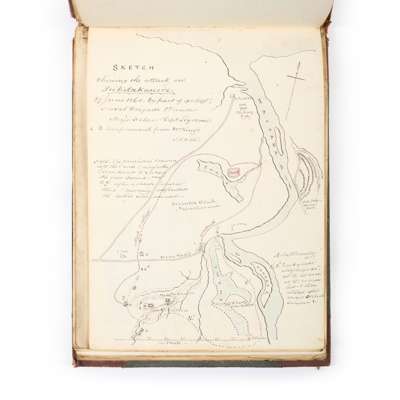
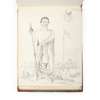
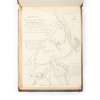
oblong 4to (18.6 x 24.5cm), reddish-brown half roan album, cloth covers, black leather label to front (lettered ‘New Zealand, Colonel Sir J. E. Alexander, 2nd 14th Regt, 1861. 62’ in gilt), [45] ff., comprising views (including Te Arei pah, camp at Waitara, Mount Egmont, a Maori kainga, Castle Point, camp at Otahuhu, various scenes on the Waitara river and Waikato rivers and at Manekau, ‘Wareka hill, stormed by Captain Cracroft, H.M.S. Niger, 1860', Wellington, Hutt River, etc.), a battle scene ('Repulse of Maoori attack on No. 3 Redoubt'), ethnographic studies (including a full-length portrait of Maori chief E Puni), and several maps and battle plans (including a general plan of the ‘Seat of War’, Waireka, defences at Puketakauere pa, the attack on Puketakauere, 'Kaihihi, sketch showing the positions of the pahs attacked', Matarikoriko, ‘Sketch of Waireka-Hill shewing the action with the Maories’, and more), manuscript captions throughout (often dated), mainly in pen-and-ink with touches of pencil and frequent use of coloured washes, a few in pencil, on rectos only (except for one leaf with pen-and-ink sketch captioned ‘Maori Paddling’ on verso)
Provenance
THE LIRARY OF GENERAL SIR JAMES EDWARD ALEXANDER (1803-1885)
Footnote
In 1858 Alexander, then commanding a depot battalion in Ireland following his return from the Crimean War, was directed to raise and command the 2nd Battalion, 14th Regiment of Foot, with whom he had served in Canada and the Crimea. With the outbreak of the First Taranaki War in 1860 he was ordered with his battalion to New Zealand, where he commanded the troops at Auckland until 1862. On his return to Britain he wrote an account of the conflict, Incidents of the Maori War (1863), in which he declared himself to be an ‘Aborigines-protectionist’, professing ‘friendly sentiments towards colonists and settlers, as long as they do not interfere with native rights, and believe, and act on the belief, that Divine Providence has given an inheritance to those of dark as well as fair complexions’ (p. vi).