

Lot 51
Alexander, Sir James Edward (1803-1885)
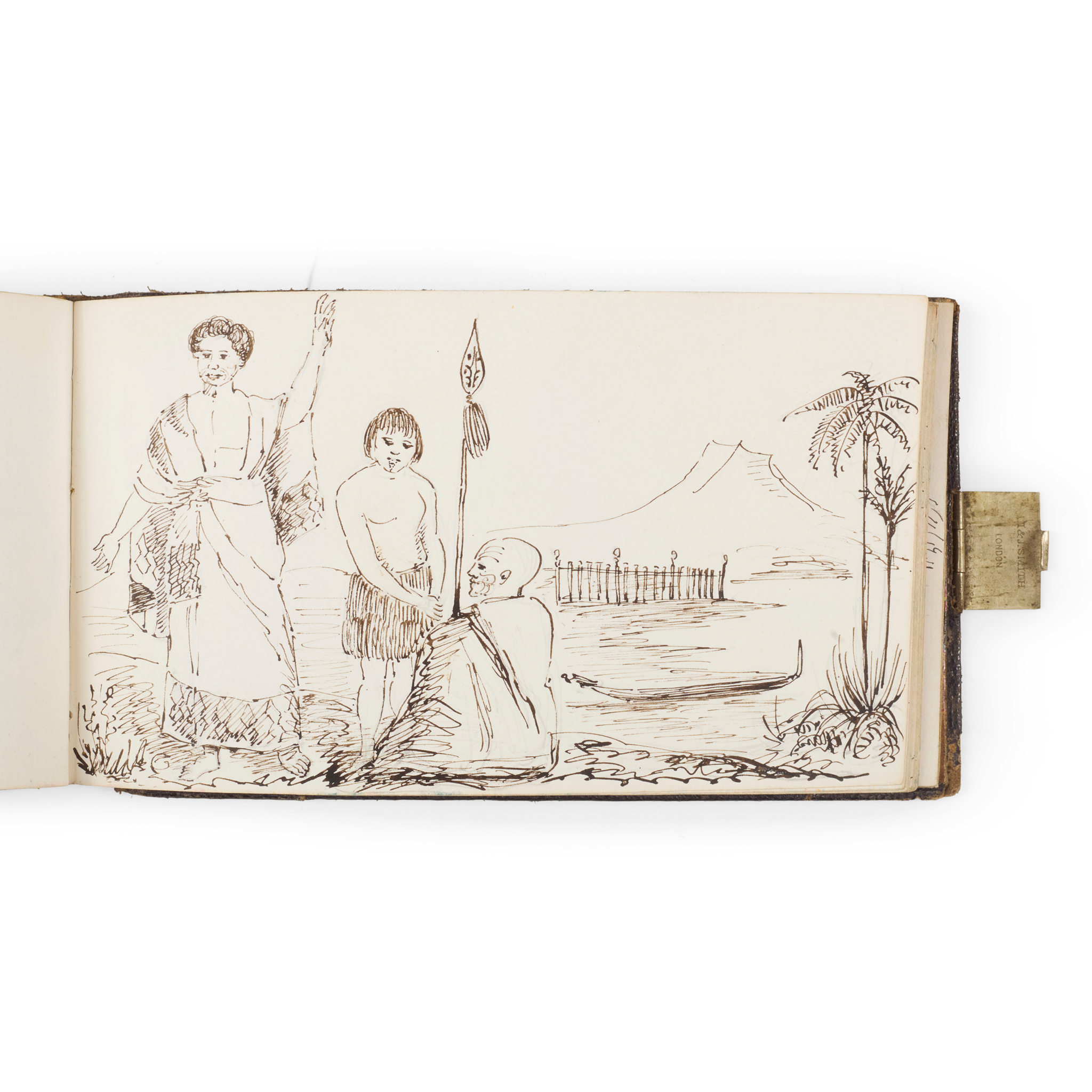
Sketchbook of New Zealand and the Maori during the First Taranaki War, 1860-1
Auction: The Library of General Sir James Alexander | Wed 25 February from 10am | Lots 31 to 62
Description
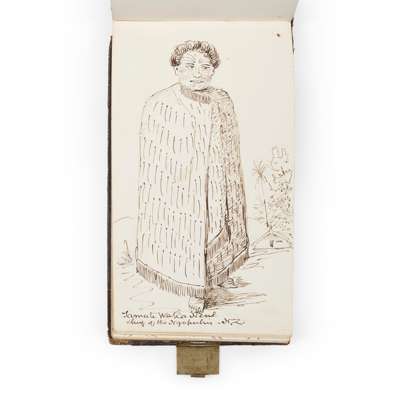
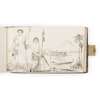
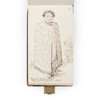
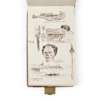
oblong 12mo (8.6 x 15cm), black roan album with metal clasp and catch, [83] ff., with drawings to recto of every leaf and to a few versos, in many cases multiple sketches to a page, nearly all in pen-and-ink with touches of pencil (a few in pencil only), manuscript captions throughout (frequently dated), contents including: portraits of Maori (‘New Zealand war dance (haka)', children and families, bust portrait of ‘Raupereha', possibly Te Rauparaha (Maori rangatira, d. 1849), full-length portrait of Tamati Waka (Maori rangatira, d. 1871), a Maori boatman); Maori settlements (‘Wiremu Kingi Fishing Pah, Waitora [Waitotara] Mouth, burnt by our native allies, Mar. 60', an unnamed Maori pah); Maori artefacts; scenery (including Gough Island, McDonald Islands, Rangitoto Mountain, St George's Bay, Panmure, Otahutu, Orakei, Mount Taranaki, New Plymouth); British encampments and fortifications (Taranaki, Pukerangiora, Omata), ideas for military uniforms (‘Proposed New Zealand Cavalry’, ‘Maori Soldiers’, ‘Proposed Mairo Rangers’), characters including named soldiers and sailors of various ranks ('Colonel The Honble H. Percy V.C. Gr. Guards - a great soldier', Governor Sir George Grey, etc.), whimsical caricatures, scenes from the voyage out (life aboard the transport Nautilus, ships sighted), natural history subjects (‘Australian Porcupines’, i.e. echidnas; kiwis), with a list of Maori populations by area to rear (the total amounting to 55,785), ownership inscription ‘Colonel Sir James Edwd Alexander, 14 Regt, Curragh Camp, May 1860’ to initial blank
Provenance
THE LIBRARY OF GENERAL SIR JAMES EDWARD ALEXANDER (1803-1885)
Footnote
In 1858 Alexander, then commanding a depot battalion in Ireland following his return from the Crimean War, was directed to raise and command the 2nd Battalion, 14th Regiment of Foot, with whom he had served in Canada and the Crimea. With the outbreak of the First Taranaki War in 1860 he was ordered with his battalion to New Zealand, where he commanded the troops at Auckland until 1862. On his return to Britain he wrote an account of the conflict, Incidents of the Maori War (1863), in which he declared himself to be an ‘Aborigines-protectionist’, professing ‘friendly sentiments towards colonists and settlers, as long as they do not interfere with native rights, and believe, and act on the belief, that Divine Providence has given an inheritance to those of dark as well as fair complexions’ (p. vi).